What Happened
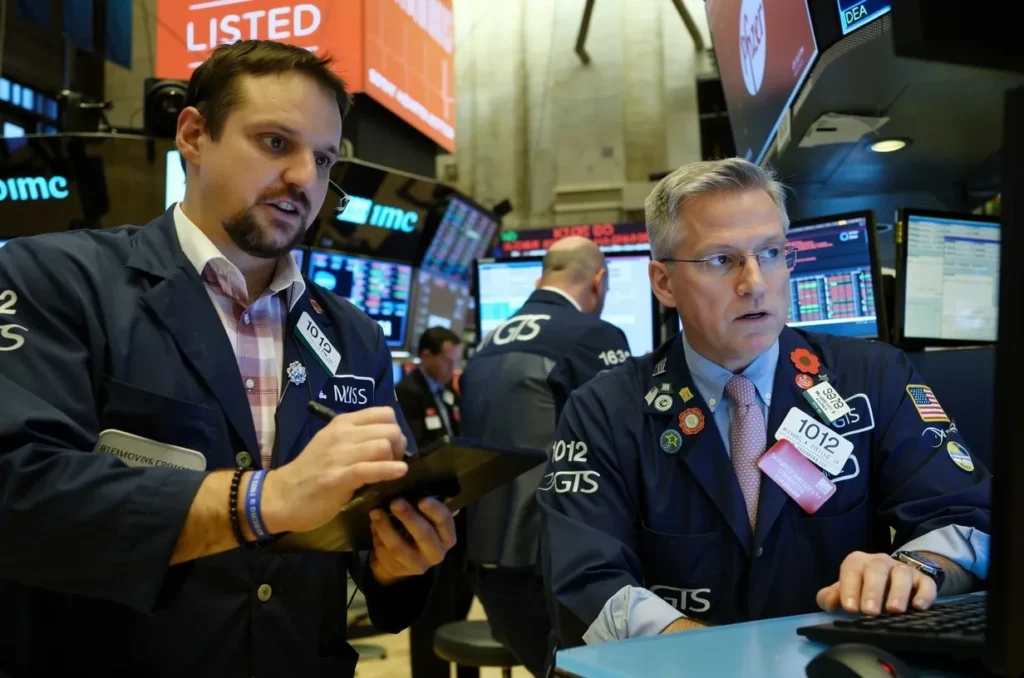
U.S. stocks moved sharply lower on Tuesday as President Trump escalated his rhetoric toward Iran ahead of a deadline for Tehran to reopen the Strait of Hormuz.
The S&P 500 fell 1.1%, while the Dow Jones Industrial Average dropped 0.9%. The Nasdaq Composite led the downside, sinking 1.7% after Wall Street had finished Monday in positive territory.
Markets were already on edge, but sentiment worsened as traders faced the risk that a possible diplomatic off-ramp was narrowing fast.
Trump’s Deadline Put Markets Back On Edge
The immediate catalyst was Trump’s renewed threat campaign ahead of his Tuesday evening deadline. On Tuesday morning, he posted on Truth Social that “a whole civilization will die tonight,” signaling the White House was still leaning into escalation rather than backing away from it.
That added to investor anxiety around what happens if Iran does not move to reopen Hormuz, one of the most important energy chokepoints in the world.
Media reports also said the U.S. had carried out strikes on military targets across Kharg Island, home to Iran’s major oil shipment facilities. That deepened concern that the conflict was moving closer to critical export infrastructure.
Oil Moved Higher As Supply Fears Intensified
Crude prices climbed as investors reassessed the odds of a ceasefire and priced in the possibility of deeper supply disruption.
- WTI crude rose more than 3% to top $115 a barrel
- Brent crude moved above $110
- energy stocks were among the few pockets of strength
The move reflected the same core fear that has driven markets for days: if the conflict intensifies and Hormuz remains blocked or heavily restricted, the global oil market gets tighter very quickly.
Iran Negotiation Hopes Faded
Stock losses worsened after reports suggested Iran had halted negotiation efforts with the United States.
According to the New York Times, three senior Iranian officials told Pakistan that Tehran would no longer engage in ceasefire talks. That hit sentiment because the market had been looking for any sign that international mediation could still produce a temporary pause.
Iran has also reportedly rejected temporary ceasefire proposals, instead demanding a full end to the conflict along with reparations and other guarantees.
That left markets trading with less confidence that diplomacy could stabilize the situation in the near term.
Most Sectors Fell, While Tech Took The Hardest Hit
By late morning, most sectors were in the red. The main exceptions were:
- energy
- utilities
- real estate
The weakest groups were technology and consumer cyclicals, which helped explain the steeper drop in the Nasdaq.
That pattern fits the broader market tone. When oil spikes and geopolitical risk rises, investors tend to move away from growth and rate-sensitive names first.
The Mag Seven Still Aren’t Acting Like A Safe Haven
One of the more notable market undercurrents is that the Magnificent Seven are not providing the kind of leadership investors became used to in past volatility episodes.
- Apple
- Alphabet
- Microsoft
- Amazon
- Meta
- Tesla
- Nvidia
Those stocks have had a difficult start to 2026, and strategists noted that the group is hovering near fresh relative lows against the S&P 500.
That matters because in a more stable market, investors often rotate into mega-cap tech when uncertainty rises. This time, that safe-haven behavior has been weaker.
At the same time, some strategists argue the selloff is starting to create more attractive valuations, especially as the relative premium for large U.S. tech names has narrowed.
What Traders Are Watching Next
The next few hours matter more than the next few weeks.
Investors are focused on:
- whether Trump’s 8 p.m. ET deadline triggers new military action
- whether Iran follows through on threats against Gulf infrastructure
- whether any last-minute diplomatic channel reopens
- whether oil keeps pushing higher from here
If the conflict escalates further, markets will likely stay focused on energy, inflation, and global growth risk. If diplomacy reappears, the rebound could be sharp, especially after Tuesday’s broad risk-off move.
WSA Take
Tuesday’s selloff was about more than just another geopolitical headline. The market is starting to price a situation where the path to de-escalation looks weaker, while the path to higher oil and broader inflation pressure looks more real.
For investors, the key signal was the split inside the market: energy held up, while technology and other risk-sensitive sectors took the hit. As long as Hormuz remains at the center of the story, stocks are likely to stay vulnerable to every new headline out of Washington, Tehran, and the wider Gulf.
Explore More Stories in Markets
Disclaimer
WallStAccess is a financial media platform providing market commentary and analysis for informational and educational purposes only. This content does not constitute investment advice, a recommendation, or an offer to buy or sell any securities. Readers should conduct their own research or consult a licensed financial professional before making investment decisions.