
What Happened
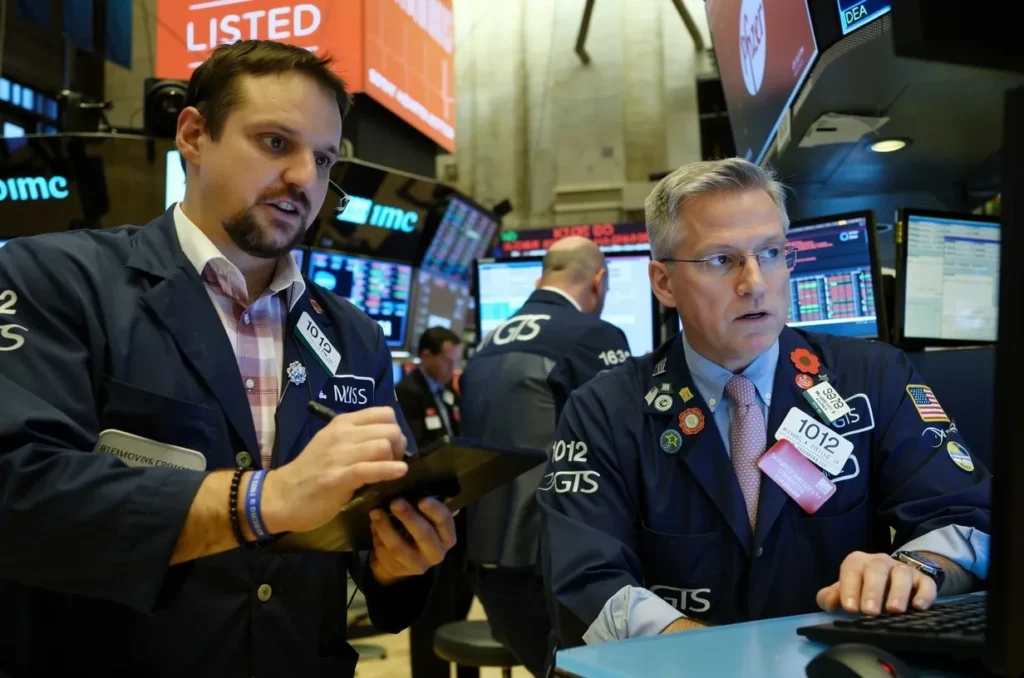
U.S. stocks moved lower on Monday after a chaotic weekend pushed U.S.-Iran tensions back to the center of the market and raised new doubts about whether any peace path can hold.
The Nasdaq Composite led the decline, falling nearly 0.4%. The S&P 500 dropped 0.3%, while the Dow Jones Industrial Average hovered just below flat.
The move reflected a market that had to quickly reprice fresh geopolitical risk after what had looked like a more stable setup only days earlier.
Hormuz Became The Main Market Problem Again
The core issue was the return of serious disruption in the Strait of Hormuz.
According to the source, the U.S. Navy seized an Iranian ship, while Iran fired at vessels and abruptly halted traffic through the waterway on Saturday. Tehran said the U.S. had broken a ceasefire deal, and the shutdown of traffic through Hormuz immediately brought supply fears back into focus.
That matters because Hormuz remains the single most important chokepoint in the global oil market. When traffic there is interrupted, the market quickly starts pricing higher energy costs, inflation pressure, and greater macro uncertainty.
Oil Jumped, But Did Not Break $100
Crude prices rose sharply as traders reacted to the renewed disruption.
- WTI crude rose 5.7% to trade above $87
- Brent crude gained 5.6% to move above $95
The fact that oil stayed below $100 still mattered. It showed the market was pricing a real disruption, but not yet a full worst-case supply shock.
That said, the direction was clear enough. When oil jumps on geopolitics, equities usually have a harder time holding recent gains, especially after a strong run higher.
The Market Is Now Balancing Two Conflicting Forces
One reason Monday’s selloff remained relatively contained is that investors are still dealing with two opposing narratives.
On one side, the market has been trying to build on a strong rally and lean back into growth, tech, and record-high territory. On the other side, every new Middle East flare-up drags the market back toward:
- higher oil
- more inflation risk
- slower global growth
- and greater headline sensitivity
That split is what defined Monday’s tape. Investors did not fully panic, but they clearly pulled back from risk.
Earnings Are The Next Big Test
The timing also matters because markets are entering another busy earnings stretch.
The source says investors are now looking ahead to results from:
- Tesla
- Intel
- United Airlines
Those reports will matter because they arrive at a moment when stocks are trying to hold elevated levels while also absorbing fresh geopolitical noise. In that kind of environment, companies do not just need to beat estimates. They need to show enough confidence in demand, margins, and guidance to keep investors engaged.
That makes this week a meaningful test for the rally.
AST SpaceMobile Was One Of The Day’s Notable Losers
One of the sharpest individual moves came from AST SpaceMobile, which dropped hard after a flawed satellite launch.
According to the source, the company’s BlueBird 7 satellite, launched on Blue Origin’s New Glenn rocket, failed to align in the proper orbit and was placed into a lower-than-planned path that was too low to sustain operations.
That matters because space and satellite names often trade heavily on execution. A technical setback like this can hit confidence quickly, especially in companies where the long-term story depends on successful deployment and scaling of orbital infrastructure.
Tesla Is Walking Into Earnings Under Pressure
The source also highlights Tesla as the weakest performer among the Magnificent Seven since the latest rally began.
That is important because Tesla is now the first of the big mega-cap growth names to report. The stock had recently pushed above a key technical level, then slipped back below it, leaving investors focused less on chart noise and more on what the company says in earnings.
This is the setup:
- Tesla has lagged its mega-cap peers
- sentiment is more fragile
- and Wednesday’s report now becomes the real near-term test
In other words, Tesla is not just another earnings release this week. It is also an early read on whether investors are still willing to reward riskier large-cap growth names in a more volatile macro tape.
Cleveland-Cliffs Added More Industrial Cost Pressure
There was also a notable industrial read-through from Cleveland-Cliffs.
The company said it incurred an $80 million quarterly energy cost hit tied to extreme cold weather in January. It also said rising fuel costs linked to the Iran war have added further pressure.
That matters because it shows how higher energy prices are not just a macro market story. They are beginning to show up in real corporate cost structures.
Cleveland-Cliffs also said it is no longer in a hurry to close its planned deal with POSCO, partly because its own operating situation has improved as steel prices have risen and auto demand has stayed healthy.
That is a separate company-specific point, but the cost pressure from energy is the more important broad-market signal.
This Is Still A Headline-Driven Market
Monday’s action was another reminder that even after a strong rebound in equities, the market remains highly exposed to geopolitical headlines.
The recent rally had encouraged a more confident, risk-on tone. But the return of Hormuz disruption showed how quickly that confidence can get interrupted.
As long as the market is juggling:
- fragile diplomacy
- volatile oil
- inflation sensitivity
- and a heavy earnings calendar
it is likely to stay reactive.
That does not mean the rally is over. It does mean the market may struggle to move in a straight line.
WSA Take
Monday’s pullback was not dramatic, but it was a clear warning that the Middle East story is still capable of reshaping market sentiment fast. Once Hormuz shut down again and oil moved higher, investors had a reason to step back from risk and reassess how much recent calm they could really trust.
For investors, the key issue now is whether the latest flare-up proves temporary or turns into another sustained energy shock. With earnings from major names like Tesla and Intel still ahead, the market now has to absorb geopolitical risk and corporate execution risk at the same time.
Explore More Stories in Markets
Disclaimer
WallStAccess is a financial media platform providing market commentary and analysis for informational and educational purposes only. This content does not constitute investment advice, a recommendation, or an offer to buy or sell any securities. Readers should conduct their own research or consult a licensed financial professional before making investment decisions.