What Happened
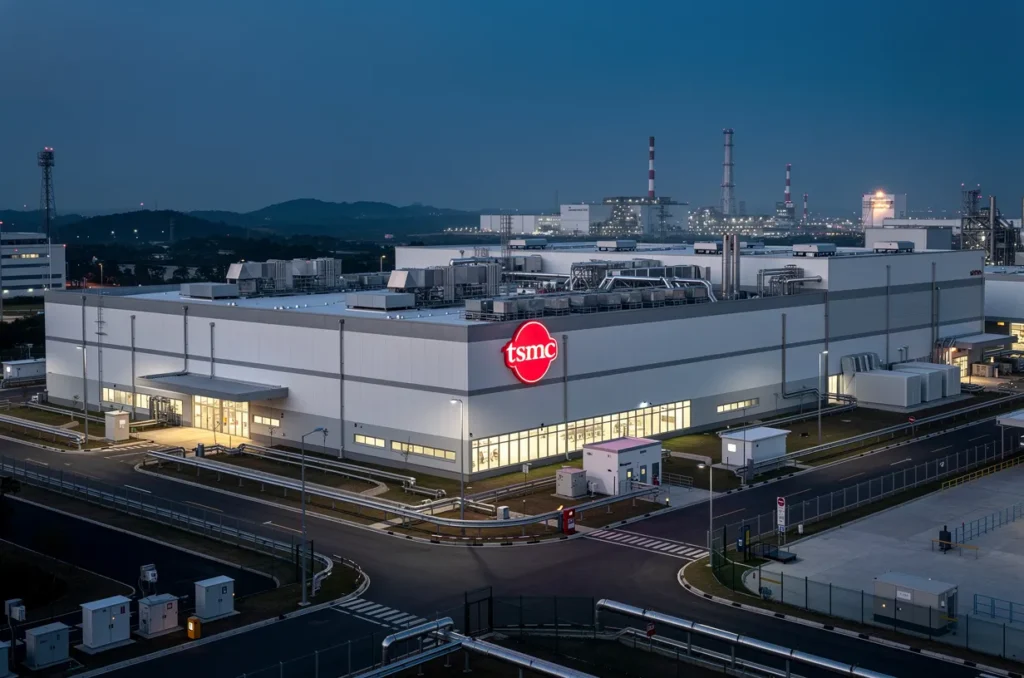
Taiwan Semiconductor Manufacturing Company (TSMC) reported a strong start to the year, with first-quarter revenue rising 35% from a year earlier as the global AI buildout kept driving chip demand higher.
Revenue for the January-to-March period reached more than NT$1.13 trillion, or about $35.7 billion, topping market expectations. On a monthly basis, March revenue climbed 31% from February and 45% from March 2025.
The company is set to hold its full first-quarter earnings call on April 16, but the headline number alone was enough to reinforce one of the market’s clearest themes: demand for advanced AI chips still looks very strong.
TSMC Is Still One Of The Best Read-Throughs On AI Demand
TSMC matters because it sits at the center of the global chip supply chain.
As the world’s largest contract semiconductor manufacturer, it builds processors for many of the most important names in the AI race, including Nvidia (NVDA), AMD (AMD), and Broadcom (AVGO). That makes its revenue performance a useful barometer for how much real demand is still flowing through the sector.
When TSMC posts numbers this strong, the message is broader than one company. It suggests the companies designing the chips — and the cloud and AI platforms buying them — are still spending aggressively.
The AI Buildout Still Looks Far From Done
The latest revenue jump fits with the broader picture across the semiconductor industry. The market is still in a phase where demand for GPUs, custom AI processors, memory, and supporting infrastructure remains intense.
The supply chain pressure is showing up in several ways:
- major AI companies are still chasing more compute capacity
- chip buyers are using multiple suppliers where possible
- cloud compute providers are becoming more important in filling gaps
- custom chip programs are expanding beyond the traditional leaders
In other words, this is no longer just a story about buying more Nvidia chips. It is becoming a wider infrastructure race involving foundries, cloud capacity, memory, packaging, and custom silicon programs.
Capacity Constraints Are Still Part Of The Story
One reason TSMC’s numbers matter so much is that the AI market is still dealing with capacity shortages.
The demand for computing power remains high enough that major technology companies are not only buying chips directly from leaders like Nvidia and AMD, but also relying on firms like CoreWeave (CRWV) to rent out processing power when direct supply is harder to secure.
That tells investors something important: this is not a market where demand is fading. It is a market where customers are still scrambling to secure enough hardware to keep up with AI ambitions.
Recent Deals Show How Broad The Spending Wave Has Become
The latest partnerships across the AI ecosystem help explain why TSMC’s growth remains so strong.
Recent examples include:
- Anthropic signing a multiyear agreement with CoreWeave
- Meta (META) using CoreWeave to help power AI services through 2032
- Anthropic working with Google and Broadcom for access to 3.5 gigawatts of Google TPUs
- Broadcom developing a custom chip for OpenAI
All of those arrangements point to the same conclusion: the AI arms race is widening, and the need for advanced silicon is spreading across more companies, more architectures, and more use cases.
That is good news for TSMC because many of those efforts still lead back to the same core requirement — world-class manufacturing capacity.
March Was Especially Strong
The monthly detail also stood out. A 31% jump from February to March is a sharp move on its own. A 45% gain from the same month last year makes it even more notable.
That kind of acceleration suggests demand did not just stay healthy through the quarter. It appears to have strengthened into the quarter’s final month.
Investors will likely want more detail on the upcoming earnings call, especially around:
- customer concentration
- advanced node demand
- AI-related capacity utilization
- the outlook for the rest of 2026
But the initial read is clear: TSMC is still seeing very strong order flow tied to the AI cycle.
The Semiconductor Spending Backdrop Still Looks Huge
The broader industry outlook also remains supportive. Expectations for global semiconductor spending have continued moving higher as AI infrastructure needs expand.
That backdrop matters because TSMC is one of the clearest beneficiaries when the market shifts from AI hype to actual deployment. A lot of companies can talk about AI growth. Far fewer are positioned to manufacture the chips powering it at scale.
That is why TSMC remains such an important name for investors trying to judge whether the AI trade still has real operating momentum underneath it.
What Investors Will Watch Next
The next checkpoint is TSMC’s April 16 earnings call.
Investors will likely be listening for updates on:
- whether AI-related demand is still accelerating
- how much capacity remains constrained
- whether customer diversification is improving
- how management sees the rest of the year shaping up
The headline revenue figure was strong. The next step is understanding whether management sees this pace as sustainable, or whether bottlenecks in packaging, memory, or broader supply chain logistics could start to shape the outlook.
WSA Take
TSMC’s quarter adds to a growing pile of evidence that the AI chip cycle is still running hard. A 35% revenue jump from a company this large is not just a good quarter — it is a signal that the underlying demand environment remains powerful.
For investors, the key takeaway is that TSMC still looks like one of the cleanest ways to track real AI spending instead of just AI enthusiasm. As long as hyperscalers, model builders, and cloud providers keep racing for more compute, TSMC should remain one of the most important names in the entire AI supply chain.
Disclaimer
WallStAccess is a financial media platform providing market commentary and analysis for informational and educational purposes only. This content does not constitute investment advice, a recommendation, or an offer to buy or sell any securities. Readers should conduct their own research or consult a licensed financial professional before making investment decisions.