What Happened
The European Union and the United States are moving closer to a new agreement on critical minerals, with both sides aiming to coordinate production, investment, and supply chains to reduce reliance on China.
According to the reported draft plan, the pact would support non-Chinese suppliers through measures such as minimum pricing mechanisms, while also encouraging cooperation on standards, joint projects, and responses to future supply disruptions.
The broader message is clear: despite political friction between Washington and Brussels, both sides appear to agree that critical minerals have become too important to leave exposed to a single dominant supplier.
What The Draft Plan Includes
The emerging framework appears designed to do more than just encourage trade. It points to a more active industrial strategy built around supply security.
Reported elements of the draft include:
- incentives to support non-Chinese producers
- possible minimum price mechanisms
- cooperation on standards and investment
- joint development of supply chain projects
- coordinated responses to disruptions from countries such as China
That matters because critical minerals markets often break down when prices fall too low for Western projects to compete, then tighten quickly when geopolitical pressure hits. A framework that includes pricing support or purchase incentives could help change that dynamic.
China Is The Core Driver
This is ultimately about China’s grip on critical minerals supply chains.
The urgency increased after Beijing imposed sweeping export controls last year, including restrictions on rare earths in response to U.S. tariffs. Those measures disrupted supply chains and reportedly forced some European manufacturers to halt production.
That episode reinforced something policymakers in both the EU and U.S. have been realizing for a while: control over critical minerals is not just a mining issue. It is now tied directly to:
- economic security
- defense readiness
- industrial competitiveness
- the energy transition
These materials are essential for everything from missile systems and fighter jets to electric vehicles, renewable energy infrastructure, and advanced industrial manufacturing.
This Is Bigger Than A Bilateral Deal
The reported plan is not limited to the EU and U.S. alone.
Both sides are also trying to bring in other “like-minded” partners as part of a broader multi-country arrangement aimed at building more resilient supply chains. The draft would complement a similar agreement with Mexico and follows earlier joint statements from the EU, U.S., and Japan.
That suggests the real goal is not a one-off pact. It is the early outline of a wider Western-aligned critical minerals bloc.
If that happens, it could gradually reshape where future investment goes across mining, refining, and downstream processing.
Politics Are Still Getting In The Way
One reason this development stands out is that it is happening during a period of real strain in transatlantic relations.
The EU and U.S. have been clashing over:
- security issues
- trade disputes
- tariff policy
- political interference concerns
- questions around broader alliance commitments
The EU has also delayed approval of a prior trade agreement reached with the Trump administration, while the U.S. is still waiting on tariff reductions for certain industrial goods.
That makes the minerals talks more notable. Even with broader tensions running high, both sides still appear willing to work together where strategic supply chains are concerned.
The Real Issue Is Not Just Mining — It Is The Whole Chain
For investors, the most important takeaway is that this is not just about digging more material out of the ground.
Critical minerals strategy now covers the full chain:
- mining
- processing
- refining
- midstream logistics
- manufacturing inputs
- pricing support
- strategic coordination
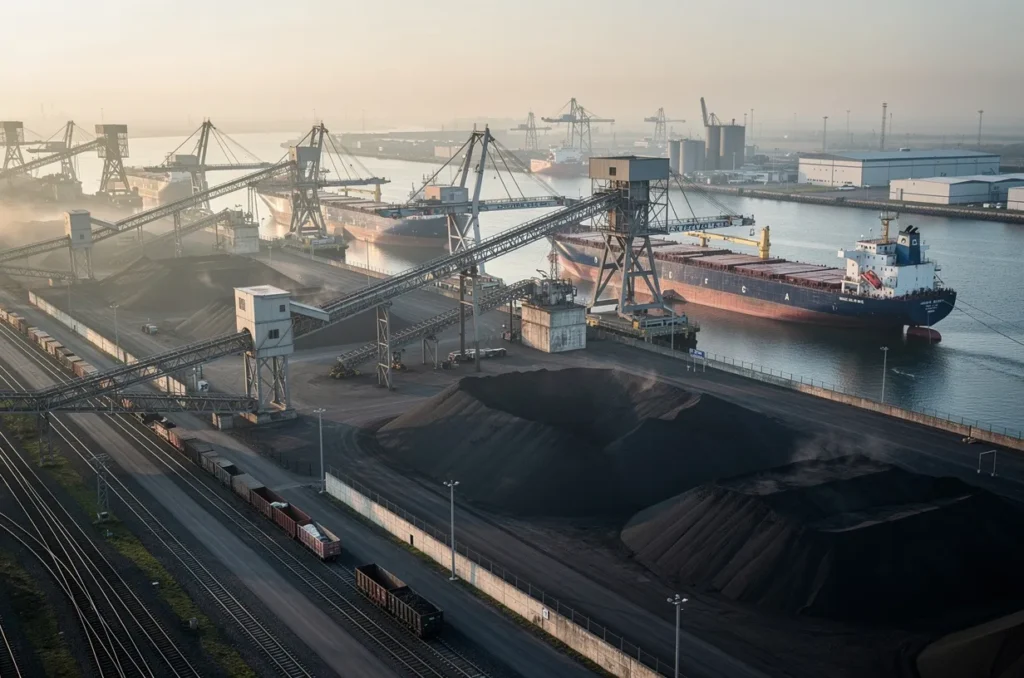
That is important because one of the West’s biggest weaknesses is not always access to mineral deposits. It is the lack of enough processing and refining capacity outside China.
A pact like this could help steer investment toward the missing parts of the chain, especially if it includes price floors, subsidies, or purchase guarantees that make new projects more financeable.
What Investors Should Watch Next
A lot of the most important details still appear unresolved.
Key open questions include:
- whether price floors are formally included
- whether there will be subsidies or purchase guarantees
- which countries join the broader pact
- whether the agreement leads to actual project financing
- how quickly the plan turns into real supply chain buildout
Those details matter because the difference between a symbolic agreement and a market-moving one will come down to execution.
If the pact delivers real support for non-Chinese supply, it could become a meaningful tailwind for selected rare earth, battery metals, and broader critical minerals names tied to Western jurisdictions.
WSA Take
This is another sign that critical minerals are moving out of the commodity bucket and into the strategic policy bucket. The EU and U.S. may disagree on plenty right now, but both appear to understand that dependence on China for key materials is becoming harder to tolerate.
For investors, that keeps the focus on companies and jurisdictions positioned to benefit from a more coordinated Western supply push. The biggest opportunity may not be in the headlines around the pact itself, but in which projects, processors, and downstream players eventually get pulled into the buildout that follows.
Explore More Stories in Commodities
Disclaimer
WallStAccess is a financial media platform providing market commentary and analysis for informational and educational purposes only. This content does not constitute investment advice, a recommendation, or an offer to buy or sell any securities. Readers should conduct their own research or consult a licensed financial professional before making investment decisions.