What Happened
New U.S. government data suggests China entered the Iran war with a much larger strategic oil cushion than the United States, giving Beijing a stronger buffer as global energy markets remain under pressure.
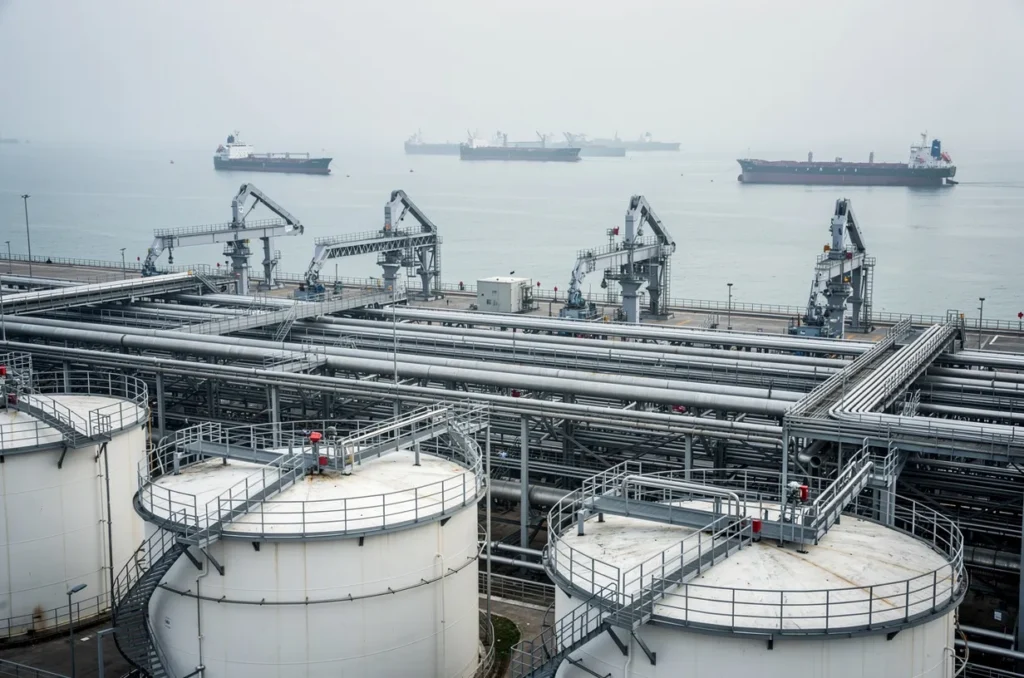
According to the figures cited in the source, China ended 2025 with nearly 1.4 billion barrels in reserve. By comparison, the 32 members of the International Energy Agency together held about 1.2 billion barrels, including roughly 413 million barrels in U.S. reserves.
That headline alone is striking. But the bigger takeaway is not just the gap in size. It is the direction of travel. China appears to have kept building inventories into the crisis, while the U.S. has continued drawing its stockpile lower.
China Built While The U.S. Drew Down
The reserve comparison matters more because the two countries were moving in opposite directions.
The source says China, which does not regularly disclose official reserve levels, added an estimated 1.1 million barrels per day to strategic inventories during 2025. It also says preliminary government data suggests China continued building inventories in 2026 before the war intensified.
The U.S., by contrast, has been running with a much smaller cushion after prior drawdowns tied to the earlier oil shock that followed Russia’s invasion of Ukraine. The source says current U.S. reserve levels are around 405 million barrels, after another sale of more than 8 million barrels in the first half of April.
That gap matters because energy security is not just about how much oil a country consumes. It is also about how much optionality it has when the market breaks.
Why This Reserve Gap Matters Now
This is becoming more important because the global market is still struggling with the fallout from disruption in the Strait of Hormuz.
The source notes that energy flows through the route remain largely shut down, and President Trump described the strait as “sealed up tight.” In that kind of environment, countries with a larger oil buffer can absorb price shocks, supply interruptions, and import stress more comfortably than those with thinner reserves.
That gives China a strategic advantage on multiple levels:
- more flexibility in managing import shocks
- more time to wait out price spikes
- less immediate dependence on emergency policy responses
- and more room to protect industrial activity if disruption lasts longer than expected
That does not make China immune. It remains the world’s largest crude importer. But it does mean Beijing appears to have entered this crisis better prepared.
China Still Depends Heavily On Global Oil
The reserve story does not change one basic fact: China is still deeply dependent on global energy markets.
That is important because a larger stockpile is not the same as energy independence. China still needs access to crude flows, stable shipping routes, and manageable prices. But the reserve data suggests Beijing understood that vulnerability and spent the last year building a bigger shock absorber around it.
That is what makes the data so important. It shows that while the world was focused on other macro themes, China was quietly strengthening one of its most important strategic defenses.
The U.S. Is Taking A Different Approach
The U.S. approach looks much different.
Instead of building aggressively into the conflict period, the Strategic Petroleum Reserve remains well below past levels. The source also says Trump has announced plans to release a total of 172 million barrels in the coming months to fight the price shock linked to the Iran war.
That is an important contrast.
China’s strategy appears centered on entering a crisis with a bigger store of oil already in place. The U.S. response appears more focused on using reserve releases as a tool after the shock is already underway.
That difference does not automatically make one model right and the other wrong. But it does shape how each country experiences the same geopolitical event.
This Is Bigger Than Oil Alone
Another reason the China comparison matters is that the article ties it to a broader energy and industrial advantage.
The source notes that China also dominates large parts of the clean energy supply chain. It cites estimates showing China controls about:
- 85% of global solar panel supply chain capacity
- 80% of global lithium-ion battery capacity
That matters because it suggests China’s edge is not limited to crude reserves. It also extends into the technologies countries increasingly rely on to diversify away from imported fossil fuels.
In other words, China may be positioned more strongly on both sides of the energy equation:
- a large strategic cushion in traditional oil
- and overwhelming scale in several parts of the clean-energy manufacturing chain
That is a powerful combination in an era where energy security and industrial policy are becoming more tightly linked.
The Real Message For Markets
For investors, the reserve gap is not just a geopolitical footnote. It has real market implications.
If China has more room to absorb a prolonged energy shock than the U.S. or parts of Europe, that can shape:
- industrial resilience
- inflation sensitivity
- energy import costs
- manufacturing competitiveness
- and potentially policy responses across major economies
That is why this story matters beyond crude charts. Reserve policy can quietly shape macro outcomes when a real supply shock hits.
What Investors Should Watch Next
The next key questions are straightforward:
- whether Hormuz remains heavily disrupted
- whether China continues building inventories through 2026
- how quickly the U.S. moves through additional reserve releases
- and whether the current energy shock starts feeding more directly into broader inflation and industrial weakness
If the conflict drags on, the countries that entered with deeper buffers may look much better positioned than those still trying to manage the shock in real time.
WSA Take
The most important takeaway from this data is that China appears to have entered the Iran war with a much stronger oil cushion than the United States. In an environment where Hormuz remains under strain and global supply risk is still elevated, that kind of preparation matters.
For investors, this is another reminder that energy security is becoming a bigger strategic differentiator again. China is not just dominating parts of the clean-energy supply chain. It also seems to have built a much stronger traditional oil buffer before the latest crisis hit.
Explore More Stories in Commodities
Disclaimer
WallStAccess is a financial media platform providing market commentary and analysis for informational and educational purposes only. This content does not constitute investment advice, a recommendation, or an offer to buy or sell any securities. Readers should conduct their own research or consult a licensed financial professional before making investment decisions.