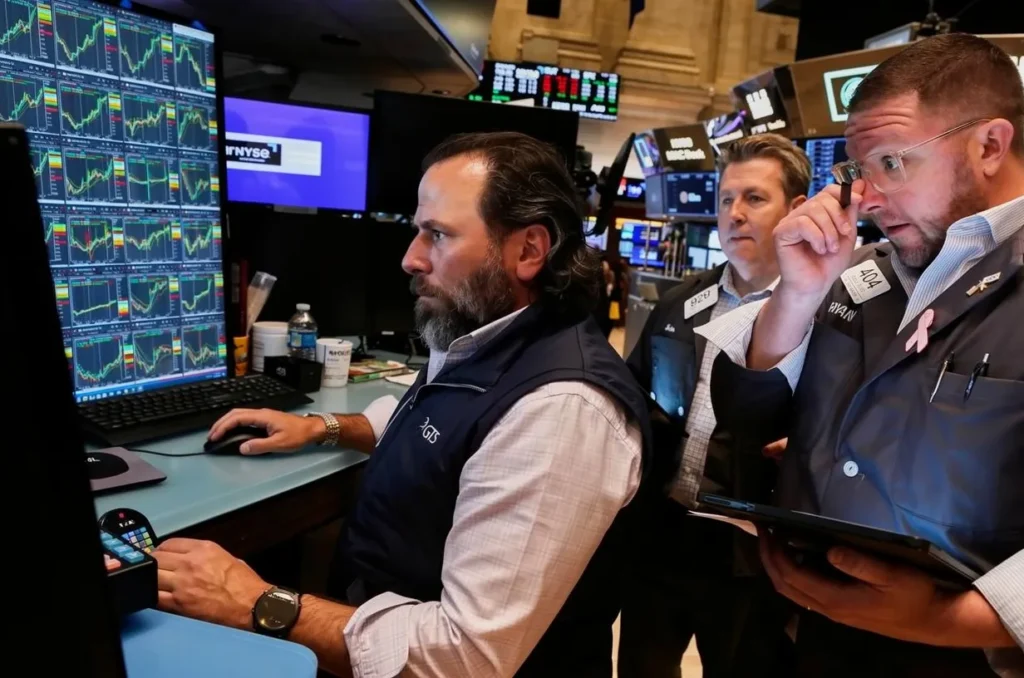
Markets came back from the holiday with a more constructive tone
US stocks opened the week in better shape as lower crude prices helped steady nerves and gave investors a reason to lean back into risk.
The S&P 500 rose 0.5%, while the Nasdaq gained 0.9%. The Dow lagged, slipping 0.2%, but the broader tone still improved as traders focused on a softer oil tape and the possibility that tensions between Washington and Tehran may not spiral further in the immediate term.
That matters because oil has been the market’s most important macro pressure point for weeks. Once crude starts falling, even modestly, the broader tape usually breathes easier.
Oil is doing the heavy lifting again
The move lower in energy was the clearest support for equities.
WTI fell roughly 3% to around $93 a barrel, while Brent traded near $97. That decline built on last week’s sharp pullback and reinforced the idea that the market is starting to price a better path for diplomacy, or at minimum a less severe disruption than feared earlier in the conflict.
Investors responded to comments from President Trump, who said negotiations with Iran were “moving along well,” while still making clear that military options remain on the table if talks break down.
That combination — diplomacy with a threat behind it — was enough to keep markets leaning optimistic for now.
Micron gave tech another reason to run
The strongest move inside the market came from Micron, which surged 17% and briefly hit a $1 trillion market capitalization for the first time.
That is a major signal, not just for Micron, but for the broader AI hardware trade. Investors are increasingly willing to re-rate parts of the semiconductor complex that look like direct beneficiaries of sustained AI infrastructure demand. Memory, once treated as a more cyclical corner of the chip market, is now being pulled deeper into the AI leadership trade.
That helped the Nasdaq outperform again.
Markets are looking through the fighting and focusing on the next headline
One of the stranger features of this rally is that stocks held higher even as military exchanges continued around the Strait of Hormuz.
The US said it conducted self-defense strikes in southern Iran, while the IRGC reportedly fired at US aircraft and drones. Under a different setup, that kind of news would normally hit risk assets much harder. Instead, the market stayed focused on the bigger picture: whether both sides are still moving toward a deal that could eventually stabilize energy flows.
That tells you where investor attention is right now. The market is no longer reacting to every flashpoint in isolation. It is reacting to whether the overall direction is getting better or worse.
Lower oil helps, but it does not erase the inflation problem
This is where the rally still gets more complicated.
Falling crude is good news for markets, but the inflation damage already done by the conflict has not disappeared. Higher energy costs have already fed into consumer and producer prices, and traders have adjusted their rate expectations accordingly. According to the article, the odds of a Fed hike in July have risen meaningfully over the past month.
That is important because even if oil keeps easing, the Fed still has to deal with the lagged impact of the earlier spike. Lower energy prices help the next chapter. They do not erase the last one.
Confidence data is still flashing strain beneath the surface
Another reminder came from consumer confidence, which slipped in May as households continued to feel the pressure from higher prices.
That matters because it shows the market and the consumer are still reading the situation differently. Stocks are responding to the possibility that the worst of the energy shock may pass. Consumers are still living with the cost of that shock in real time.
That gap is worth watching. It does not stop a rally on its own, but it can limit how far optimism runs if household pressure keeps building.
Even a deal would not fully solve the energy issue overnight
That is why the “Hormuz Hangover” idea matters.
Even if a deal gets done and shipping conditions improve, the energy market may not normalize quickly. Inventories need rebuilding, shipping flows need clearing, and damage across regional infrastructure still has to be worked through. In other words, a diplomatic breakthrough could improve the direction without fully repairing the price damage right away.
That makes the current rally understandable, but also a little fragile. The market is pricing better market is pricing better conditions ahead, not a full return to normal.
Space stocks are catching a second wave of enthusiasm
Another interesting side trade continues to build around space and aerospace names after SpaceX’s IPO filing.
Names like Redwire, Rocket Lab, Planet Labs, and Firefly Aerospace have all seen renewed momentum, suggesting investor appetite for frontier-industrial growth stories remains strong. That fits the current market mood well: if inflation pressure starts to ease even slightly, money quickly rotates back toward long-duration innovation themes.
WSA Take
Monday’s move made sense. Lower oil, steadier diplomacy, and another powerful show of strength in AI-linked tech gave investors enough reason to push stocks higher.
Still, this is not a clean all-clear. The market is trading the prospect of relief, not the full arrival of it. Oil has cooled, but the inflation shock has already done damage. Iran talks sound better, but the region is still volatile. As long as those two realities hold, equities can rally, but the macro backdrop will remain more delicate than the price action alone suggests.
Explore More Stories in Markets
Disclaimer
WallStAccess is a financial media platform providing market commentary and analysis for informational and educational purposes only. This content does not constitute investment advice, a recommendation, or an offer to buy or sell any securities. Readers should conduct their own research or consult a licensed financial professional before making investment decisions.