Copper’s bull case is still intact, but the path looks messier
Copper’s long-term story remains one of the strongest in the commodities market, but the near-term supply picture has become more complicated.
The International Energy Agency warned in its Global Critical Minerals Outlook 2026 that copper’s short- and medium-term supply outlook has “worsened considerably,” even though the long-term project pipeline has improved modestly. The problem is not demand. The problem is the combination of mine disruptions, tight concentrate markets and a sudden shock in sulphuric acid supply.
That matters because copper is already trading near record levels. Prices topped $12,000 per tonne in December, moved above $14,000 in May and remain supported by the same structural forces that have driven the market higher: electrification, grid expansion, electric vehicles, data centres and underinvestment in new mine supply.
The IEA’s message is not that the copper thesis is broken. It is that the market may face more friction before new supply can catch up.
Sulphuric acid has become an unexpected bottleneck
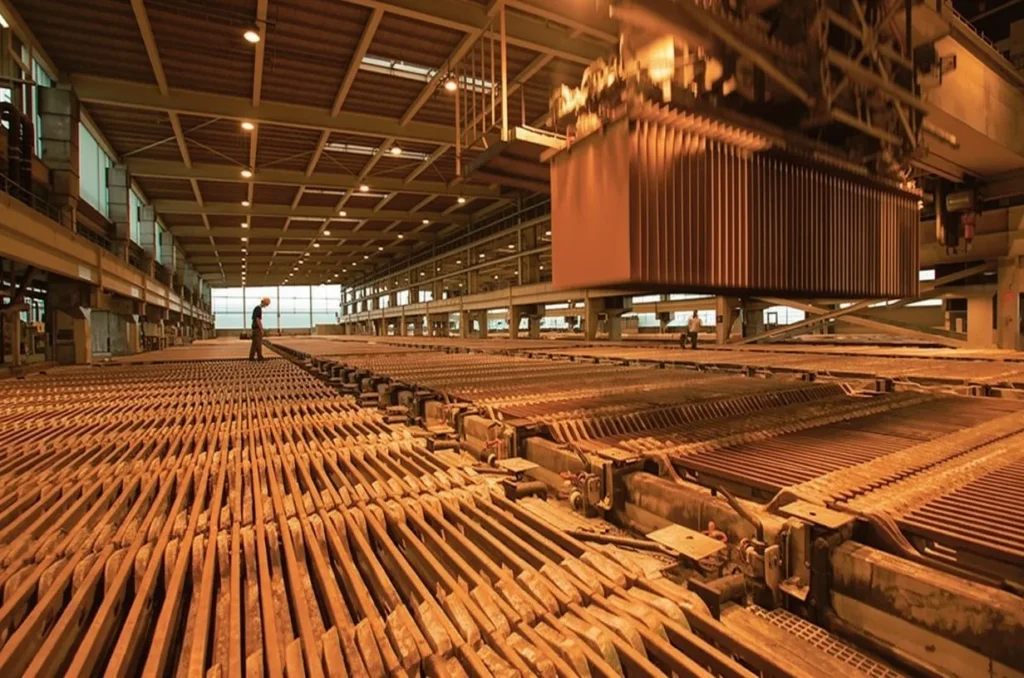
The most immediate issue is sulphuric acid, a key input for copper production through leaching, solvent extraction and electrowinning, known as SxEW.
This production route uses acid to leach copper from ore and produce finished cathode directly at the mine site. It is especially important for lower-grade oxide and secondary copper ores. According to the IEA, more than 15% of global primary copper output depends on this process.
The acid market has been disrupted by two major shocks. The effective closure of the Strait of Hormuz in February choked off a major route for sulphur exports from Gulf countries and Iran, which together account for roughly a quarter of global sulphur supply. China then banned sulphuric acid exports from May through the end of the year, removing another key source of supply for markets outside China.
That combination has turned what is usually an industrial input into a major copper-market risk.
DRC and Chile are the most exposed
The risk is concentrated in countries where copper production depends heavily on acid leaching. The Democratic Republic of Congo and Chile are the most exposed, according to the IEA.
The DRC relies on sulphuric acid leaching for almost 45% of its copper production. Chile is already facing an acid supply crunch and also has a large base of leached copper output. The IEA estimates roughly 1.5 million tonnes of leached production in the DRC and about 1.2 million tonnes in Chile are tied to this part of the supply chain.
The cost impact is also meaningful. For an average SxEW facility, acid accounts for about 13% of costs. In the DRC, that figure rises to 20% because carbonate-rich ore consumes more acid during processing.
The warning signs are already visible:
- Some producers’ sulphur or acid inventories are reportedly down to 30 to 60 days.
- Production cuts are becoming a bigger risk if the squeeze persists.
- Higher acid prices could pressure margins at leaching operations.
- Any curtailments would hit an already tight copper market.
The IEA warned that reduced acid availability from a prolonged export ban or sustained high prices could lead to global SxEW production curtailments. That would add more stress to a market that already has very little slack.
Copper is still recovering from a difficult 2025
The acid squeeze is arriving after a year of major mine disruptions.
In 2025, supply disruptions removed about 1.5 million tonnes of copper from the market, equal to more than 6% of global mined supply. That helped push the refined market into deficit and created the conditions for the current price strength.
Several major operations are still recovering. Freeport-McMoRan’s Grasberg mine was hit by a deadly mudflow in September 2025 and produced about half of its 2024 volumes last year. The mine is not expected to fully recover until the end of next year. Kamoa-Kakula also suffered flooding that cut output by nearly one-third versus guidance, leaving 2026 production below 2024 levels.
That is why the acid issue matters so much. Copper does not have enough spare supply to absorb another major disruption easily. When a market is already tight, even a bottleneck in a supporting input can become a price driver.
Smelter fees show how tight the midstream has become
The stress is also showing up in the midstream copper market.
Despite record copper prices, the annual treatment charge benchmark settled at $0 per tonne for 2026, the lowest ever agreed. Spot fees have been negative since 2024, showing how aggressively smelters are competing for concentrate.
Treatment charges are the fees miners pay smelters to process copper concentrate. When concentrate is abundant, smelters have more bargaining power and treatment charges rise. When concentrate is scarce, miners have more leverage and treatment charges fall.
The current market is sending a clear message: smelter capacity has expanded faster than mine supply.
China is the main reason. The country has accounted for more than 90% of global smelter output growth since 2005, lifting its share from around 15% to roughly half of world supply. Utilization rates outside China have fallen below 70%, compared with about 85% inside China.
China’s largest smelters have agreed to cut production capacity by more than 10% this year, and Beijing has halted around 2 million tonnes of planned new capacity. The IEA, however, says those cuts are not enough to meaningfully balance the market.
Copper’s supply chain is becoming more concentrated
The IEA also warned that copper could face a version of the problem already seen in nickel, where oversupply from the dominant producer pushed competitors out and deepened supply concentration.
That is a serious issue for copper because the metal is central to electrification, defence, grid expansion, industrial machinery and data-centre infrastructure. A supply chain that becomes too concentrated can create geopolitical risk even when the commodity itself remains globally traded.
The concern is not only where copper is mined. It is also where concentrate is processed, where refining capacity sits and who controls the economics between miners and smelters.
The IEA’s warning suggests the current treatment charge system may need to be rethought if market structure continues shifting. A smelting system that depends too heavily on one country creates risk for producers, customers and governments trying to secure copper supply.
The long-term gap has improved, but not enough
The long-term copper outlook has improved slightly, but the market remains structurally short.
Based on the current project pipeline, the IEA expects primary copper supply to fall about 25% short of requirements by 2035 under current policy settings. That is better than the 30% gap projected last year, but still large enough to support the long-term copper thesis.
Africa accounts for much of the improved supply outlook. The DRC and Zambia together add almost 650,000 tonnes to the 2035 projection, helped by Chinese-backed operations, CMOC’s Kisanfu expansion and Barrick’s Lumwana expansion in Zambia.
Other project additions also help:
- Peru adds nearly 300,000 tonnes through Antamina and Tia Maria.
- Russia’s Baimskaya could add almost 350,000 tonnes.
- Canada adds 200,000 tonnes through Teck’s Highland Valley life extension.
- Resolution Copper in the US remains excluded because of legal uncertainty.
The improvement is real, but it does not close the gap. Copper still needs more projects, faster development and major capital investment.
New copper supply remains difficult to build
The reasons for the supply gap are familiar, but they are becoming more serious.
Average copper ore grades have fallen 40% since 1991. Capital intensity for brownfield expansions has increased 65% since 2020, reaching levels usually associated with greenfield projects. Lead times from discovery to production still average around 17 years.
That combination makes copper one of the hardest commodities to scale quickly.
The IEA estimates that copper requires roughly $310 billion of the more than $750 billion in mining and refining investment needed through 2040 across the critical minerals universe. That makes copper the largest investment requirement of any mineral tracked by the agency.
Miners are already responding. Overall critical mineral investment fell 9% in 2025, but spending by copper-focused companies rose 8%. Global mining M&A value also jumped 20%, helped by demand for quality copper assets.
That is one of the more bullish parts of the story. Capital is moving toward copper because the market understands how difficult new supply will be to replace.
Demand still supports the long-term copper trade
The demand side remains the reason the market is willing to pay high prices.
Global refined copper consumption reached almost 28 million tonnes in 2025, up 3.7%. The IEA expects consumption to grow by more than 25% by 2040 under its Stated Policies Scenario, adding roughly 7 million tonnes of new demand.
The main drivers remain the same:
- Power grids need more copper for transmission and distribution.
- Electric vehicles use significantly more copper than traditional vehicles.
- Data centres require copper in power systems, cooling infrastructure and electrical equipment.
- Industrial electrification keeps increasing copper intensity across the economy.
Recycling will help, but it cannot fully solve the gap. The scale of new demand is too large, and copper recycling depends on collection, quality, processing economics and the timing of scrap availability.
That is why copper remains structurally attractive even with near-term disruptions. The market is not only pricing this year’s supply tightness. It is pricing a decade-long challenge.
Forecasters disagree on timing, not the bigger issue
Copper prices remain elevated, but analysts are split on whether the rally has moved ahead of near-term fundamentals.
BMI lifted its 2026 average price forecast to $12,700 per tonne and sees copper reaching $17,000 by 2035. Macquarie forecasts $13,165, while also arguing prices are ahead of fundamentals. Goldman Sachs is holding at $12,650, UBS sees copper reaching $13,000 by year-end and Chile’s Cochilco projects $12,235 for 2026.
Those differences are mostly about timing.
The deeper issue is that copper supply remains difficult to grow, while demand is becoming more strategic. The acid squeeze, mine disruptions and smelter pressure may create volatility, but they also reinforce how tight the copper system has become.
A market that is still expected to be 25% short of requirements by 2035 does not need perfect near-term conditions to remain compelling.
WSA Take
The IEA’s warning adds near-term caution to copper, not a bearish reversal. Sulphuric acid shortages, mine disruptions and strained smelter economics could make supply more volatile over the next few years.
The bigger story is still constructive. Copper demand is rising with grids, EVs and data centres, while new mine supply remains slow, expensive and difficult to permit. If anything, the acid squeeze shows how little margin for error the copper market has left.
Explore More Stories in Commodities
Disclaimer
WallStAccess is a financial media platform providing market commentary and analysis for informational and educational purposes only. This content does not constitute investment advice, a recommendation, or an offer to buy or sell any securities. Readers should conduct their own research or consult a licensed financial professional before making investment decisions.