vidia is securing the memory behind the AI boom
Nvidia is moving to lock down one of the most important inputs in artificial intelligence: high-bandwidth memory.
The company said it has secured AI memory supply from South Korea’s SK Hynix as part of a broader agreement that could be worth $500 billion over several years. The deal includes large-scale data centres expected to come online in 2027 and points to another major wave of AI infrastructure spending.
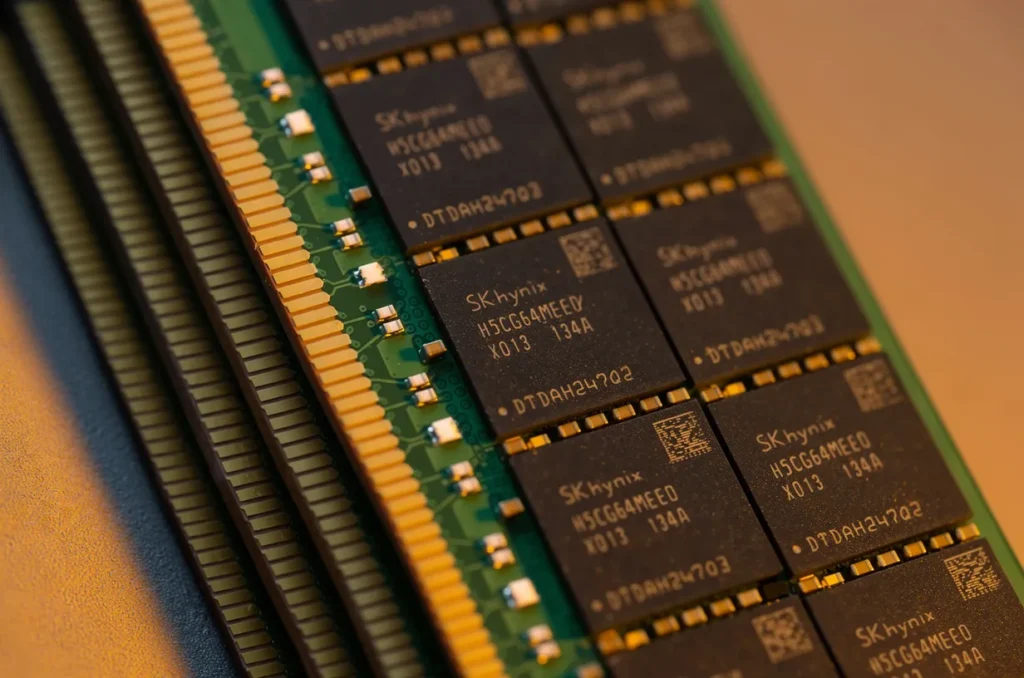
The agreement matters because Nvidia’s GPUs and rack-scale AI systems depend heavily on advanced memory. As demand for AI training and inference grows, HBM has become a critical constraint across the semiconductor supply chain.
Nvidia already dominates AI chips. Now it is trying to make sure the memory needed to support those chips does not become the limiting factor.
SK Hynix gives Nvidia access to a critical supply source
SK Hynix is widely viewed as a leader in HBM production, making it one of the most strategically important suppliers in the AI hardware market.
Nvidia said the expanded relationship will include a co-development opportunity around next-generation SK Hynix AI memory. Raj Mirpuri, Nvidia’s enterprise vice president, said the agreement will help Nvidia secure a stable supply of HBM memory.
That stability is increasingly valuable. The global memory market is already facing shortages as AI systems require more advanced memory, faster bandwidth and tighter integration between GPUs, CPUs and networking equipment.
The market signal is clear: the AI race is no longer only about who can design the best chip. It is also about who can secure the memory, power and data centre capacity needed to deploy those chips at scale.
SK Telecom will build around Nvidia’s Vera Rubin systems
As part of the broader announcement, SK Hynix affiliate SK Telecom will build a cloud business using Nvidia’s Vera Rubin systems.
Nvidia said the project is targeting enough capacity to require 2 gigawatts of power, suggesting a massive data centre buildout involving hundreds of thousands of GPUs.
That scale is important. One gigawatt of AI capacity can represent tens of billions of dollars in infrastructure, depending on the chips, systems, power equipment and data centre requirements involved. A two-gigawatt buildout shows how quickly AI infrastructure commitments are moving into national and industrial-scale projects.
It also shows that AI data centre spending is expanding beyond US hyperscalers. Foreign governments, telecom operators and industrial conglomerates are now becoming larger players in the compute race.
South Korea is becoming a larger AI infrastructure hub
The deal was announced at an AI summit in San Francisco with South Korean officials, including President Lee Jae Myung.
That political backdrop matters because AI infrastructure is becoming a national strategy issue. Countries want domestic or allied access to chips, memory, cloud capacity and data centre infrastructure. South Korea already has major advantages through companies such as SK Hynix, Samsung Electronics and SK Telecom.
Nvidia also said it would invest $1 billion into Naver, a Korean cloud company building data centres around Nvidia GPUs. That project is expected to provide potential customers in South Korea and abroad with access to AI computing capacity before its planned 200 megawatts is completed.
Together, the announcements point to a deeper Nvidia-South Korea AI partnership built around:
- HBM memory supply
- Vera Rubin AI systems
- Cloud infrastructure
- Data centre capacity
- National AI competitiveness
That combination makes South Korea more than a supplier. It becomes part of the AI infrastructure network Nvidia is building globally.
Samsung and Broadcom added to the AI deal wave
The Nvidia-SK Hynix agreement was not the only major South Korean AI infrastructure announcement.
Samsung Electronics said it signed a memorandum of understanding with Broadcom to expand collaboration across memory and foundry technologies. That agreement is estimated to be worth $200 billion and is intended to support next-generation AI infrastructure.
The timing reinforces the same theme. AI infrastructure is pulling together chip designers, memory suppliers, foundries, cloud companies and telecom operators into larger long-term partnerships.
These deals are becoming less transactional and more strategic. Companies are not simply buying chips quarter by quarter. They are securing multi-year supply, co-developing components and building data centre capacity around future AI systems.
Memory is becoming a market power point
Nvidia’s push to secure HBM supply shows how the AI bottleneck is shifting.
In the first phase of the AI boom, the focus was almost entirely on GPUs. The next phase is more complex. Advanced AI systems require massive quantities of HBM, reliable foundry capacity, high-performance networking, power infrastructure and enough data centre space to deploy it all.
That makes memory suppliers more important than they have been in previous cycles. SK Hynix and Samsung are no longer just component vendors. They are becoming essential partners in the AI infrastructure buildout.
For Nvidia, securing supply protects its ability to deliver future systems. For SK Hynix, the deal strengthens its position at the centre of the AI memory market.
WSA Take
Nvidia’s SK Hynix deal shows that AI infrastructure is now a supply-chain race as much as a chip race. GPUs remain the headline product, but HBM memory is becoming one of the key constraints behind future data centre growth.
The size of the agreement also shows how quickly the market is scaling. Nvidia is locking in memory, South Korea is positioning itself as an AI infrastructure hub, and the next phase of the boom will depend on who can secure chips, memory, power and capacity years ahead of demand.
Disclaimer
WallStAccess is a financial media platform providing market commentary and analysis for informational and educational purposes only. This content does not constitute investment advice, a recommendation, or an offer to buy or sell any securities. Readers should conduct their own research or consult a licensed financial professional before making investment decisions.