
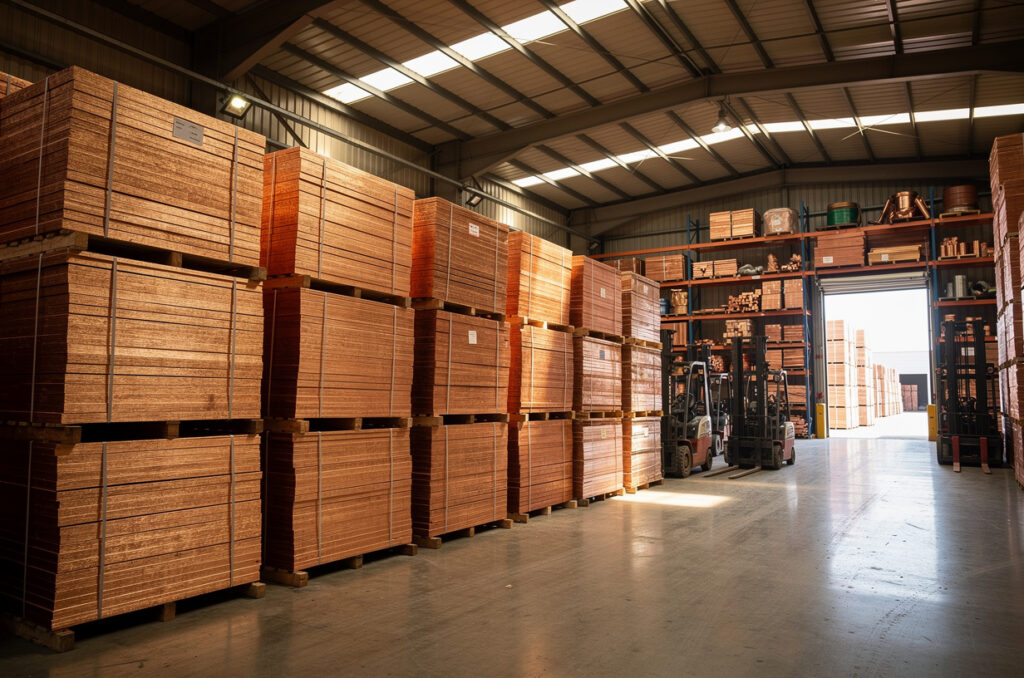
Copper is trading like a market with little slack
Copper climbed Thursday as tightening physical supply and relief from the Federal Reserve’s decision to hold interest rates steady outweighed disappointment over China’s lack of fresh stimulus.
The most active Comex copper contract for September delivery rose as much as 2.9% to $6.4930 per pound. By late morning, it was still up 2.2% at $6.4515, or about $14,224 per tonne.
The move keeps copper close to record territory. The red metal is now up more than 14% in 2026, and Thursday’s high put it within roughly 2.5% of the record set in early June, when the most active contract moved above $6.60 per pound.
On the London Metal Exchange, copper rose 1.3% to $13,753 per tonne, leaving the US premium over the global benchmark at about $470 per tonne.
Physical tightness is becoming harder to ignore
The strongest signal is coming from the physical market.
Nearby LME copper contracts traded at a premium of about $24 per tonne over three-month futures. That condition, known as backwardation, usually signals near-term scarcity. It is a notable shift because the spread spent most of the year in discount.
Inventories are also moving in the wrong direction for buyers. LME stockpiles have fallen by more than 10,000 tonnes this week to 262,300 tonnes. China’s import premiums also reached their highest level since 2022 last week.
The market is watching several tightening signals at once:
- LME backwardation showing near-term scarcity
- Falling exchange inventories
- Stronger China import premiums
- A persistent US premium over global copper prices
That combination suggests the copper rally is being supported by more than speculative buying. The physical market is tightening underneath the headline price move.
Mine supply problems continue to stack up
Copper’s supply side remains the central issue.
Codelco effectively abandoned its long-standing goal of returning production to pre-pandemic levels. New chairman Bernardo Fontaine said there is “no possibility” of reaching the previous target of 1.7 million tonnes within five years.
That matters because Codelco is the world’s largest copper miner. In March, the company guided 2026 production of no more than 1.357 million tonnes, and management is now warning of another difficult year.
Chile has also been hit by deadly storms this month, adding another layer of disruption in one of the world’s most important copper-producing countries.
The International Energy Agency has added a separate warning around sulphuric acid shortages, which could put more than one-seventh of global copper output at risk. That is important because acid is essential for certain leaching operations that produce copper cathode directly at mine sites.
Cobre Panama is one of the few relief valves
One of the main potential sources of supply relief is Cobre Panama, where First Quantum’s restart momentum is building.
The project matters because copper needs large, high-quality sources of supply to balance a market already under pressure from lower grades, project delays and stronger demand from electrification.
A restart would help, but it does not fully solve the supply problem. The broader copper market remains dependent on a limited number of large mines, many of which are facing operational, political or technical constraints.
That is why every major disruption now matters more. Copper does not have much spare capacity to absorb mistakes.
The Fed helped the metals trade
The Fed’s decision to hold interest rates steady gave base metals some relief after cautious trading ahead of the meeting.
The decision was not unanimous. Three of 12 policymakers favoured a quarter-point hike to fight inflation risks tied partly to the US-Iran war. That split matters because higher borrowing costs can pressure growth and demand from metal-consuming sectors.
For copper, the hold was enough to support sentiment. Lower rate pressure can help industrial metals by easing concerns about construction, manufacturing and broader economic activity.
But the Fed backdrop is still not fully supportive. Inflation risk has not disappeared, and any renewed move higher in rates could weigh on cyclical commodities.
China is still holding back
China remains the missing piece of the demand story.
Top officials struck a more supportive tone at Thursday’s Politburo meeting, but Beijing stopped short of announcing major new stimulus. State media said the government would roll out “pragmatic and effective new policies” in a timely manner.
That was not enough for traders looking for a clearer boost to manufacturing, infrastructure or consumption.
A stronger China stimulus package would be a clear positive for industrial metals, especially copper. China remains the world’s largest copper consumer, and any sustained rebound in manufacturing or construction activity can tighten the market further.
For now, copper is rallying despite limited help from Beijing. That makes the supply story even more important.
Copper miners followed the metal higher
Copper equities rallied as stronger prices reinforced the sector’s margin story.
Teck Resources rose as much as 6.1%, matched by merger partner Anglo American, which reported first-half results supported by record copper prices and raised its dividend.
Other major miners also gained:
- Glencore rose as much as 4.6% after reporting a 15% rise in first-half copper output
- Freeport-McMoRan climbed as much as 4.1%
- Southern Copper advanced as much as 3.7%
- Rio Tinto gained as much as 3.3% after posting its best first-half earnings in four years
- BHP rose as much as 3% at its high
The move shows how directly investors are rewarding copper exposure. With prices near records and supply tight, producers with meaningful copper output are seeing stronger market interest.
The copper trade still has momentum
Most LME metals are heading for modest gains in July, but copper remains one of the cleaner stories in the group.
Comex copper is up about 4% for the month, supported by tight physical supply, falling inventories and supply disruption risk. The metal is also benefiting from a long-term demand story tied to power grids, electrification, data centres and industrial investment.
The near-term risk is that copper has already moved quickly and may need stronger demand confirmation from China to break decisively higher.
The bigger point is that supply continues to look fragile. In a market this tight, even modest demand strength can have an outsized price impact.
WSA Take
Copper’s move higher reflects a market with tightening inventories, constrained mine supply and little room for disruption. The Fed hold helped sentiment, but the rally is being driven by physical tightness more than macro optimism. If China adds stimulus or mine disruptions persist, copper prices could stay close to record levels.
Explore More Stories in Commodities
Disclaimer
WallStAccess is a financial media platform providing market commentary and analysis for informational and educational purposes only. This content does not constitute investment advice, a recommendation, or an offer to buy or sell any securities. Readers should conduct their own research or consult a licensed financial professional before making investment decisions.