China controls the copper bottleneck
China has built a commanding position in global copper processing, and veteran metallurgist Phillip Mackey says the West could take decades to catch up.
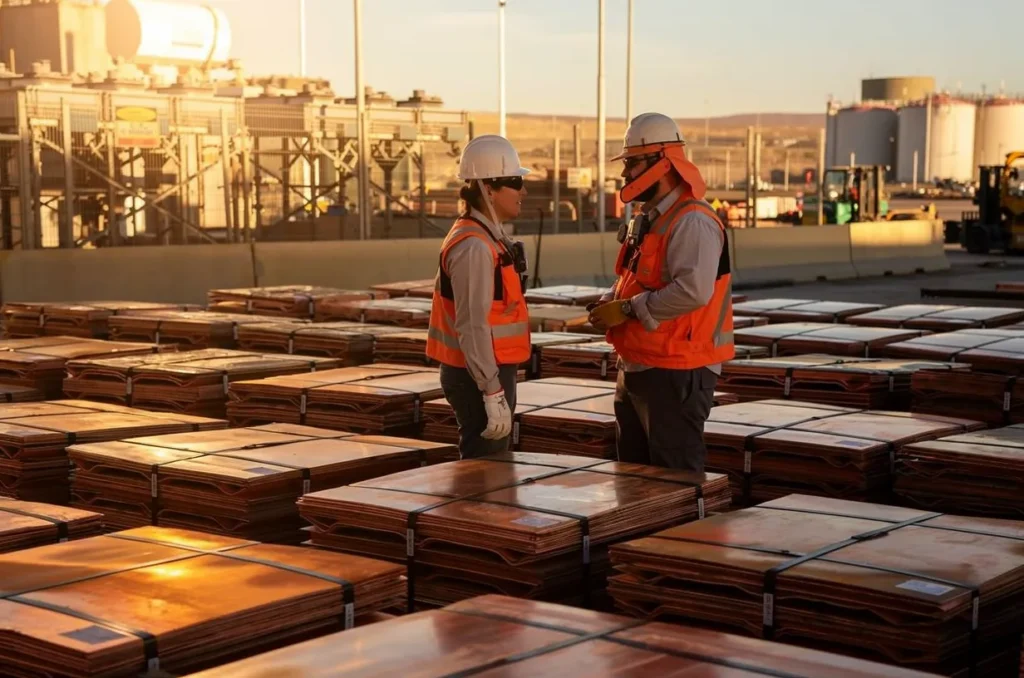
China now smelts about 60% of the world’s copper and refines a similar share. Mackey, a copper smelting specialist with more than five decades in the industry, said China produces about 12 million to 13 million tonnes of refined copper per year out of a global market of roughly 26 million tonnes.
The country mines only about 8% of global copper, but it processes well over half of it.
That imbalance has created a strange supply chain. Western governments want to reduce dependence on China for critical minerals, while Western miners continue shipping concentrate to China to be processed.
Western miners still depend on Chinese smelters
China’s copper smelting network includes roughly 45 smelters, with several among the largest ever built.
Chile, the world’s largest copper producer, now operates only four smelters after closing capacity. The US has also cut back heavily, shrinking from about a dozen copper smelters to just two.
Mackey described China as the “Saudi Arabia of copper smelting,” telling The Northern Miner Podcast that China now controls the market.
The comparison is direct. China does not need to mine most of the copper to control a large part of the copper supply chain. It controls the processing step that turns concentrate into refined metal.
China’s buildout took 25 years
Mackey said China’s dominance was built over roughly 25 years, starting around 2000.
The expansion was not driven by a breakthrough in smelting technology. China used proven processes, state-backed financing and massive industrial scale to build capacity faster than Western countries.
During the same period, Western smelting investment slowed. Environmental permitting, high capital costs and long construction timelines made new projects difficult to approve and finance.
A modern copper smelter can cost several billion dollars and take close to a decade to permit, build and commission.
Processing fees show China’s market power
China’s smelting expansion has changed the economics of copper processing.
Treatment and refining charges, the fees miners pay smelters to process concentrate, have collapsed as Chinese smelting capacity outpaced available concentrate supply.
Those charges have fallen close to zero and at times below zero.
That pricing structure shows the scale of Chinese overcapacity. Smelters are competing aggressively for concentrate, and China’s capacity is setting the price of processing across the global copper market.
Mackey said the economics are unlikely to remain sustainable indefinitely, but they continue to reinforce China’s influence.
The West wants supply security, but capacity is missing
Western governments have introduced critical minerals policies and supply-chain initiatives, but Mackey said they have not yet matched those goals with the funding and permitting changes needed to rebuild smelting capacity.
“We’re mining the copper and then shipping it to China to be smelted and refined and then bringing it back,” Mackey said. “It doesn’t make sense in the long term.”
The issue is not copper availability. Copper is mined across multiple regions and remains widely traded.
The weakness is processing. Western countries still export lower-value raw material and import higher-value refined products.
Recycling can help, but it is not enough
Mackey pointed to copper recycling as one area where North America and Europe still have an advantage.
Scrap can be processed at smaller scale and lower cost than building new primary smelters. That gives Western markets a way to add more domestic copper supply without waiting a decade for new mega-projects.
But recycling cannot close the full processing gap.
Demand for refined copper continues to rise as electrification, renewable power, data centres and grid investment expand. The more demand grows, the harder it becomes to rely on imported refined metal while sending concentrate offshore.
Copper independence will take money, time and permits
The technology exists. The concentrate supply exists. The demand outlook is strong.
What is missing is the decision to spend the money and accept the timeline.
New Western smelting capacity would require long-term government support, faster permitting and industry commitments large enough to justify multi-billion-dollar projects.
Mackey said there is growing interest, but interest alone does not build smelters.
“There’s a lot of interest, but interest and doing are two different things,” he said.
Explore More Stories in Commodities
Disclaimer
WallStAccess is a financial media platform providing market commentary and analysis for informational and educational purposes only. This content does not constitute investment advice, a recommendation, or an offer to buy or sell any securities. Readers should conduct their own research or consult a licensed financial professional before making investment decisions.