
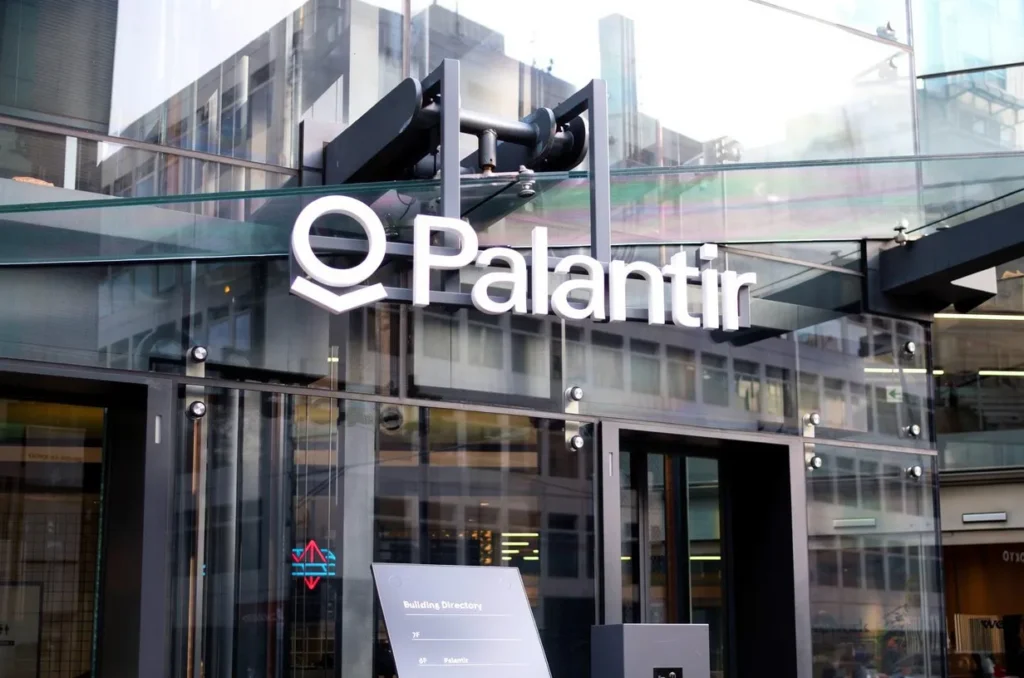
Palantir’s commercial business just accelerated hard
Palantir shares surged after the company reported a second-quarter beat driven by rapid demand for enterprise AI tools.
Revenue rose 93% from a year earlier to $1.94 billion, ahead of LSEG estimates of $1.8 billion. Commercial revenue jumped 149% to $764 million, while government revenue grew 90% to $809 million.
The move was enough to send Palantir stock up sharply Tuesday, with shares rising as much as 29% after the results.
CEO Alex Karp called the quarter “otherworldly” and said the company is benefiting from what he described as the rise of AI sovereignty.
The demand is coming from companies that want control
Palantir is positioning itself around a simple enterprise AI concern: companies want to use AI, but they do not want to hand their data, systems and workflows over to outside model providers.
The company’s software helps organizations connect AI to existing internal data and operations while keeping more control over how that data is used.
Karp said customers are rejecting a future where language model companies have direct access to the core systems of large institutions. In his shareholder letter, he wrote that customers have “declined to become vassal states of the language labs.”
The message is blunt. Palantir is selling itself as the AI layer for companies that want AI capability without surrendering data control to OpenAI, Google, Anthropic, Meta or other frontier AI labs.
Guidance shows the growth is not being treated as one quarter
Palantir expects full-year revenue of $8.15 billion to $8.158 billion.
The company also expects commercial revenue to exceed $3.424 billion for the year, pointing to continued strength from enterprise customers adopting AI tools.
That guidance reinforces the main point from the quarter: Palantir’s commercial business is no longer a side story beside government work. It is becoming the company’s fastest-growing engine.
Citi says the results weaken the bear case
Palantir shares had been down 29% so far this year as investors became more cautious on AI stocks and software valuations.
Citi analysts said the results “further weaken the bear case around rising AI competition,” arguing that Palantir’s data privacy and enterprise integration position gives it a clearer lane in the AI market.
The concern around Palantir has been that larger AI labs or cloud platforms could pressure its growth. The second-quarter numbers cut against that view, at least for now.
Citi said the results reinforce Palantir as “one of the clearest beneficiaries of enterprise AI adoption,” with accelerating commercial demand pushing back against fears of slowing growth.
Palantir is trying to define a separate AI lane
The broader AI trade has been dominated by chips, cloud infrastructure and frontier model labs. Palantir is arguing that enterprise adoption creates a different opportunity.
Its pitch is not just better models. It is control, security and deployment inside existing institutions.
That is why the phrase AI sovereignty is important to the company’s story. Palantir is trying to make itself the default platform for companies and governments that want AI inside their operations without giving outside labs too much power over their data.
The second-quarter numbers gave that argument more weight. Commercial revenue jumped 149%, total revenue nearly doubled, and guidance moved higher.
The stock reaction was about more than one earnings beat. Palantir showed that enterprise AI demand is already turning into revenue at scale.
Disclaimer
WallStAccess is a financial media platform providing market commentary and analysis for informational and educational purposes only. This content does not constitute investment advice, a recommendation, or an offer to buy or sell any securities. Readers should conduct their own research or consult a licensed financial professional before making investment decisions.