A red carpet leads to harder negotiations
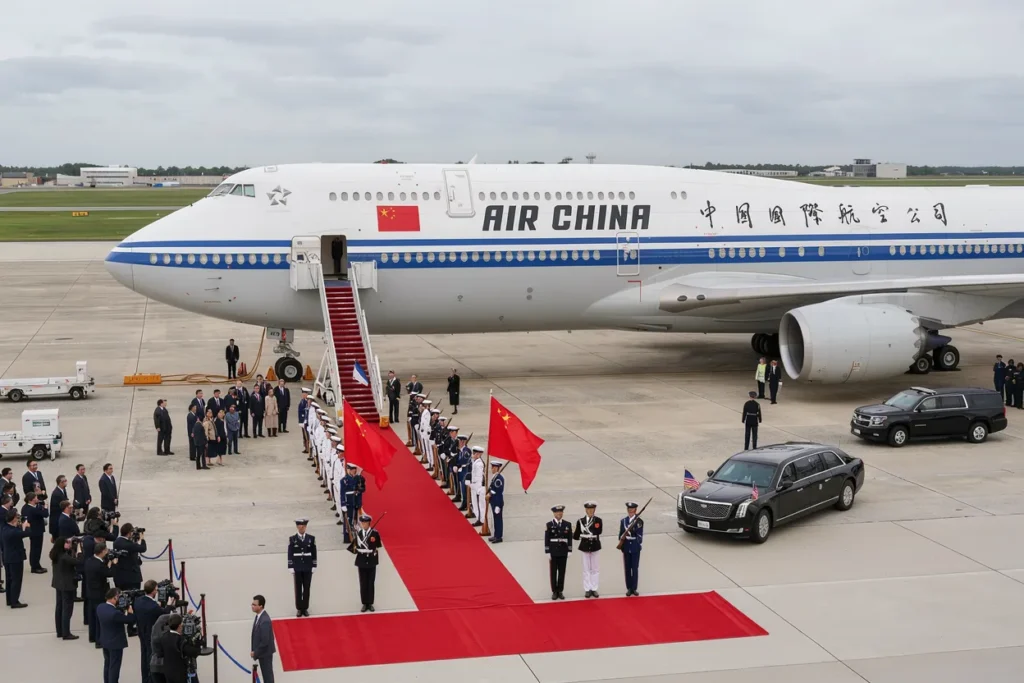
Xi Jinping was waiting at the foot of Air Force One.
The Chinese president’s personal airport greeting for the U.S. President on Wednesday came with a military band and a flyover. Ahead of Thursday’s talks in Shenzhen, the two leaders made room for a conspicuously warm arrival.
American companies face a less welcoming set of rules.
Just two days earlier, Washington had released an interim final rule targeting remote access to advanced American chips. Canadian Prime Minister Mark Carney, also meeting the U.S. President at the APEC gathering, arrived with fresh trade concessions from Beijing and unfinished negotiations with Washington.
The summit’s commercial stakes lie in how reliably companies can access computing power, essential materials and customers—and how long any agreement protects that access.
That is a harder bargain than arranging a cordial reception.
The chip dispute has moved beyond the shipping container
A Chinese company does not necessarily need a powerful processor delivered to China to use it. It can rent computing capacity from a data center elsewhere.
That is the gap Washington is trying to close.
The Bureau of Industry and Security’s November 16 announcement says its rule addresses arrangements through third-country data centers that could circumvent existing restrictions. Treasury and the National Security Council directed its development.
The commercial implications reach beyond chipmakers such as Nvidia (NASDAQ: NVDA). Overseas cloud operators can have legitimate demand and installed equipment while facing new questions about which customers they can serve.
That makes the customer relationship, alongside the hardware’s destination, an important source of policy exposure. Depending on implementation and licensing decisions, restrictions could complicate sales and capacity planning.
For an industry committing capital years ahead, uncertainty over permitted customers can become a financing problem.
China brings a different supply chain advantage
Beijing has leverage further upstream in the industrial economy.
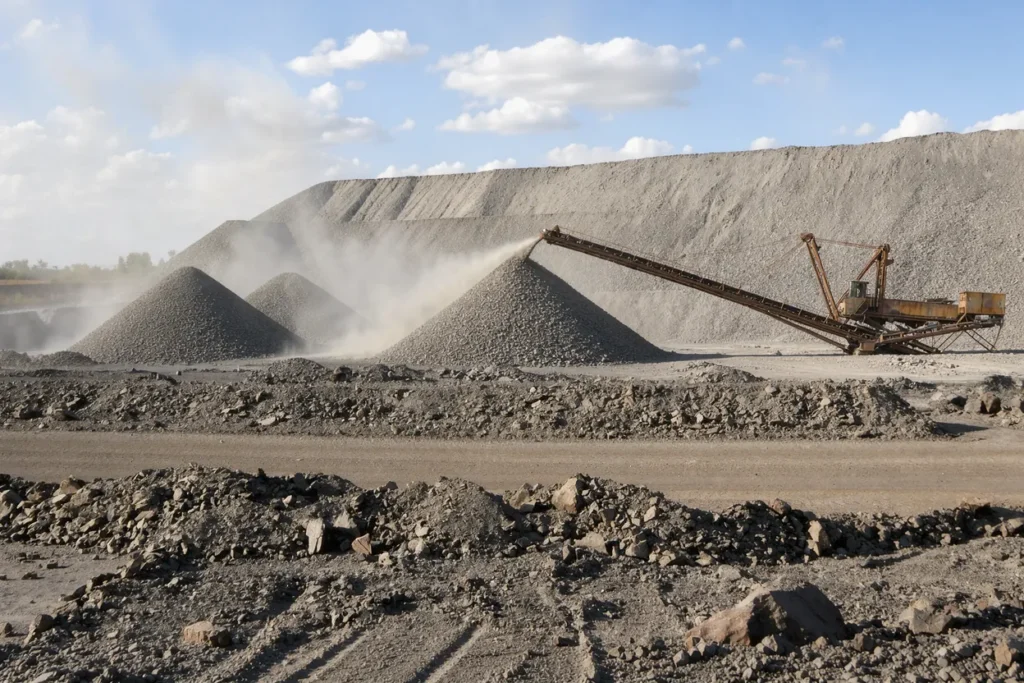
In 2024, China accounted for 91% of magnet rare-earth refining and 94% of sintered permanent magnet production, according to the International Energy Agency. Those magnets support products ranging from electric motors to defense equipment.
A warmer relationship can ease immediate supply concerns. It cannot quickly reproduce that processing network elsewhere.
The current relief also has an expiration date. China recently extended certain critical-mineral export-control waivers until January 10, 2027, alongside other trade measures. The extension preserves breathing room; it does not remove every export restriction.
A manufacturer can use that time to replenish inventory. Building an alternative supply chain requires a much longer commitment.
Thursday’s discussions could change that timetable again. WSA’s continuing coverage follows the policy decisions reaching semiconductor companies, critical-mineral developers and the businesses buying their output.
The Trade Talks End. The Market Story Keeps Moving. Follow It in Your Inbox.
Canada is negotiating while building alternatives
Carney’s visit shows how these disputes can reshape trade beyond the two largest economies.
Canada’s official readout of Wednesday’s U.S. President meeting described work toward a mutually beneficial agreement and a commitment to keep talking. It announced no completed trade settlement.
With China, Ottawa had specific terms to present.
Its November 17 agreement provides additional tariff relief for approximately C$400 million in Canadian exports, including pork and seafood. Canada will extend and expand relief for certain Chinese steel and aluminum products through the end of 2028.
Those are narrow concessions, rather than a wholesale realignment. But they give affected businesses something concrete to plan around while broader U.S. negotiations continue.
For American companies, the consequence is competitive as well as diplomatic. Trading partners can pursue other customers and suppliers while waiting for Washington to settle terms.
Thursday brings the test of durability
The next test comes in Thursday’s meetings involving the U.S. President, Xi and Vladimir Putin.
A broad promise of cooperation could improve sentiment. The commercial substance will sit in the details: which restrictions change, which products qualify and when the relief expires.
A January waiver and a multiyear agreement offer very different foundations for a factory, a data center or a supply contract.
Xi delivered the welcome on Wednesday. Thursday’s negotiations will show whether businesses receive more time—or firmer terms.
Explore More Stories in Markets
Disclaimer
Wall Street Access is an independent financial publisher. Wall Street Access is not a financial advisor. No company mentioned has compensated Wall Street Access for the preparation, publication or distribution of this article. This content is provided for informational and educational purposes only and is not investment advice or a recommendation to buy, sell or hold any security. Investing involves risk, including the possible loss of principal.
Prices, market capitalizations, financial figures and other market data are based on information available as of the date and time of publication and may change without notice. Information is drawn from public sources believed to be reliable but is not guaranteed to be complete or accurate. Opinions and expectations expressed are our own and may change as new information becomes available.
Readers should conduct their own due diligence and contact a licensed financial professional before making any investment decision. Past performance does not guarantee future results. Any material ownership interest or conflict of interest, where applicable, will be disclosed separately.