
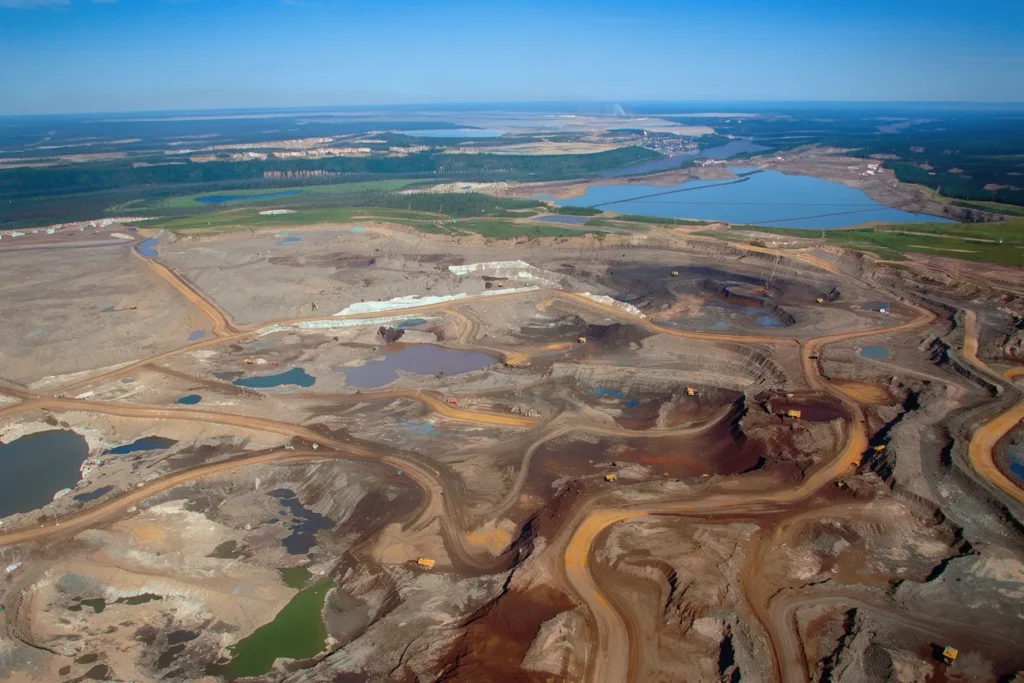
The value sits between the wells and the pipeline
An oil and gas acquisition brings wells, land and production. The facilities connecting them can be just as important.
Canadian Natural Resources’ agreement to buy Advantage Energy for C$2.53 billion, approximately US$1.77 billion, puts that infrastructure in focus.
The assets sit beside Canadian Natural’s existing operations around Grande Prairie, Alberta. They come with these producing wells, development acreage and established gas-processing facilities.
The deal’s appeal lies in combining neighboring resources with infrastructure already in place, potentially making future development more efficient. The financial case will depend on how much value Canadian Natural can extract from that fit.
For a producer of its size, buying the right assets nearby can be more useful than planting a flag somewhere new.
This is more than an oil expansion
The C$13.55-per-share cash offer represents a 25% premium to Advantage’s November 13 closing price. The equity consideration is approximately C$2.26 billion; debt and convertible debentures bring the total to C$2.53 billion.
Canadian Natural cites approximately 79,000 barrels of oil equivalent per day of acquired production.
But “oil equivalent” deserves a moment. It combines oil, liquids and natural gas using an energy conversion; it does not mean every unit earns an oil price.
Advantage’s third-quarter production averaged 86,964 boe/d, including 452 million cubic feet of gas daily and 11,623 barrels of liquids. On that historical mix, roughly 87% was natural gas on an energy-equivalent basis.
That quarterly average is separate from Canadian Natural’s acquisition production figure. It nevertheless shows why gas prices, processing costs and liquids recovery matter alongside crude prices.
The processing plants give the acreage a route forward
Advantage brings the 425-million-cubic-feet-per-day Glacier plant and the newly commissioned 75-million-cubic-feet-per-day Progress plant.
These are processing capacities, not a promise of additional production. Their importance is that future wells can potentially connect to an operating system rather than require an entirely new one.
Advantage’s recent results offer evidence of the economics involved. It reported a 16% sequential reduction in operating expense per boe and a 10% reduction in transportation expense per boe, citing a more focused asset base and increased use of owned infrastructure among the reasons its cost structure improved.
Those improvements predate the takeover. They support the logic of the acquisition without proving what further savings Canadian Natural can achieve.
Advantage also identifies more than 2,200 future drilling locations. That inventory provides options; converting locations into profitable output still requires capital, successful wells and suitable commodity prices.
As consolidation changes who controls those opportunities, WSA follows the assets, infrastructure and public companies shaping the next stage of energy development.
Follow Where Energy’s Next Investment Dollars Are Going—Subscribe to Wall Street Access
A manageable addition still has to earn its price
Canadian Natural produced approximately 1.65 million boe/d in the third quarter. The 79,000 boe/d cited in the acquisition amounts to roughly 5% of that production base.
The addition strengthens an existing operating area rather than transforming the whole company.
It also changes ownership before it changes industry supply. Canadian Natural’s reported production would increase when the assets join its books; additional Canadian output would require further development.
Management values the transaction at approximately C$32,000 per flowing boe/d. That is purchase price divided by daily production—a useful starting comparison, but one that cannot capture gas-versus-oil economics, future drilling costs or field decline rates.
The more revealing outcome will be cash generated after those expenses.
Growth has to share the balance sheet with buybacks
That preserves its stated capital-allocation approach. It also puts the acquisition alongside an existing commitment to shareholders: financing costs and integration spending still affect what the enlarged business can return.
The next formal steps are a shareholder circular expected in December, a vote anticipated in January 2027, and a targeted first-quarter closing, subject to approvals.
After that, the operating results will need to show whether neighboring acreage and shared infrastructure produce the efficiencies behind the purchase price.
Explore More Stories in Commodities
Disclaimer
Wall Street Access is an independent financial publisher. Wall Street Access is not a financial advisor. No company mentioned has compensated Wall Street Access for the preparation, publication or distribution of this article. This content is provided for informational and educational purposes only and is not investment advice or a recommendation to buy, sell or hold any security. Investing involves risk, including the possible loss of principal.
Prices, market capitalizations, financial figures and other market data are based on information available as of the date and time of publication and may change without notice. Information is drawn from public sources believed to be reliable but is not guaranteed to be complete or accurate. Opinions and expectations expressed are our own and may change as new information becomes available.
Readers should conduct their own due diligence and contact a licensed financial professional before making any investment decision. Past performance does not guarantee future results. Any material ownership interest or conflict of interest, where applicable, will be disclosed separately.