
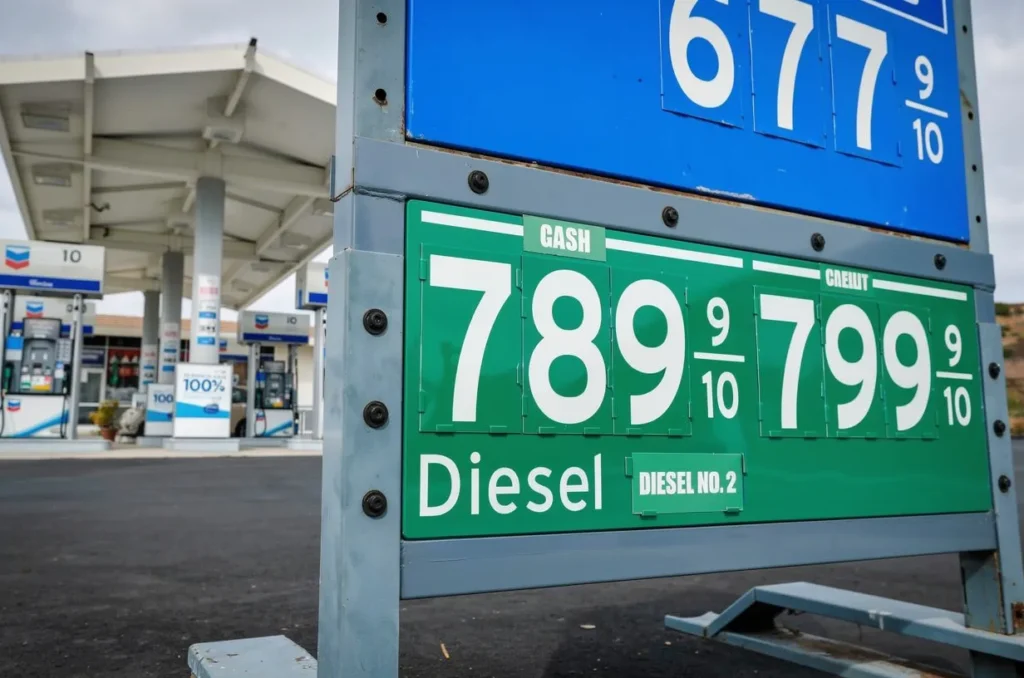
The inflation problem hiding behind the gas pump
Gasoline gets most of the attention when energy prices rise, but diesel touches far more of the physical economy.
Trucks use it to move food and merchandise. Farmers burn it in tractors and combines. Construction companies rely on diesel-powered equipment. Railroads, delivery networks and home heating in the Northeast are all exposed to the same fuel or closely related distillates.
Diesel reached an all-time high of $6.31 per gallon Wednesday, and prices in parts of California have already climbed to roughly $8. J.B. Hunt (NASDAQ: JBHT) says unusually volatile fuel prices are creating at least a $10 million earnings headwind.
The bigger economic impact will arrive more slowly. Freight surcharges take time to move through supply chains, which means today’s diesel spike can become next month’s grocery, delivery and construction inflation.
Convenience stores are already feeling the squeeze. Higher fuel-delivery costs are compressing margins before shoppers even walk inside, where almost every product on the shelf also arrived by truck.
Cheap crude would not necessarily fix this quickly
The unusual part of the current energy shock is that diesel is not simply following crude oil higher.
Global refining capacity has been damaged by disruptions in Russia and the Middle East, leaving much of the remaining available system running near its limits. U.S. refiners also have little spare capacity to absorb another major disruption.
That helps explain why diesel has continued surging even while crude prices have occasionally pulled back.
Oil can become cheaper while the products made from it remain scarce. If refineries cannot produce enough diesel, jet fuel and heating oil, falling crude prices only solve part of the problem.
This also makes the shock harder to reverse. Supply-chain experts cited in the report suggested diesel could take a year or longer to return toward $4 per gallon even if geopolitical conditions improve.
Some companies can pass the cost along. Others cannot.
Large trucking companies often use fuel surcharges and wholesale purchasing agreements to protect margins. Smaller carriers and owner-operators have fewer options, making them more vulnerable when prices move this quickly. If enough smaller operators reduce capacity, freight rates can rise further even after fuel prices stabilize.
Farmers face a similar squeeze because diesel is required both to operate machinery and transport crops and fertilizer. Construction companies can be caught completing projects at previously agreed prices while equipment and transportation costs rise underneath them.
Refiners sit on the other side of the trade. Tight supplies of diesel and other refined products can widen crack spreads, increasing margins for refiners able to keep plants running. Federal Reserve Chair Kevin Warsh specifically pointed to those refining spreads when discussing inflation after this week’s rate hike.
Home heating could become the next pressure point. Heating oil closely tracks diesel, and households that rely on it could face bills as much as 31% higher this winter if current prices persist.
Diesel could keep inflation sticky long after the initial oil shock
The Fed can raise rates to cool demand, but it cannot repair damaged refineries or reopen disrupted energy infrastructure.
That leaves the economy exposed to a form of inflation that monetary policy has limited ability to solve quickly. Higher diesel costs can weaken consumer spending while simultaneously raising the price of moving goods, producing an uncomfortable mix of slower growth and persistent inflation.
Much now depends on refinery availability, Russian fuel production and how quickly Middle Eastern export routes normalize.
If diesel stays near record levels into winter, the next inflation wave may not begin at the gas pump. It may already be working its way through the trucks delivering almost everything Americans buy.
Explore More Stories in Commodities
Disclaimer
Wall Street Access is an independent financial publisher. Wall Street Access is not a financial advisor. No company mentioned has compensated Wall Street Access for the preparation, publication or distribution of this article. This content is provided for informational and educational purposes only and is not investment advice or a recommendation to buy, sell or hold any security. Investing involves risk, including the possible loss of principal.
Prices, market capitalizations, financial figures and other market data are based on information available as of the date and time of publication and may change without notice. Information is drawn from public sources believed to be reliable but is not guaranteed to be complete or accurate. Opinions and expectations expressed are our own and may change as new information becomes available.
Readers should conduct their own due diligence and contact a licensed financial professional before making any investment decision. Past performance does not guarantee future results. Any material ownership interest or conflict of interest, where applicable, will be disclosed separately.