Cheaper oil gives gold a little breathing room
Gold found some relief Monday from an unlikely direction: easing inflation fears.
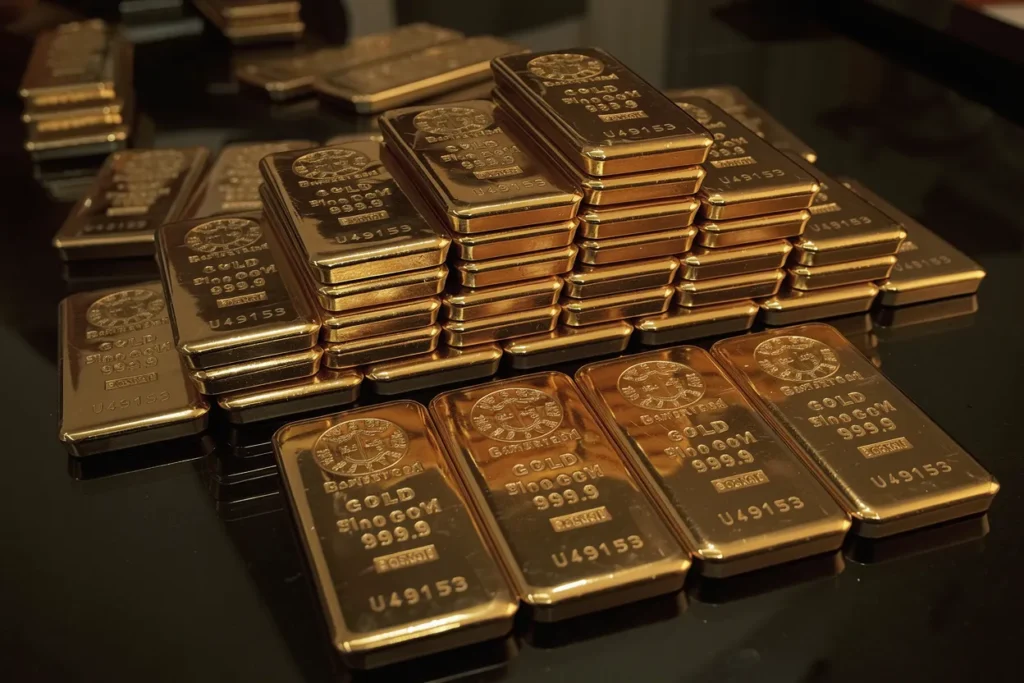
Spot gold rose 0.3% to $4,007.57 an ounce by 9:23 a.m. Eastern, recovering from Friday’s $3,975 low, its weakest level since July 20. December gold futures gained 0.4% to $4,021.80. Oil retreated on hopes of easing U.S.–Iran hostilities, although prices remained near six-month highs.
That reaction captures gold’s current difficulty. An energy shock can increase demand for protection while also raising inflation pressure—and the likelihood of higher interest rates.
Gold pays no interest. When investors expect better returns from cash and bonds, holding bullion becomes a more expensive choice.
Our view is that a sustained recovery needs the expected interest-rate path to become less threatening. Monday’s oil decline helps at the margin. Whether that relief lasts depends on what happens to inflation, yields and the dollar.
Wednesday’s pause could leave December wide open
The Fed enters its October 27–28 meeting after raising its benchmark rate by a quarter percentage point in September to 3.75%–4%. Inflation remained elevated when that increase was approved.
Markets widely expect rates to stay unchanged Wednesday. Monday morning’s pricing nevertheless placed the probability of a December increase at approximately 82%. Those expectations can shift quickly as economic data and market prices change.
For gold, that leaves an important distinction between skipping one increase and finishing the tightening cycle.
A widely anticipated hold may offer limited reassurance if the accompanying statement keeps another hike firmly in play. Investors will be looking for evidence that officials are becoming more comfortable with inflation—or preparing to act again.
Subscribe for Our Take on Gold’s Next Test
Buyers have been showing up through the decline
September provides a useful warning against reading too much into any single source of demand.
Gold fell 8.5% during the month, even as global gold ETFs attracted approximately $10 billion, equivalent to 67 tonnes. Over the same period, the U.S. 10-year Treasury yield climbed 53 basis points to 5.3%, the dollar index gained 2%, and managed-money positions in gold futures contracted sharply.
Some investors were adding exposure while others were reducing it. Rising yields and a stronger dollar accompanied a price decline despite substantial ETF buying.
That makes the next move in yields especially relevant to gold’s recovery. Continued investment demand could provide a stronger foundation if the financial pressure working against it starts to ease.
Thursday can change Wednesday’s verdict
This week’s calendar creates an awkward sequence.
The Fed announces its decision Wednesday, followed by September’s Personal Income and Outlays report and the first estimate of third-quarter GDP on Thursday, October 29. The spending report includes the PCE inflation measure closely watched by policymakers.
The latest published PCE reading showed annual inflation at 3.4% in August, still above the Fed’s 2% objective.
Thursday’s figures could therefore change December expectations almost immediately after this week’s decision. Softer inflation would strengthen the case for patience. Persistent price pressure alongside resilient growth could leave another increase looking more likely.
Gold has regained $4,000. The more consequential recovery would be one accompanied by falling yields and reduced expectations for further tightening. This week will help establish whether Monday’s breathing room can become something more durable.
Explore More Stories in Commodities
Disclaimer
Wall Street Access is an independent financial publisher. Wall Street Access is not a financial advisor. No company mentioned has compensated Wall Street Access for the preparation, publication or distribution of this article. This content is provided for informational and educational purposes only and is not investment advice or a recommendation to buy, sell or hold any security. Investing involves risk, including the possible loss of principal.
Prices, market capitalizations, financial figures and other market data are based on information available as of the date and time of publication and may change without notice. Information is drawn from public sources believed to be reliable but is not guaranteed to be complete or accurate. Opinions and expectations expressed are our own and may change as new information becomes available.
Readers should conduct their own due diligence and contact a licensed financial professional before making any investment decision. Past performance does not guarantee future results. Any material ownership interest or conflict of interest, where applicable, will be disclosed separately.