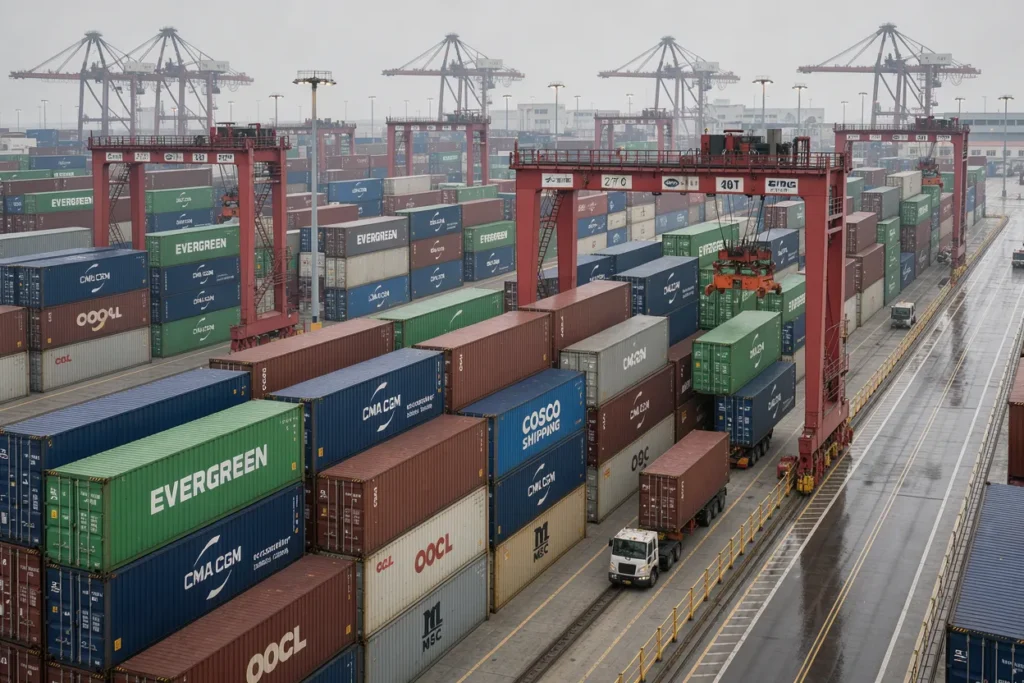

Brent holds its weekly gain despite a Friday pullback
Brent crude was up about 2.3% for the week Friday morning, on course to end a three-week losing streak. Renewed attacks on tankers in the Strait of Hormuz and a partial halt at a Saudi refinery have raised fresh doubts about how reliably the Gulf can get oil and fuel to market.
By 11:04 a.m. ET, delayed quotes showed January Brent at $94.73 a barrel and January WTI at $83.40. Brent was down 1.9% on the day but still above last Friday’s $92.57 settlement. U.S. crude was little changed from a week earlier.
Saudi Arabia’s energy ministry said a Thursday attack killed a worker and temporarily halted some operations at the Jazan refinery operated by Saudi Aramco (Tadawul: 2222). Disruptions at a refinery affect the supply of finished fuels. Trouble in the strait can delay cargoes that refiners elsewhere are counting on.
Crude exports recovered faster than fuel shipments
Gulf crude exports excluding Oman reached 15 million barrels a day in October, equivalent to 82% of prewar levels, according to the International Energy Agency’s November oil report. Gulf shipments of refined products and LPG were still running at roughly half their prewar levels.
That gap matters for a buyer that needs diesel on a tight schedule. More crude reaching the market helps, but the oil still has to be processed and the fuel delivered. A partial refinery outage can make that harder even if global oil inventories are starting to build.
OPEC+ is expected to hold output targets steady
OPEC+ has reportedly reached an agreement in principle to keep first-quarter 2027 production targets steady at Sunday’s meeting. The IEA expects a global oil surplus this quarter and a larger one next year as Gulf production recovers.
An unchanged target would keep the near-term focus on how reliably cargoes move and refineries run. If more cargoes load and arrive on schedule, the market has room to build inventories. If delays persist, buyers with a delivery deadline may have to pay up for the oil or fuel they can get.
Explore More Stories in Commodities
Disclaimer
Wall Street Access is an independent financial publisher. Wall Street Access is not a financial advisor. No company mentioned has compensated Wall Street Access for the preparation, publication or distribution of this article. This content is provided for informational and educational purposes only and is not investment advice or a recommendation to buy, sell or hold any security. Investing involves risk, including the possible loss of principal.
Prices, market capitalizations, financial figures and other market data are based on information available as of the date and time of publication and may change without notice. Information is drawn from public sources believed to be reliable but is not guaranteed to be complete or accurate. Opinions and expectations expressed are our own and may change as new information becomes available.
Readers should conduct their own due diligence and contact a licensed financial professional before making any investment decision. Past performance does not guarantee future results. Any material ownership interest or conflict of interest, where applicable, will be disclosed separately.