Demand is showing up in the results
CoreWeave gave the AI trade two things it needed Wednesday: evidence that customers are spending and a clearer explanation of how it intends to fund the capacity they want.
Shares jumped as much as 23% during Wednesday’s trading after the cloud provider reported $3.66 billion in third-quarter revenue and lifted its annual sales outlook to $13 billion–$13.3 billion.
CEO Michael Intrator told CNBC that demand for its remaining 2027 capacity was ten times the available supply.
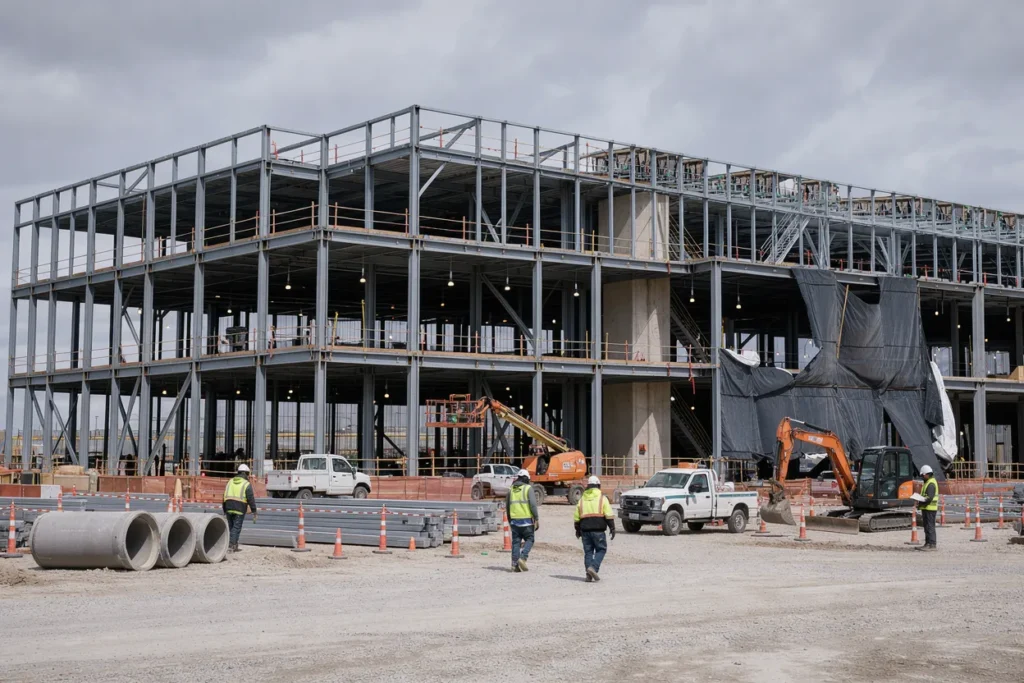
CoreWeave rents access to the chips and computing systems used to train and run AI. Building those systems requires substantial spending before the associated customer revenue arrives.
That gap has become central to the debate over its business.
Customer commitments are becoming a source of financing as well as future revenue. That gives CoreWeave a clearer route from its order book to operating data centers, even while its interest burden keeps rising.
Customers are helping close the funding gap
Management expects approximately $9 billion in prepayments and deposits over the next three months.
These are expected collections from signed contracts, rather than cash already received during the third quarter. They bring money forward, helping CoreWeave cover spending before it finishes delivering the contracted services.
The earnings call revealed another useful detail: more than $3 billion relates to renewing contracts on existing infrastructure, where management says no additional capital expenditure is needed.
That makes the installed fleet important to the funding story. Equipment already purchased can secure another customer commitment and generate cash without requiring another equivalent hardware investment.
Prepayments still carry an obligation to provide service. Their value lies in the timing: customers help fund the capacity they will later consume.
CoreWeave’s rebound raises a question for the rest of the AI trade: who can turn a full order book into a funded project? Follow that story across cloud providers, chipmakers and power suppliers with Wall Street Access.
Follow the Money Behind AI’s Expansion
A customer contract changes the lender’s calculation
The other part of the plan involves borrowing against specific infrastructure and customer contracts.
With unsecured corporate debt, lenders rely on the broader company’s ability to repay. Asset-level financing gives lenders identified collateral and a clearer view of the contractual cash flows intended to service the loan.
CoreWeave can draw that funding as equipment is purchased and delivered. Customer payments then help cover interest and principal over the contract’s life.
Management does not intend to issue additional parent-level unsecured debt at current yields through 2027. Instead, it expects the next contract-backed facility to carry financing costs of approximately 7%–7.5%, based on current benchmark rates.
That facility has yet to close. The expected terms describe management’s discussions with lenders, not a completed refinancing of the whole company.
The shift could improve the economics of new capacity. Existing borrowings and repayment obligations remain.
Operating progress still meets a heavy interest bill
CoreWeave’s third quarter showed improvement in the underlying business: GAAP operating income reached $207 million.
Net interest expense was $846 million, however, and the company finished the quarter with a $709 million net loss.
That explains why access to reasonably priced funding matters so much. More revenue can improve operating performance while financing costs continue to absorb the gains.
The construction program remains large. CoreWeave now expects $37 billion–$39 billion in capital expenditure this year, raising the lower end of its previous range as it anticipates delivering infrastructure sooner.
Its $132.5 billion revenue backlog supplies a substantial pipeline, but recognition still depends on meeting delivery and service-availability requirements.
Wednesday’s rally rewarded a clearer funding plan. Closing the next facility and collecting the expected customer payments over the coming three months will show how much of that confidence is justified.
Disclaimer
Wall Street Access is an independent financial publisher. Wall Street Access is not a financial advisor. No company mentioned has compensated Wall Street Access for the preparation, publication or distribution of this article. This content is provided for informational and educational purposes only and is not investment advice or a recommendation to buy, sell or hold any security. Investing involves risk, including the possible loss of principal.
Prices, market capitalizations, financial figures and other market data are based on information available as of the date and time of publication and may change without notice. Information is drawn from public sources believed to be reliable but is not guaranteed to be complete or accurate. Opinions and expectations expressed are our own and may change as new information becomes available.
Readers should conduct their own due diligence and contact a licensed financial professional before making any investment decision. Past performance does not guarantee future results. Any material ownership interest or conflict of interest, where applicable, will be disclosed separately.