
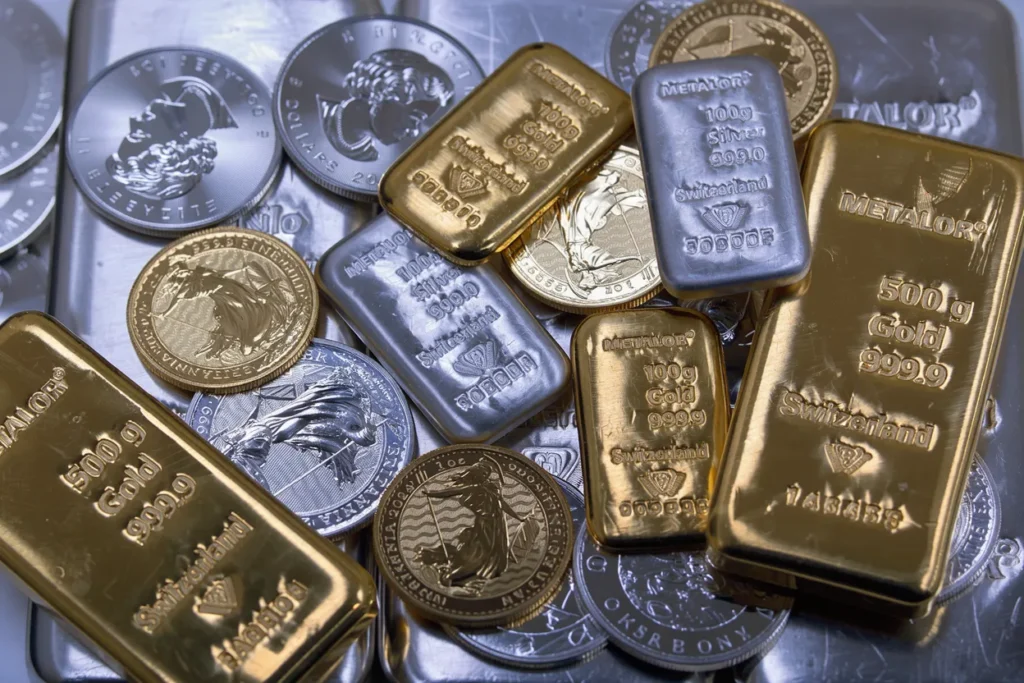
When investors need cash, gold can be first to go
Gold is supposed to offer shelter when stocks tumble. Last week, it helped pay the bill.
As the AI trade unraveled, precious metals fell alongside equities, copper and Bitcoin. Investors facing losses or demands for additional collateral had something more immediate to worry about than their long-term view of bullion: raising cash.
Monday brought some relief. Spot gold climbed to $3,636 an ounce during Asian trading, while silver later pushed through $44 as New York trading began. The S&P 500 opened more than 4% higher.
The reversal followed a striking stretch of shared losses. Between October 30 and November 20, gold and the S&P 500 each fell 8.8%. Silver dropped 15.4%, matching copper’s decline.
That doesn’t make gold a technology stock. It shows how a scramble to reduce exposure can temporarily overwhelm the reasons people bought different assets in the first place.
The World Gold Council has documented similar gold selling during the financial crisis and the pandemic, when investors used its deep liquidity to meet margin calls and other funding needs.
A readily available buyer is an advantage—until everyone needs one at once.
The selling pressure has eased, but the rate problem remains
There were other pressures on bullion before stocks plunged.
Gold pays no interest. Higher inflation-adjusted bond yields therefore increase the income forgone by holding it, while a stronger dollar makes dollar-priced metal more expensive for buyers using other currencies.
Saxo’s assessment of the sell-off identifies those pressures alongside investors’ growing need for cash. Importantly, it also notes that dollar strength alone does not establish a broader funding shortage.
Monday’s rebound can reflect less urgent selling without resolving the interest-rate outlook. During last week’s stock-market plunge, Treasury yields fell, yet gold continued to struggle. The usual relationship between bonds and bullion was being pulled in several directions.
That makes the next inflation release consequential across stocks, bonds and metals.
When Stocks and Gold Fall Together, the Headline Isn’t the Whole Story. Get Market Coverage in Your Inbox.
Silver’s supply deficit tells only part of its story
Silver has an additional complication: factories consume it.
The Silver Institute’s November outlook forecasts a 35-million-ounce supply deficit in 2026, the market’s sixth consecutive annual shortfall. Yet it also expects industrial demand to fall 3% to 640 million ounces.
Demand outside solar manufacturing is growing. Within solar, however, manufacturers are using less silver per cell and adopting substitutes. Those changes can offset growth elsewhere, even in a metal closely associated with electrification.
Nor does an annual deficit mean buyers immediately run out of metal. Existing holdings can supply the difference. The institute says a narrower shortfall and silver released through exchange-traded-product selling have helped ease physical market tightness.
That explains how silver can face a multiyear supply deficit and still suffer a sharp price decline. Investment flows, available inventories and industrial consumption operate on different clocks.
For both metals, Wednesday provides the next immediate test. The October PCE inflation report is scheduled for November 25 at 8:30 a.m. ET. September’s annual reading was 3.6%, with core inflation at 3.1%.
A softer report could ease the rate pressure on bullion. Another stubborn reading would leave Monday’s recovery facing the same obstacle that preceded the washout: expensive money.
Explore More Stories in Commodities
Disclaimer
Wall Street Access is an independent financial publisher. Wall Street Access is not a financial advisor. No company mentioned has compensated Wall Street Access for the preparation, publication or distribution of this article. This content is provided for informational and educational purposes only and is not investment advice or a recommendation to buy, sell or hold any security. Investing involves risk, including the possible loss of principal.
Prices, market capitalizations, financial figures and other market data are based on information available as of the date and time of publication and may change without notice. Information is drawn from public sources believed to be reliable but is not guaranteed to be complete or accurate. Opinions and expectations expressed are our own and may change as new information becomes available.
Readers should conduct their own due diligence and contact a licensed financial professional before making any investment decision. Past performance does not guarantee future results. Any material ownership interest or conflict of interest, where applicable, will be disclosed separately.