A major funding round just validated one of biotech’s most-watched AI platforms
Isomorphic Labs said it raised $2.1 billion in a new financing round, with Thrive Capital returning as lead investor and existing backers Alphabet and GV also participating, alongside new investors including MGX, Temasek, CapitalG, and the UK Sovereign AI Fund. That is a large raise by any standard, but it matters even more because it puts fresh capital behind one of the most high-profile attempts to turn frontier AI into real drug discovery output.
This is not just another AI company chasing a healthcare angle
Isomorphic was founded in 2021 as a spinout from Google DeepMind, led by Demis Hassabis, and built around the idea that AI can radically improve the way drugs are designed. Its roots matter because this is not a generic software platform trying to bolt itself onto biotech. It comes directly out of the DeepMind ecosystem that produced AlphaFold, the protein-structure prediction breakthrough that helped reshape how researchers think about computational biology.
The real bet is on AI compressing one of medicine’s slowest, most expensive processes
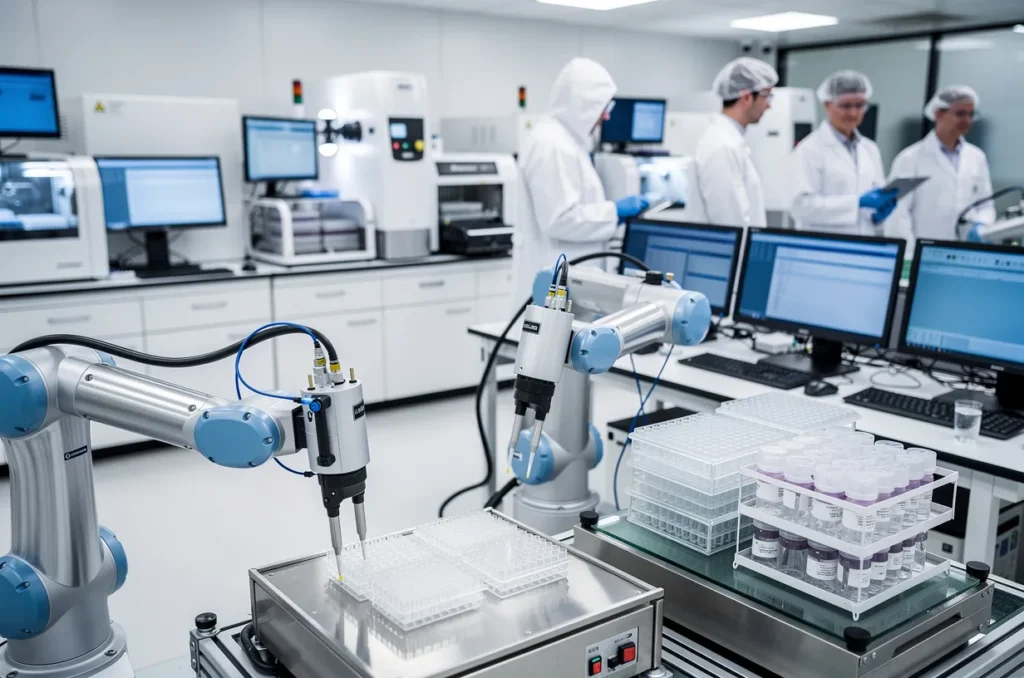
The attraction of this sector is simple. Traditional drug discovery is slow, costly, and full of failure points. AI-driven drug design promises to improve target selection, molecular design, and prediction of how compounds behave before they ever reach the clinic. Isomorphic says its own Isomorphic Labs Drug Design Engine, or IsoDDE, is designed to move beyond structural prediction into real-world drug design, with the company claiming materially stronger predictive performance and a scalable foundation for discovering novel molecules.
That is why this funding round matters beyond one company. It is another sign that investors still believe AI in healthcare can become a real commercial platform, not just a research story. Reuters framed the raise as part of a broader push to show that AI can accelerate R&D and shorten drug discovery timelines across the sector.
The company is now under more pressure to turn platform promise into pipeline progress
The next step is where the real test begins. Reuters reported in January that Isomorphic now expects its first clinical trials by the end of 2026, later than the earlier goal of reaching trials by the end of 2025. That delay does not kill the story, but it does sharpen the market’s focus. Investors are no longer just funding scientific ambition. They are increasingly funding the path toward actual human data.
That is why this capital matters. Isomorphic said the new money will help scale its business globally and progress its drug candidate pipeline. In biotech, especially AI biotech, the difference between an exciting platform and a real company often comes down to whether the science can survive the move from model to molecule to clinic.
Strategic pharma ties help separate Isomorphic from the crowded AI-health field
Another reason the company stands out is that it is already working with major drugmakers. Isomorphic’s official partnership materials say it has a strategic research collaboration with Eli Lilly focused on small-molecule therapeutics and a broader multi-target collaboration with Johnson & Johnson across several modalities, including biologics and small molecules. It has also expanded work with Novartis, which matters because large pharma partners do not remove execution risk, but they do provide validation that the platform is worth serious attention.
That is important in a sector where many AI-biotech stories still feel early, theoretical, or hard to separate from marketing. Isomorphic has capital, pedigree, and big-company relationships. That does not guarantee success, but it does make the company more substantial than a typical preclinical AI story.
Why the market should care about this sector now
The broader AI drug discovery sector is important because it sits at the intersection of two themes investors care deeply about: the search for practical AI applications and the massive economic value locked inside better drug development. If AI can meaningfully improve hit rates, cut timelines, or reduce failed programs, the payoff would be enormous across biotech and pharma. That is why capital keeps flowing into the space even though the real-world proof is still developing.
This raise reinforces that point. Investors are not just paying for a concept deck anymore. They are backing platforms they believe could become infrastructure for the next generation of drug design.
WSA Take
Isomorphic’s $2.1 billion raise is a big deal because it confirms that serious capital still wants exposure to one of the most ambitious corners of the AI-healthcare trade. The company has DeepMind roots, AlphaFold credibility, large pharma partnerships, and now a much bigger balance sheet to push toward clinical execution.
For investors, the key takeaway is that AI drug discovery is moving deeper into its prove-it phase. The promise is still huge, but the next value inflection will not come from another funding headline alone. It will come from whether companies like Isomorphic can turn powerful models into actual medicines that make it into the clinic.
Explore More Stories in Health
Disclaimer
WallStAccess is a financial media platform providing market commentary and analysis for informational and educational purposes only. This content does not constitute investment advice, a recommendation, or an offer to buy or sell any securities. Readers should conduct their own research or consult a licensed financial professional before making investment decisions.