Copper has become the market’s clearest AI metal
The market has already made one thing pretty clear: copper is no longer trading like just another cyclical industrial metal. Reuters reported earlier this year that copper’s rally has been driven by tightening supply and rising demand tied to AI data centers, grid upgrades, and electrification, while the IEA noted that copper briefly surged above $14,500 per tonne in January as the market started pricing more serious strategic tightness.
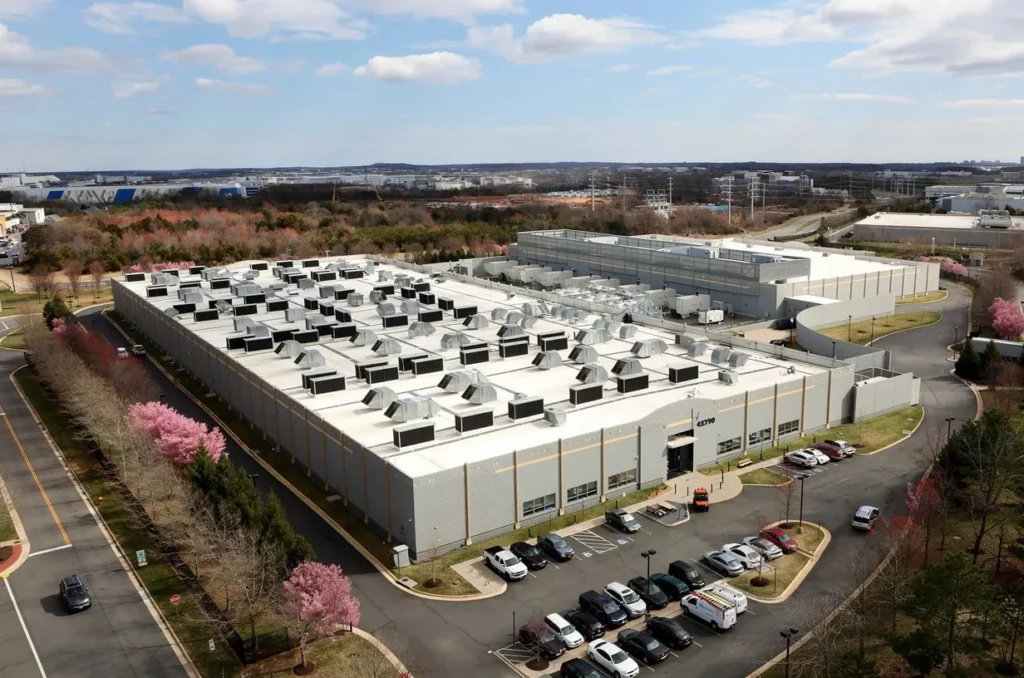
That matters because copper sits almost everywhere the AI buildout becomes physical. It is in wiring, transformers, power distribution, cooling systems, and data center infrastructure. The further AI moves from model hype into real-world deployment, the more copper starts looking like one of the purest material expressions of that trend.
Silver is starting to get pulled into the same trade
Silver’s move matters because it suggests investors are broadening the way they think about AI-related industrial demand. The USGS says silver is widely used in electrical circuits, batteries, and solar cells, which means it has much more real industrial exposure than many generalist investors tend to associate with it.
That does not make silver a perfect mirror of copper. Copper is still the cleaner read-through on large-scale construction and electrification. But silver’s recent strength alongside copper suggests the market is increasingly paying attention to the wider hardware stack behind AI, not just the semiconductors themselves.
This is becoming a real-world buildout, not just an AI narrative
The reason this matters is that AI is increasingly demanding real infrastructure, not just code and cloud subscriptions. Reuters reported this week that U.S. electricity demand is expected to hit new records in 2026 and 2027, with data centers supporting AI as one of the main drivers.
That is the deeper shift the market is starting to price. Data centers do not run on chips alone. They need more:
- power
- wiring
- cooling
- backup systems
- physical expansion of industrial capacity
That is why the AI trade is increasingly spreading beyond software and semis into metals, utilities, electrical equipment, and industrial suppliers.
Gold sitting out the move says something important
The contrast with gold is useful. When copper and silver are firm while gold is softer, the market is often drawing a line between hard-infrastructure demand and safe-haven demand. That does not mean gold has lost relevance. It means the market is currently leaning more toward pricing a buildout cycle than a panic cycle.
That is an important distinction. Copper and silver moving together is not just a metals story. It is a message about what investors think the next phase of AI actually looks like.
China helps at the margin, but the bigger story is structural
There may be a China angle to the move, especially with improving sentiment around industrial demand. But the bigger story looks broader than that. Reuters reported that new investors have been buying into copper exposure specifically because of the long-term demand case tied to AI, while the IEA has emphasized the growing strategic pressure around copper supply.
That is why this feels more structural than cyclical. The market is not just pricing a short rebound in factory demand. It is increasingly pricing a world where AI becomes a major source of physical capital spending.
WSA Take
Copper remains the clearest metal signal for the AI buildout, but silver’s recent strength suggests the market is starting to widen the trade. That is important because it reinforces a bigger idea: AI is no longer being priced only as a software revolution. It is also being priced as a power, wiring, electronics, and infrastructure boom.
For investors, that changes the map. The next phase of AI upside may not just belong to model builders and chip designers. It may increasingly belong to the physical inputs that make the whole system possible.
Explore More Stories in Commodities
Disclaimer
WallStAccess is a financial media platform providing market commentary and analysis for informational and educational purposes only. This content does not constitute investment advice, a recommendation, or an offer to buy or sell any securities. Readers should conduct their own research or consult a licensed financial professional before making investment decisions.