
Small caps have finally broken out of their long period of underperformance
US small-cap stocks are closing out their strongest first half in 35 years.
The Russell 2000 advanced more than 21% through the first six months of 2026, reversing years in which smaller companies consistently trailed the largest members of the S&P 500.
The rally has not followed the traditional small-cap playbook. Historically, smaller companies tend to outperform when domestic growth accelerates, credit conditions ease and investors move into banks, industrials and consumer businesses.
This time, technology has led the move.
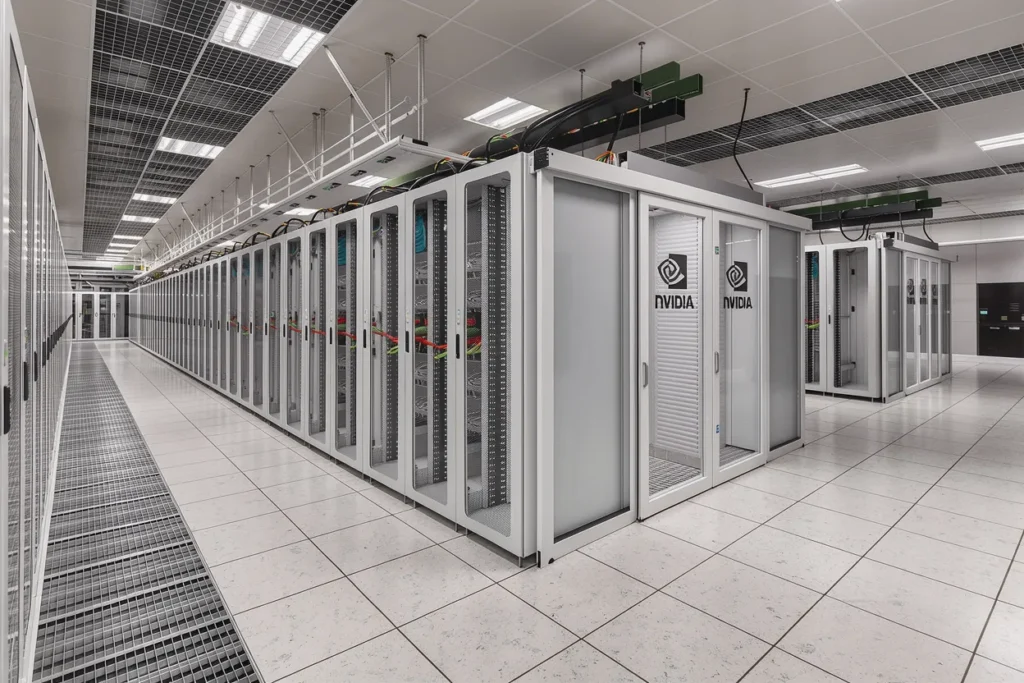
The same artificial-intelligence investment cycle that drove Nvidia, Microsoft and other megacaps is now reaching smaller semiconductor suppliers, testing companies, equipment manufacturers and network-component businesses.
The AI trade is moving beyond the largest companies
The early phase of the AI rally was concentrated in a small group of companies supplying processors, cloud infrastructure and large-language models.
As construction has accelerated, spending has spread across a wider network of businesses.
New AI data centres require far more than advanced processors. They also need memory, test equipment, cooling systems, power components, optical networking, manufacturing tools and specialized materials.
Many companies providing those products are small enough that one major order or customer program can produce a substantial change in revenue and earnings.
A contract that may appear modest to a trillion-dollar technology company can transform the financial outlook of a business worth only a few billion dollars.
That operating leverage has made smaller suppliers some of the market’s strongest performers.
Chip suppliers have dominated the Russell 2000 leaderboard
Semiconductor and semiconductor-equipment companies account for a large share of the Russell 2000’s best-performing stocks this year.
Aehr Test Systems, Ichor Holdings and MaxLinear have been among the most dramatic winners, with gains reaching several hundred percent at different points during the first half.
These companies generally are not attempting to compete directly with Nvidia in advanced AI accelerators.
Instead, they occupy specialized positions across the supply chain.
Aehr provides semiconductor testing and burn-in systems. Ichor supplies gas and fluid-delivery subsystems used in chip-manufacturing equipment. MaxLinear develops connectivity and networking products that can support increasingly data-intensive computing systems.
Their gains show how the economics of the AI buildout are moving outward from the most visible chip designers.
Smaller companies can produce amplified earnings growth
Revenue generated by new AI infrastructure does not affect every company equally.
For a large technology business, a new data-centre customer may add only a small percentage to overall sales. For a specialized small-cap supplier, the same program can produce a material increase in revenue, capacity utilization and profit.
That is one reason investors have moved toward second- and third-order AI beneficiaries.
Smaller companies often have less diversified operations and higher fixed costs relative to revenue. When demand improves, more of each additional sales dollar can flow into operating income.
The same leverage works in reverse during a downturn, which is why the strongest performers also carry substantial volatility.
The rally is also correcting an unusually wide valuation gap
AI has provided the catalyst, but valuation helped create the opportunity.
Small caps entered 2026 trading at a substantial discount to large-cap companies after years of rising rates and megacap technology leadership.
Investors had repeatedly favoured companies with stronger balance sheets, reliable cash flow and less dependence on external financing. Smaller businesses were left behind as capital concentrated in the largest members of the S&P 500.
That gap became difficult to ignore once small-cap earnings estimates began improving.
The rally therefore reflects both stronger fundamentals and a partial recovery from depressed valuations. Investors are paying more for small companies, but many still trade below the relative premiums reached during previous economic expansions.
Earnings expectations have risen sharply
Consensus estimates now call for Russell 2000 earnings to increase approximately 38% in 2026, compared with forecasts of roughly 23% at the beginning of the year.
Some of that growth reflects an easy comparison with weaker prior periods. Small-cap earnings were heavily affected by elevated financing costs, uneven domestic demand and pressure on regional banks and other economically sensitive industries.
The magnitude of the revision still shows that the improvement is broader than stock-price momentum alone.
Semiconductor suppliers are contributing strongly, but analysts are also forecasting better performance across industrials, financials, healthcare and selected consumer businesses.
For the rally to continue, companies will need to convert those forecasts into actual earnings rather than relying entirely on expanding valuations.
The next stage could broaden beyond technology
Technology has driven the first-half advance, but several other conditions could support a wider small-cap recovery.
Smaller companies generate a larger share of their revenue inside the United States than many multinational large caps. That gives them more direct exposure to domestic economic growth and corporate investment.
Potential increases in merger-and-acquisition activity could also help. Large pharmaceutical companies continue searching for biotechnology assets, while industrial and technology businesses may use acquisitions to add specialized products and engineering talent.
Tax incentives encouraging capital spending could provide another tailwind for equipment suppliers, manufacturers and construction-related companies.
A broader rally would make the small-cap advance more durable by reducing its dependence on a relatively narrow group of semiconductor winners.
Financial conditions remain the central risk
Interest rates are still the most important threat to the small-cap thesis.
Smaller companies generally have less cash, lower credit ratings and greater reliance on bank loans or floating-rate debt than large corporations. They also face more frequent refinancing needs and usually pay a higher premium over benchmark rates.
Bank of America estimates that each additional 25-basis-point rate hike could reduce aggregate Russell 2000 operating earnings by roughly 2%.
That sensitivity matters because the Federal Reserve has recently taken a more hawkish position as inflation remains elevated.
Another increase in borrowing costs could pressure profit margins, delay investment and weaken the expected acceleration in earnings later this year.
The rate outlook could determine whether the rally survives
The market is pricing a meaningful possibility that the Fed raises rates before the end of 2026.
For smaller companies, the difference between stable rates and another tightening cycle is significant.
A period of unchanged borrowing costs would allow companies to refinance with greater certainty and give earnings time to catch up with share-price gains. A renewed series of hikes would raise interest expense and reduce the appeal of smaller, more highly leveraged businesses.
Investors do not necessarily need aggressive Fed easing for the rally to continue. They need evidence that inflation and policy rates are no longer moving materially higher.
Stable financial conditions may be enough to support further valuation normalization if earnings continue improving.
The rally contains real fundamentals—and real speculation
The Russell 2000’s performance should not be interpreted as proof that every small-cap company has entered a durable growth cycle.
Some of the strongest semiconductor names have gained several hundred percent in only a few months. Those moves leave little room for execution problems, order delays or weaker guidance.
Small companies frequently depend on a limited number of customers and products. A lost contract or delayed manufacturing program can produce a much larger financial effect than it would at a diversified megacap.
Liquidity is also lower. When sentiment changes, small-cap stocks can fall faster because fewer buyers are available to absorb selling.
The index has benefited from legitimate earnings revisions and AI demand, but parts of the market are now pricing extremely optimistic outcomes.
Small-cap leadership would be healthy for the broader market
A sustained Russell 2000 advance would represent an important change in the structure of the bull market.
For much of the past several years, index gains depended heavily on a small group of highly valued technology companies. Broader participation would reduce that concentration and show that corporate growth is extending beyond the largest businesses.
It would also indicate that AI investment is creating revenue throughout the economy rather than remaining confined to chip designers and cloud platforms.
The first half provided evidence of that expansion. The second half will test whether the gains can continue as valuations rise and monetary policy becomes less supportive.
WSA Take
The Russell 2000’s best first half since 1991 is both a catch-up trade and an AI infrastructure story.
Smaller semiconductor, equipment and connectivity companies are benefiting as hyperscaler spending moves deeper into the supply chain. Improving earnings forecasts and historically wide valuation discounts gave investors another reason to move beyond megacap technology.
The largest risk is now financial rather than technological. Small companies remain more exposed to refinancing costs and floating-rate debt, making another Fed hike capable of weakening the earnings recovery quickly.
The rally has real fundamental support, but the strongest stocks have already priced in significant growth. The second half will depend on whether earnings broaden beyond chips—and whether interest rates remain stable enough for smaller companies to deliver.
Explore More Stories in Markets
Disclaimer
WallStAccess is a financial media platform providing market commentary and analysis for informational and educational purposes only. This content does not constitute investment advice, a recommendation, or an offer to buy or sell any securities. Readers should conduct their own research or consult a licensed financial professional before making investment decisions.