America’s defense problem is no longer only about technology
The United States has spent decades developing some of the world’s most advanced weapons.
Recent conflicts have exposed a different weakness: producing enough of them.
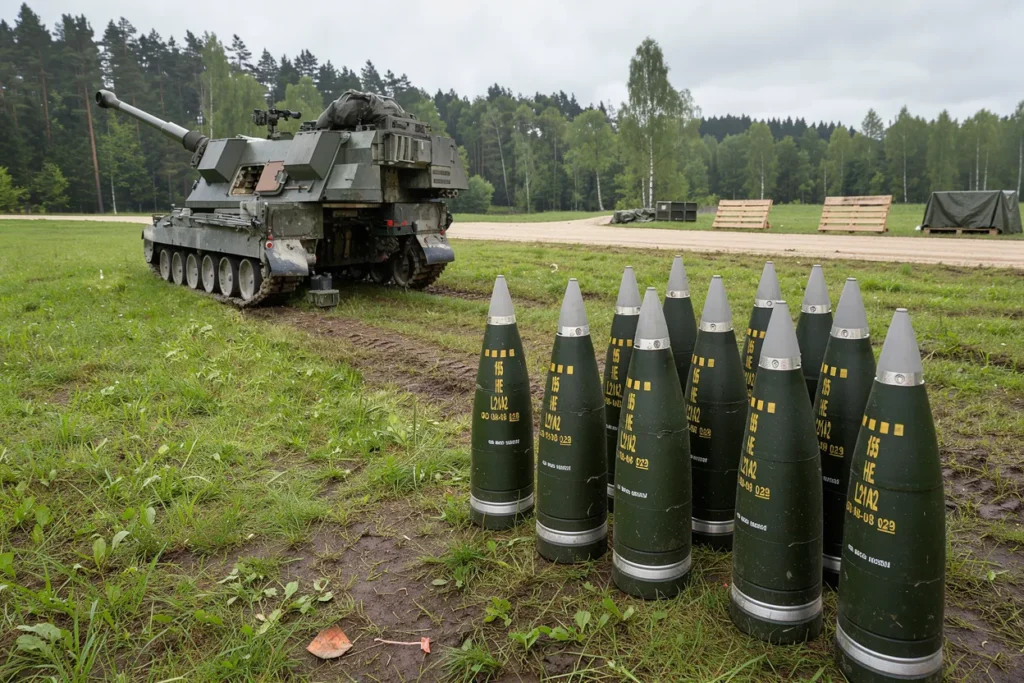
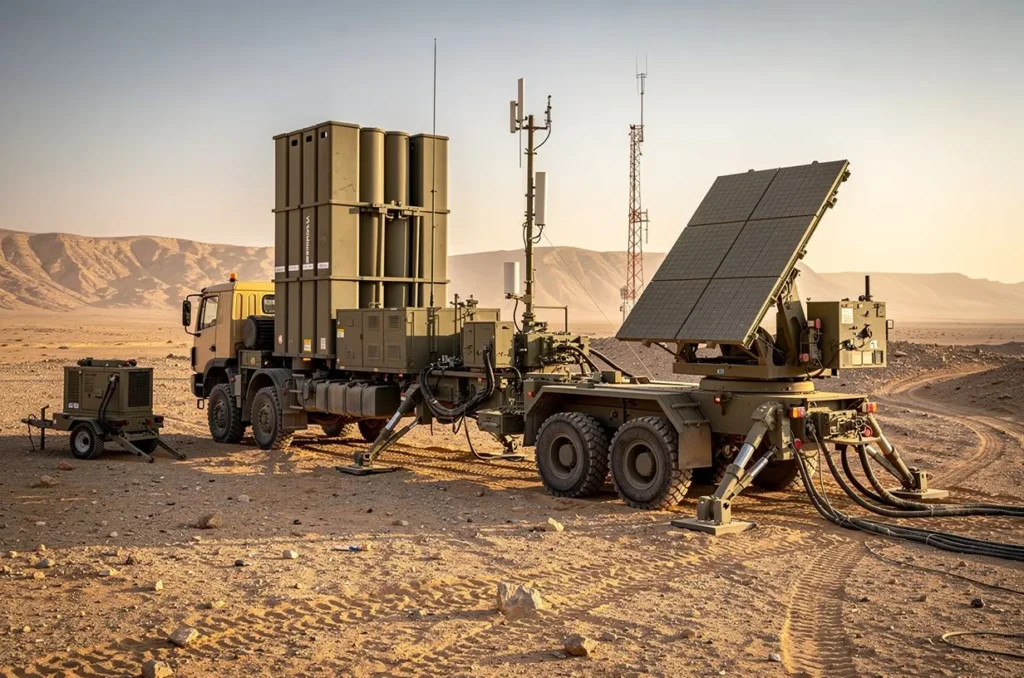
Weapons supplied to Ukraine, used to defend Israel and expended during military operations against Iran have reduced inventories of air-defense interceptors, precision-guided missiles, artillery and other critical munitions. Replacing those stocks is difficult because many production lines were designed for relatively modest peacetime demand.
The result is a growing recognition in Washington that military superiority depends not only on designing the best weapon, but also on manufacturing it quickly, affordably and in sufficient quantities.
That shift sits at the centre of the proposed $1.5 trillion fiscal 2027 defense budget.
The $1.5 trillion request is designed to rebuild capacity
The proposal would represent the largest US defense budget in history and one of the sharpest annual increases since the Second World War.
Roughly $1.15 trillion would move through the regular congressional appropriations process, while another $350 billion would rely on separate reconciliation legislation. A large portion of the request is directed toward weapons systems, procurement, research, military construction and expansion of the defense industrial base.
The budget is not yet law. Congress could reduce, redirect or delay parts of the request, and the Senate Armed Services Committee has already advanced a lower spending framework.
Even if the final figure comes in below $1.5 trillion, the direction is clear. Washington is preparing for a longer period of elevated defense spending and larger production commitments.
Munitions inventories have become a strategic vulnerability
Modern warfare can consume sophisticated weapons far faster than factories can replace them.
Air-defense systems may fire several interceptors against one incoming threat. Long-range precision strikes require missiles that depend on specialized propulsion, guidance systems, electronics and explosive materials. Many of those components come from a limited number of suppliers.
Production rates measured in dozens or hundreds of units per year can quickly become inadequate during a sustained conflict.
The concern is particularly acute for weapons needed in a potential confrontation with a major military power. A conflict involving China or Russia would likely require far more missiles, drones and interceptors than the United States has used in recent regional operations.
Rebuilding inventories therefore serves two purposes: replacing weapons already expended and creating enough production capacity to deter a larger future conflict.
The Pentagon is demanding a different procurement model
The traditional defense-contracting system has often rewarded development activity more reliably than high-rate production.
Under cost-plus contracts, contractors are reimbursed for allowable expenses and receive an additional fee. The structure can be useful when technical requirements are uncertain, but it places much of the cost risk on the government and provides limited incentive to simplify designs or reduce manufacturing expense.
The Pentagon is now increasing its use of firm-fixed-price contracts, multiyear purchasing commitments and production frameworks tied to defined volumes.
Under a fixed-price contract, the contractor receives an agreed amount regardless of its final cost. Efficient execution can improve margins. Delays and overruns are absorbed by the company.
That transfers more risk to manufacturers, but it also rewards companies that design weapons around repeatable production from the beginning.
Castelion represents the new defense-industrial model
Castelion offers one of the clearest examples of the Pentagon’s emerging approach.
Founded by former SpaceX executives Bryon Hargis, Sean Pitt and Andrew Kreitz, the company is developing Blackbeard, a lower-cost hypersonic strike missile intended for production at much greater scale than traditional hypersonic systems.
Castelion has reached a framework agreement with the Pentagon that could support a minimum of 500 missiles annually after testing and validation, with a path toward orders in the thousands.
The company has also received contracts to integrate Blackbeard with US military platforms, including the Navy’s F/A-18 Super Hornet.
The strategic objective is not simply to demonstrate that a missile can fly at hypersonic speed. It is to build one that can be manufactured repeatedly, delivered quickly and purchased in quantities large enough to affect military planning.
Private capital is changing how weapons are developed
Castelion has financed much of its early expansion through private investment rather than waiting for the government to fund each stage of development.
The company has raised hundreds of millions of dollars to conduct flight testing, build production infrastructure and vertically integrate key manufacturing processes.
That resembles the commercial aerospace model more than the traditional defense model. A company invests ahead of a full production contract, moves through rapid design cycles and attempts to reach scale before government procurement would normally support it.
Private financing can shorten development timelines, but it also creates substantial risk.
Investors are committing capital before military testing is complete and before the full value of future government orders is guaranteed. Companies that fail to meet technical or production milestones could face significant losses.
For successful firms, the reward could be access to multiyear defense programs with unusually large production requirements.
Hypersonic weapons highlight the manufacturing gap
The United States has invested heavily in hypersonic research but has struggled to field affordable systems in large numbers.
Hypersonic weapons travel at more than five times the speed of sound and can manoeuvre during flight, making them difficult to detect and intercept. China and Russia have already deployed several operational systems, increasing pressure on the Pentagon to close the gap.
Technical performance alone does not resolve the problem.
A weapon costing tens of millions of dollars and produced only a few times per year may have limited value in a conflict requiring sustained strikes. Castelion is attempting to reduce unit costs into the hundreds of thousands of dollars while designing for production in the hundreds or thousands.
Whether the company reaches those targets remains to be proven. The model reflects exactly what the Pentagon now wants: advanced capability designed around manufacturing scale rather than handcrafted scarcity.
New Mexico shows how defense spending reaches the real economy
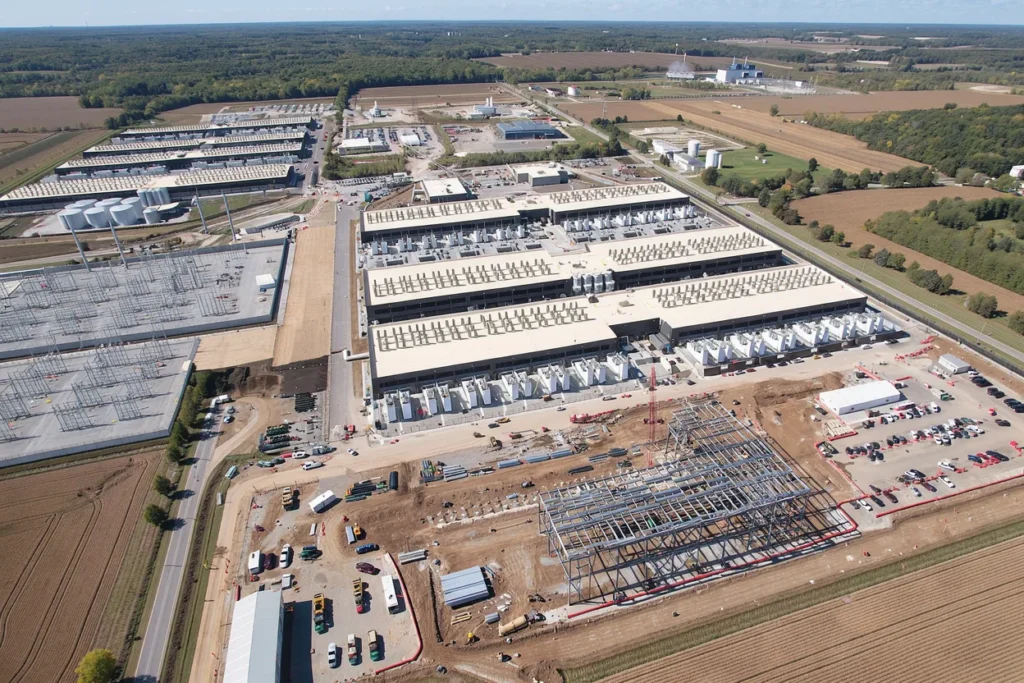
Castelion selected Sandoval County, New Mexico, for a 1,000-acre manufacturing campus known as Project Ranger.
The development is expected to include 21 buildings supporting solid rocket motors, missile assembly and testing. Castelion has said the project will involve more than $220 million in private investment, create at least 300 high-paying jobs and generate approximately $650 million in economic activity over a decade.
New Mexico offered several advantages:
- large tracts of available land
- proximity to Sandia and Los Alamos national laboratories
- an existing aerospace and defense workforce
- room for explosives handling and testing
- coordinated state and local permitting
The project demonstrates how the defense buildout is becoming an economic-development competition between states.
Factories need more than tax incentives
Winning a defense project requires more than offering the largest subsidy.
Missile and explosives facilities need large buffer zones, secure locations, specialized transportation access and permits that can be difficult to obtain near densely populated areas. Manufacturers also need engineers, machinists, technicians and employees with security clearances.
Power, water and supplier access matter as well.
States with military bases, national laboratories, aerospace programs and existing defense manufacturers have an advantage because the workforce and regulatory infrastructure already exist.
Speed is increasingly decisive. Defense startups operating with private capital cannot wait several years for zoning, environmental reviews and utility connections while military customers demand rapid deployment.
The state competition could intensify
A sustained increase in weapons procurement could support dozens of new or expanded facilities across the country.
Missiles require propulsion systems, guidance electronics, composite structures, warheads and specialized metals. Drones require sensors, motors, batteries and communications systems. Air-defense programs need launchers, radar systems and interceptors.
The production chain extends well beyond the largest defense contractors.
Smaller manufacturers, machine shops, chemical producers and electronics suppliers may receive new orders as prime contractors increase output. Regions able to assemble clusters of those suppliers could capture more durable economic value than states securing a single final-assembly plant.
Castelion has already indicated that the New Mexico campus may not be its final location as production expands.
Legacy contractors remain central to the rearmament effort
Defense startups are attracting attention, but established contractors will still receive most of the major procurement spending.
Large weapons programs depend on companies with decades of experience, cleared workforces and established relationships across the military. Rebuilding inventories of existing missiles and interceptors requires expanding production lines already operated by traditional contractors.
The new model is therefore unlikely to replace the legacy defense industry.
It could pressure established companies to move faster, invest earlier and accept more production risk. Startups may also become suppliers, acquisition targets or competitors in areas where traditional programs have become too expensive or slow.
The likely outcome is a defense market containing both large incumbents and a growing group of venture-backed manufacturers.
Multiyear contracts may matter more than the headline budget
Factories cannot be built around one year of elevated spending.
Manufacturers need confidence that orders will continue long enough to justify new equipment, facilities and employees. Multiyear procurement agreements provide that visibility by committing the government to purchases over several budget cycles.
That can lower unit costs because suppliers invest against a predictable production schedule rather than responding to irregular annual orders.
The Pentagon is increasingly seeking multiyear authority for missiles and other high-priority weapons. The approach could prove more important to industrial capacity than the record size of any single-year budget.
A temporary spending surge can replenish inventories. Durable contracts can rebuild an industry.
The budget creates opportunity and execution risk
The proposed spending increase is highly constructive for defense manufacturers, but larger budgets do not automatically produce more weapons.
The US defense industry still faces labour shortages, supplier bottlenecks, long permitting timelines and limited capacity for specialized materials. Some components have only one qualified domestic producer.
Contractors may also be required to invest before government payments begin, pressuring cash flow and increasing the financial risk of expansion.
Fixed-price agreements introduce another challenge. Companies that underestimate costs or fail to meet timelines can lose money even when demand is strong.
Investors will need to distinguish between companies receiving larger contract announcements and those capable of converting those awards into profitable production.
The defense cycle is shifting from research toward volume
For years, much of the Pentagon’s advanced-weapons spending focused on research, prototypes and limited production.
Recent conflicts have changed the priority.
The military now needs larger inventories of systems that already work, along with new weapons designed to be built in far greater quantities. That favours companies with manufacturing discipline, vertically integrated supply chains and products engineered for affordability.
The strategic test is no longer whether the United States can invent advanced military technology.
It is whether the country can produce enough of it before the next conflict begins.
WSA Take
The proposed $1.5 trillion budget marks a major shift in the US defense cycle.
Washington is responding to depleted stockpiles, rising geopolitical competition and an industrial base that cannot replenish sophisticated weapons quickly enough. The result is a stronger emphasis on multiyear contracts, fixed pricing, private investment and high-rate production.
Castelion illustrates how the new model could work. Private capital funds development and factories upfront, while the Pentagon offers a potential path to large production orders once the weapon is validated.
The opportunity extends across missiles, drones, air defense, propulsion, electronics and specialized manufacturing. The most important beneficiaries may not simply be the companies with the most advanced technology, but those able to turn that technology into thousands of reliable, affordable units.
The record budget request is the headline. Rebuilding the American defense-industrial base is the larger investment story.
Explore More Stories in Markets
Disclaimer
WallStAccess is a financial media platform providing market commentary and analysis for informational and educational purposes only. This content does not constitute investment advice, a recommendation, or an offer to buy or sell any securities. Readers should conduct their own research or consult a licensed financial professional before making investment decisions.