The Quiet Metals War
Oil dominates the headlines during geopolitical crises.
It moves instantly. Prices spike overnight. Markets react immediately. Inflation expectations change within hours.
But wars do not only reshape energy markets. They reshape industrial supply chains.
And while oil may be the loud signal today, the more important strategic shift may already be underway in a much quieter corner of the commodities world.
Rare earth minerals.
Oil Is the Shock. Rare Earths Are the Strategy.
When geopolitical tensions rise, oil becomes the immediate focus because it touches everything at once: transportation, manufacturing, and consumer costs.
Markets react instantly.
But history shows that the deeper economic consequences of geopolitical conflicts often appear later — inside industrial supply chains.
Oil shocks move markets.
Mineral shortages move industries.
Defense systems, semiconductors, aerospace manufacturing, advanced electronics, and renewable technologies all depend on a group of materials that rarely receive mainstream attention.
Rare earth elements.
The Pentagon Just Fired a Starting Gun
A recent move by the U.S. Department of Defense quietly signaled that policymakers are beginning to treat rare earth supply chains as a strategic priority.
Industry participants were asked to submit proposals aimed at expanding domestic supply for 13 critical minerals, including yttrium — a material widely used in advanced electronics, ceramics, lasers, and defense technologies.
The proposal request reportedly includes potential project funding in the $100 million to $500 million range, with submissions due within weeks.
That kind of timeline is not symbolic.
It suggests the government is looking for projects that could realistically move into development, not just long-term academic ideas.
In other words, the conversation is shifting from policy talk to capital allocation.

Rare Earths Aren’t Rare. Secure Supply Is.
Despite the name, rare earth elements are not especially scarce in the Earth’s crust.
The real constraint is something far more complicated: processing capability.
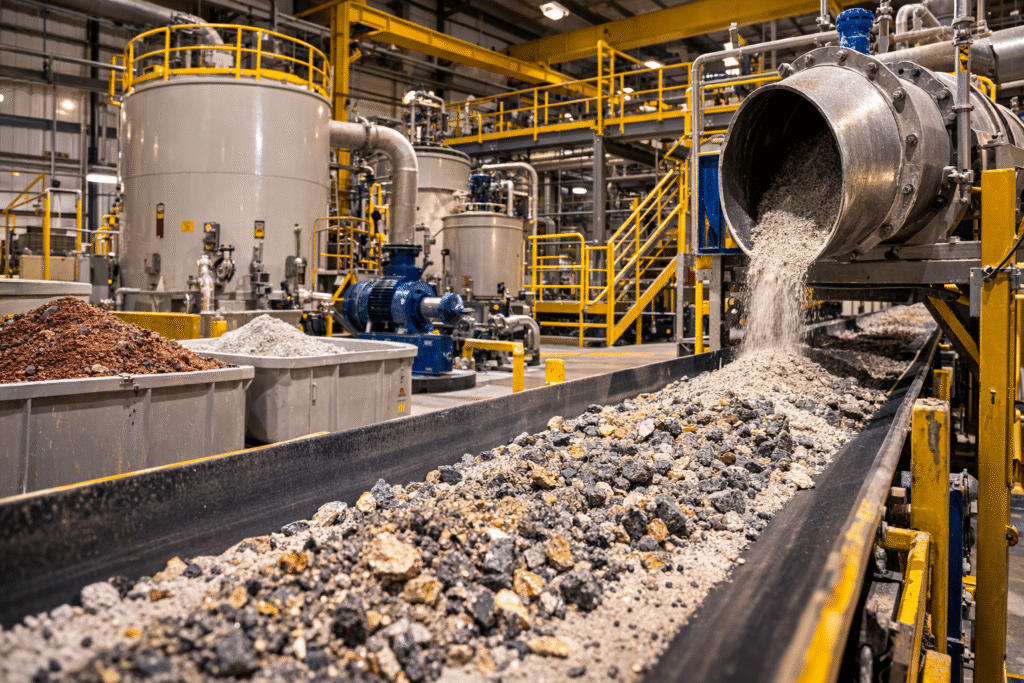
Mining rare earth ore is only the first step in a long industrial chain. The difficult part is converting raw concentrates into separated, high-purity materials that meet strict industrial specifications.
That process involves complex chemical separation systems, specialized infrastructure, and a highly technical workforce.
It is also where the global supply chain becomes extremely concentrated.
A large portion of rare earth processing capacity exists outside Western supply chains, which creates vulnerabilities for industries that rely on those materials.
The issue is not geological scarcity.
The issue is industrial control.
The Supply Chain Problem Nobody Notices Until It Breaks
When oil prices spike, consumers feel it immediately at the gas pump.
Rare earth disruptions work differently.
They appear later, often deep inside manufacturing pipelines.
Production delays. Procurement shortages. Defense contracts that suddenly require alternative sourcing.
These are the kinds of problems that force governments to rethink supply chain strategy.
Over the past decade, global institutions such as the International Energy Agency have repeatedly warned about the concentration of critical mineral supply chains.
Those warnings are now colliding with geopolitical reality.
Why One Element Is Getting Attention
Among the materials receiving new attention is yttrium, a rare earth element that rarely makes financial headlines but plays an important role in advanced technologies.
Its industrial uses include:
• electronics and semiconductor components
• advanced ceramics and specialty alloys
• laser systems and optical equipment
• phosphors used in displays and lighting
• catalysts used in industrial processes
These applications may sound niche, but many of them sit inside high-value manufacturing sectors such as aerospace, electronics, and defense.
That makes supply chain reliability far more important than raw production volume.
And it helps explain why policymakers are now focusing on these materials.

The Real Bottleneck: Processing and Separation
The United States has mineral resources.
What it lacks in many cases is domestic processing capacity.
Historically, rare earth concentrates produced in North America have often been exported for separation and refinement abroad before returning as finished materials.
That arrangement works in stable geopolitical environments.
It becomes much more complicated during periods of strategic competition.
Developing new mines takes time. Building full processing capacity takes even longer.
Which means the push to rebuild these supply chains is likely to play out over many years.
Strategic Metals Are Becoming Strategic Policy
Critical mineral policy is beginning to resemble energy policy in the 1970s.
Governments are no longer treating supply chains as purely market-driven outcomes.
They are beginning to treat them as strategic infrastructure.
That shift has several implications:
Countries will increasingly seek domestic production capacity.
Government funding programs will begin supporting supply chain development.
Defense procurement requirements will likely prioritize secure sourcing.
And companies capable of operating within stable jurisdictions may receive increasing policy support.
The Investment Landscape Is Still Early
From an investor perspective, critical mineral supply chains tend to develop in phases.
Large, diversified mining companies often move first because they already have capital access and operational scale.
Next come development-stage projects with credible plans to move toward production.
Smaller exploration companies sometimes follow, though only those capable of demonstrating realistic development pathways tend to attract serious attention.
The difference between speculative geology and viable supply chains becomes increasingly important as governments begin evaluating projects for potential funding or procurement alignment.
The Strategic Metals Cycle May Just Be Beginning
For now, oil continues to dominate the front page of global markets.
Energy shocks are immediate and visible.
But beneath that volatility, a deeper shift may be unfolding.
Countries are beginning to secure the inputs that power advanced industries — not just the fuels that power transportation.
Rare earth elements, critical minerals, and specialized industrial metals are slowly becoming part of that new strategic landscape.
These shifts rarely happen overnight.
But once governments begin aligning policy, capital, and industrial planning around supply chains, the effects tend to last for decades.
WSA Take
Energy shocks dominate headlines.
Supply chain shocks reshape industries.
The current geopolitical environment is reminding policymakers of something they already knew: economic security does not come only from controlling outcomes.
It comes from controlling inputs.
Rare earth minerals sit directly at the center of that equation.
And while oil may be the market’s loudest signal today, the quieter strategic battle around critical minerals may ultimately prove far more important.
Explore More Stories in Commodities
Disclaimer
WallStAccess is a financial media platform providing market commentary and analysis for informational and educational purposes only. This content does not constitute investment advice, a recommendation, or an offer to buy or sell any securities. Readers should conduct their own research or consult a licensed financial professional before making investment decisions.