
A private-market cash-out just reinforced how much appetite still exists for SpaceX
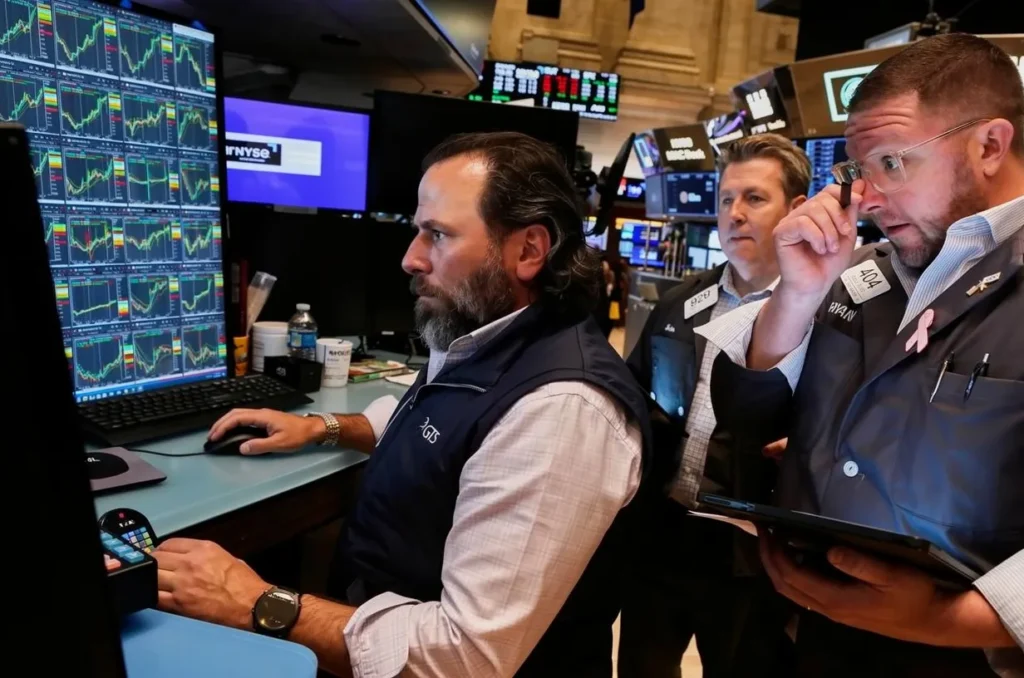
Blue Owl said it sold roughly half of its SpaceX position at a $1.25 trillion valuation, generating about a 10x return, while still holding the other half. That matters because it gives the market a fresh real-money read on how investors are still valuing the company ahead of its expected IPO. This was not just a mark on paper. It was a liquidity event at a valuation large enough to remind the market that SpaceX is already trading like a company with public-market gravity before the public listing even happens.
Why this IPO matters more than a normal blockbuster listing
If SpaceX does come public later this year near the $1.75 trillion valuation cited by Reuters, and raises around $75 billion, it would likely become the largest IPO on record. That alone makes it important. But the bigger reason it matters is that it would give public investors direct exposure to a company that has already reshaped launch economics through reusable rockets, built one of the most important global satellite networks through Starlink, and is now pitching an even broader future tied to AI-era infrastructure, orbital systems, and long-duration space industrialization.
This is not just another tech listing. It is a potential market-defining test of whether investors are ready to value space infrastructure the way they value other forms of strategic infrastructure — as something closer to a platform than a niche industry.
The space sector is no longer a side theme
One reason this IPO matters so much is that the space sector is no longer just about rocket launches. It now overlaps with:
- communications
- military and intelligence infrastructure
- satellite internet
- Earth observation
- data routing and future orbital compute
- and longer-term energy and industrial systems in space
Reuters’ review of SpaceX’s IPO materials shows the company is no longer framing itself only as a launch and satellite business. It is trying to position itself around a much bigger future, including concepts such as orbital data centers and space-based solar power, even though those ambitions still carry meaningful execution risk. That is exactly why the IPO matters for the market: it could become the first major public vehicle through which investors price the next phase of the space economy, not just the current one.
The materials story underneath space is getting more important
The market often gets fascinated by rockets and valuation headlines while ignoring a quieter but equally important layer: materials.
Advanced aerospace and space-adjacent systems rely on specialized ceramics, coatings, optics, alloys, electronics, and rare earth-related inputs that allow high-performance systems to function under extreme thermal and mechanical stress. That is where minerals like yttrium start to matter. The USGS says yttrium’s leading end uses include ceramics and phosphors, with additional use in fiber optics, optical glass, and other advanced materials. The same USGS summary also notes that the United States does not currently have fully commercial facilities to separate or refine yttrium.
That matters because a space and aerospace buildup is not only a launch-capacity story. It is also a supply-chain story.
Why yttrium matters more than most investors realize
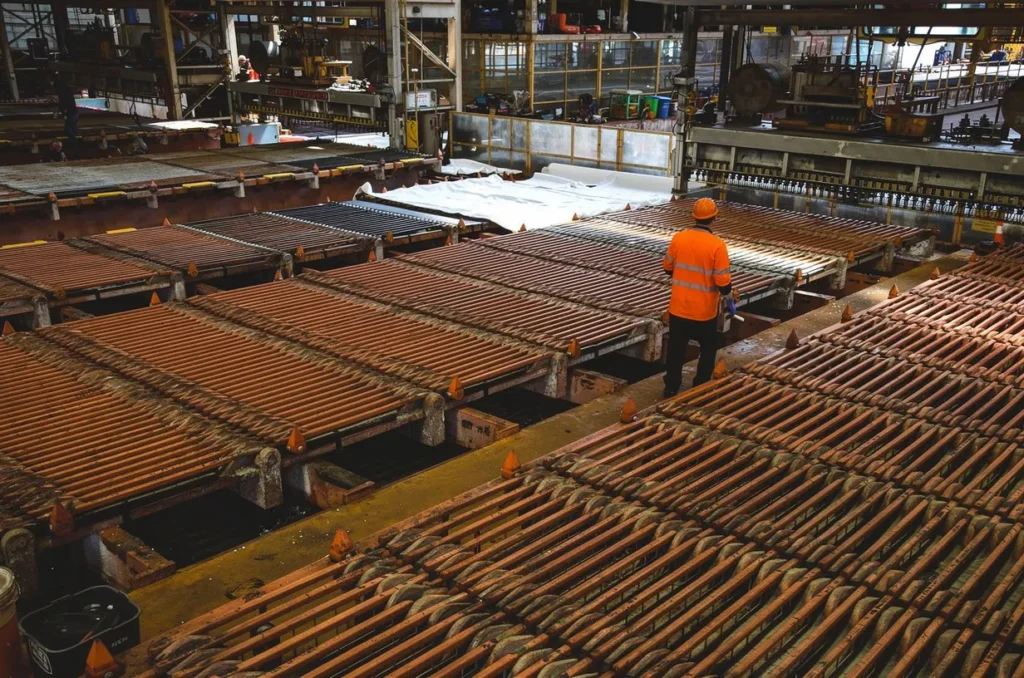
Reuters reported this week that yttrium oxide is vital for U.S. aerospace, particularly in high-temperature coatings for jet engines and turbines, and that prices had surged after China’s export controls tightened supply. NASA materials research has also documented how yttria-stabilized zirconia is widely used in thermal barrier coatings to protect turbine engine components from extreme heat.
That is not a niche issue. If yttrium becomes constrained, it does not just hurt some obscure industrial chain. It can directly pressure the performance and maintenance economics of high-end propulsion systems across aerospace and defense. And while that is most obvious in military and aviation systems, the same broader lesson applies to the space sector too: high-performance aerospace capability depends on advanced materials that are often hard to substitute and even harder to source domestically.
China’s grip on strategic materials still hangs over the whole story
Reuters also reported that China recently approved a large shipment of yttrium oxide to the U.S. after months of scarcity, underlining how much leverage Beijing still has in parts of the rare-earth and specialty-materials chain. Even with that March shipment, Reuters said overall U.S. imports of yttrium oxide over the prior year were still 75% below the previous year.
That matters because if investors want to understand the long-term space trade properly, they have to think beyond rockets and software. They also have to think about:
- rare earths
- advanced coatings
- magnet and ceramic supply chains
- and the upstream material bottlenecks that can quietly determine whether strategic manufacturing scales or stalls
In other words, the coming SpaceX IPO is not just a story about one company’s valuation. It is also a reminder that a real space-industrial cycle will require secure access to materials the West still does not fully control.
WSA Take
Blue Owl’s sale matters because it validates the private-market appetite around SpaceX at a staggering valuation. But the bigger market takeaway is what the coming IPO represents: a possible turning point where space stops being treated like a speculative frontier trade and starts being priced like a strategic industrial and infrastructure sector.
And if that shift is real, investors need to think beyond launch headlines. The future winners in the space buildout will not just be rocket companies. They will also include the businesses and supply chains behind the specialty materials, rare earths, and advanced aerospace inputs that make high-performance space and defense systems possible — including overlooked materials like yttrium.
Disclaimer
WallStAccess is a financial media platform providing market commentary and analysis for informational and educational purposes only. This content does not constitute investment advice, a recommendation, or an offer to buy or sell any securities. Readers should conduct their own research or consult a licensed financial professional before making investment decisions.