Fresh Gulf tensions knocked the market off balance
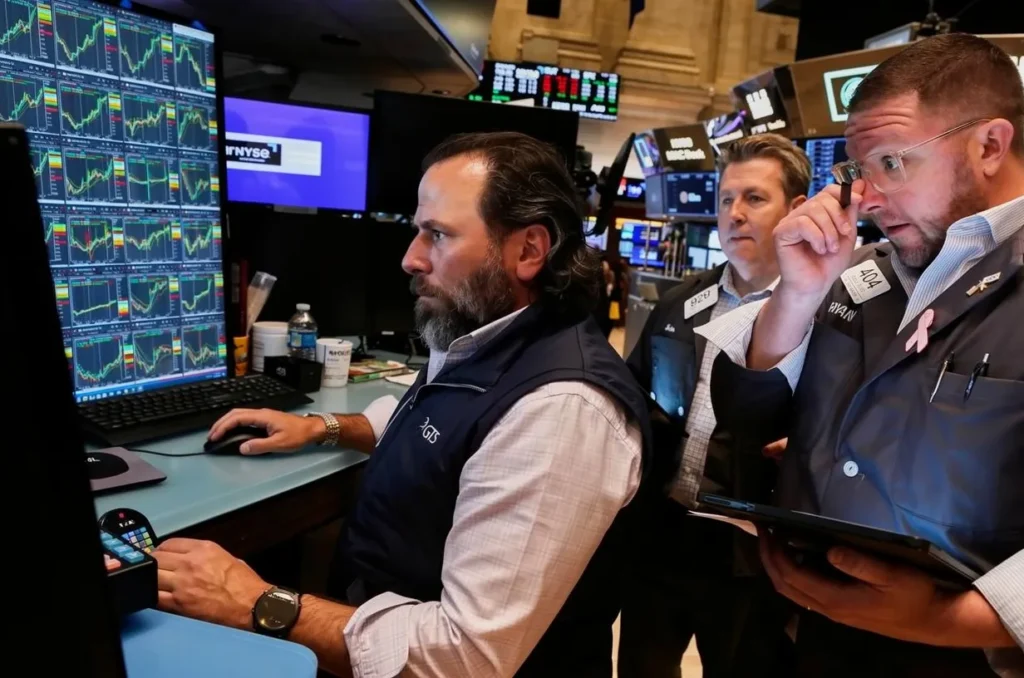
U.S. stocks opened the week lower as rising anxiety around the Iran war overshadowed what had otherwise been a supportive earnings backdrop.
The Dow Jones Industrial Average dropped about 1%, while the S&P 500 and Nasdaq Composite each fell roughly 0.5%. The weakness followed a strong finish to last week, but the market quickly shifted back into risk-off mode once the latest Middle East headlines started hitting.
At the core of the selloff was a familiar market fear: if the situation around the Strait of Hormuz worsens again, the inflation and energy shock could deepen fast.
Project Freedom raised the stakes instead of calming them
The pressure built after reports circulated that Iranian strikes had hit regional targets and that tensions around the Strait of Hormuz were escalating again.
The UAE said an Abu Dhabi National Oil Company carrier had been targeted and that the Fujairah petroleum export complex had also been struck. Those developments landed just as President Trump said the U.S. would begin helping trapped vessels leave the waterway under a plan he called “Project Freedom.”
That mattered because the initiative did not reduce tension. It increased the chance of direct confrontation.
Trump’s warning that any interference would be dealt with “forcefully” was quickly met by Iranian threats against U.S. ships, with Tehran also arguing that American interference in the strait would violate the current ceasefire arrangement.
That is exactly the kind of setup markets struggle with: a humanitarian or logistical intervention that can quickly become a military flashpoint.
Oil immediately repriced the risk
The clearest reaction came in crude.
- Brent crude jumped roughly 5.2% to around $114 a barrel
- WTI climbed back above $105
That is a serious move, and it matters well beyond the energy sector.
When oil spikes like this, investors start thinking about:
- higher transport costs
- more pressure on margins
- stickier inflation
- a tougher interest-rate backdrop
- and slower consumer spending if fuel costs stay elevated
That is why stocks fell even though earnings and economic data had not completely broken down. Energy became the headline that reset the mood.
Higher bond yields added another layer of pressure
The move in oil quickly spread into the bond market.
Yields rose across the curve, with the 10-year Treasury climbing and the 30-year yield moving back above levels investors had not seen since last summer. Mortgage rates also moved higher again, with the average 30-year mortgage rate back above 6.5%.
That matters because the market is no longer just dealing with one geopolitical shock. It is dealing with a geopolitical shock that is now feeding directly into financing conditions.
Once yields start climbing alongside oil, equities lose one of the biggest supports they have relied on during this rally: the idea that lower rates or easier financial conditions could keep cushioning the market.
Factory orders showed the AI buildout is still real
One of the more constructive data points in the session came from factory orders.
March orders rose 1.5%, well ahead of expectations for 0.5%, with the gain driven in part by demand for the electronic components tied to AI infrastructure.
That is an important signal because it confirms that the capital spending boom around AI is still feeding into the real economy. Even with all the geopolitical noise, businesses are still ordering the equipment and components needed to support the next phase of data center and compute buildouts.
That is one reason the broader market did not completely unravel. Beneath the geopolitical pressure, the investment cycle still looks healthy.
AI capex is getting so big that public and private markets both matter
The other major theme sitting underneath the market is the scale of upcoming AI spending.
The latest estimates suggest the five largest hyperscalers — Amazon, Google, Meta, Microsoft, and Oracle — could spend roughly $751 billion in capex next year. That kind of number is too large to be funded through only one part of the capital markets.
That is why investors are increasingly focused on how the buildout gets financed across:
- public debt markets
- private credit
- equity issuance
- and company cash flow
This matters for Wall Street because the AI trade is no longer just a technology story. It is also becoming one of the biggest funding stories in global capital markets.
This week’s earnings will test whether tech can still carry the tape
Even with the macro pressure, earnings remain important.
This week’s lineup includes key reports from AMD, Arm, Lattice Semiconductor, Palantir, and Paramount Skydance. For the market, the semiconductor results matter most because they offer another direct read on whether the AI hardware cycle still has momentum.
That is especially relevant now. If tech and chip earnings stay strong, they can help cushion some of the oil-driven pressure. If they disappoint, the market will have fewer places to hide.
The market is still caught between two strong forces
Monday’s session showed the market dealing with two major forces at once.
On one side, there is still a powerful AI and capex story supporting growth, orders, and parts of the earnings outlook.
On the other side, there is a worsening Middle East energy shock that is pushing oil, yields, and inflation risk higher.
Those two forces are now colliding more directly. That is why the tape feels more unstable than it did only a few sessions ago.
WSA Take
The market can handle a lot, but it does not like a setup where oil, bond yields, and geopolitical uncertainty all start rising together. That is what Monday looked like. Strong factory orders and the ongoing AI investment boom are still real supports, but they were not enough to overcome the shock coming from Hormuz.
For investors, the key issue now is whether this becomes a short, violent energy flare-up or something more lasting. If the strait stays unstable and oil holds these levels, the market will have a much harder time simply leaning on earnings and AI optimism to keep the rally going.
Explore More Stories in Markets
Disclaimer
WallStAccess is a financial media platform providing market commentary and analysis for informational and educational purposes only. This content does not constitute investment advice, a recommendation, or an offer to buy or sell any securities. Readers should conduct their own research or consult a licensed financial professional before making investment decisions.