
A cleaner quarter gave Apple stock new life
Apple (AAPL) shares moved higher after the company delivered a stronger-than-expected quarter, topping Wall Street on both the top and bottom lines and giving investors a more confident read on the business at a time when the stock needed it.
The company reported earnings per share of $2.01 on revenue of $111.2 billion, ahead of expectations for $1.96 and $109.66 billion. That was also a clear improvement from the same quarter last year, when Apple posted $1.65 in EPS on $95.35 billion in revenue.
The stock reaction made sense. Apple came into earnings facing three major questions at once: whether iPhone demand was still strong, whether China had stabilized, and whether investors would stay comfortable with the coming CEO transition. This report helped on all three.
The iPhone still did the heavy lifting
The clearest support came from the iPhone business.
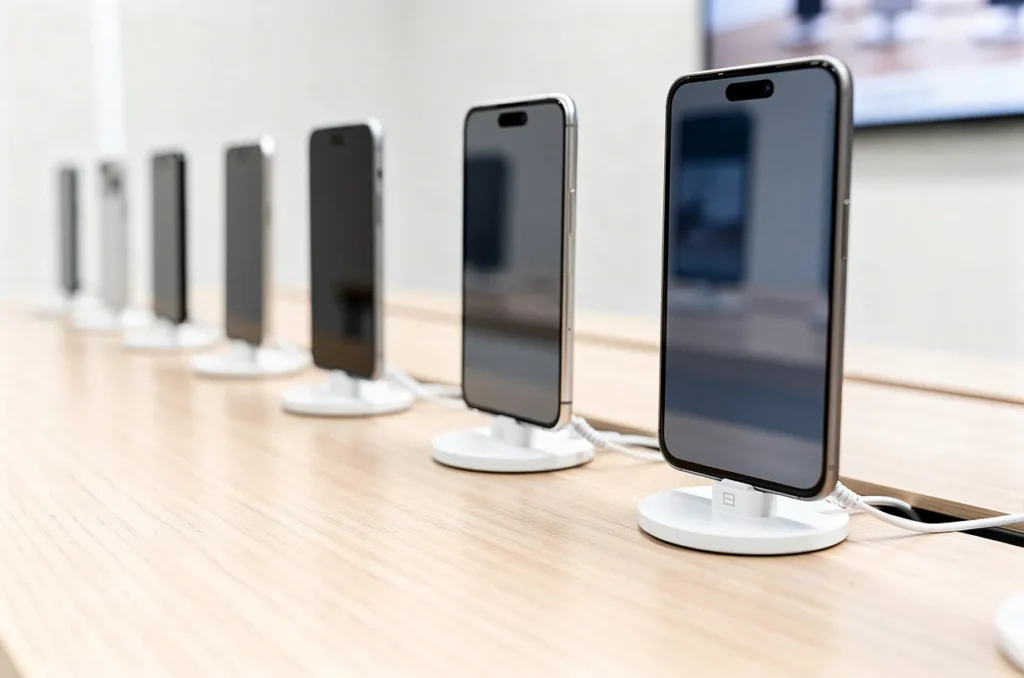
Apple reported $56.99 billion in iPhone revenue, just ahead of Wall Street expectations. More importantly, this marked the second straight quarter of more than 20% revenue growth in the segment.
That matters because the iPhone remains the company’s core earnings engine. When that business is growing cleanly, it tends to settle a lot of the market’s biggest concerns around Apple. In this case, management pointed to what Tim Cook described as “extraordinary” demand for the iPhone 17 lineup.
For investors, that is the most important takeaway in the report. Apple did not need a complicated story to win the quarter. It needed the iPhone to show up, and it did.
Services kept reinforcing the higher-quality growth story
Apple’s Services segment also delivered another strong print.
The company generated $30.97 billion in Services revenue, ahead of expectations for $30.37 billion and well above the $26.64 billion it reported in the same quarter last year.
That matters because Services remains one of Apple’s most important margin-supporting businesses. It gives the company a steadier, more recurring revenue stream layered on top of its hardware base, and it helps reinforce the argument that Apple is not just a device maker.
When the market sees both iPhone and Services working at the same time, the quality of the quarter improves materially.
China finally gave Apple a better headline
One of the more important pieces of the report was Greater China.
Revenue there came in at $20.49 billion, well ahead of expectations for $18.9 billion. That is significant because China has been one of the more closely watched pressure points in the Apple story. Stronger results in the region suggest the company is stabilizing better than the market feared.
That does not mean China is no longer a risk. It does mean that, for this quarter, Apple gave investors a number that was clearly good enough to improve sentiment.
Mac added another useful tailwind
Apple’s Mac business also came in solidly, with revenue of $8.39 billion.
The source points to a few factors helping there, including demand tied to the Mac mini and interest from developers using Apple hardware in AI-related workflows. That matters because it shows Apple still has smaller but important supporting growth pockets beyond the iPhone.
Mac is not the main story here, but it did add to the broader sense that this was a healthier quarter across multiple parts of the company.
The CEO transition looks less threatening after this report
This was also Apple’s first quarterly report since announcing that Tim Cook will step down as CEO in September, with John Ternus set to take over.
That leadership shift had been one of the stock’s key overhangs. Investors were already wondering whether Apple’s attempted breakout could hold, and succession uncertainty only added to the pressure. A strong earnings report does not erase the importance of the transition, but it does make the handoff easier for the market to accept.
For now, the results appear to have done enough to reduce the immediate fear around the change at the top.
Margin questions have not disappeared
Even with the strong quarter, one issue remains in the background: memory costs.
Apple, like the broader smartphone and computer industry, is still dealing with the effects of the global memory shortage tied to the AI data center buildout. Premium devices such as the iPhone may be better insulated from demand weakness, but higher memory prices can still pressure margins.
So while the quarter was clearly strong, investors will still want to see how Apple manages costs if component pressure remains elevated.
The chart matters again now
The earnings reaction also brought the technical setup back into focus.
The stock had been struggling near a breakout zone before the report, with the old $278 to $280 area acting as a key resistance band. After earnings, that level becomes much more important as a support zone. Above it, the stock stays in a healthier breakout setup. If it loses that level again, the failed-breakout risk returns.
That matters because Apple had been one of the weaker Magnificent Seven names in the recent rally. A strong earnings reaction now gives it a chance to rejoin the leadership group near the highs.
WSA Take
This was the kind of quarter Apple needed. iPhone sales were strong, Services stayed impressive, and China came in better than expected. Just as importantly, the company delivered this performance while investors were still digesting the coming CEO transition, which makes the reaction even more meaningful.
For investors, the big takeaway is that Apple reminded the market it does not need an entirely new narrative to work. It still has one of the strongest consumer hardware ecosystems in the world, and when demand lines up across iPhone, Services, and China, the stock starts to look a lot more comfortable near record territory.
Disclaimer
WallStAccess is a financial media platform providing market commentary and analysis for informational and educational purposes only. This content does not constitute investment advice, a recommendation, or an offer to buy or sell any securities. Readers should conduct their own research or consult a licensed financial professional before making investment decisions.