Silver may be becoming a victim of its own success
One of the strongest arguments for silver over the past several years has been straightforward: the world kept consuming more metal than it was producing, while solar panels, electronics and other industrial applications added another layer of demand.
Scarcity eventually became extreme. London supplies tightened sharply last year, borrowing costs for physical metal surged, and silver went on to reach a record $121.67 an ounce in January 2026.
High prices, however, have a habit of solving commodity shortages.
More metal is coming back into visible inventories, recycling has become more attractive, and industrial users are finding ways to accomplish the same job with less silver. Deutsche Bank now believes those forces could push the market into surplus as early as 2027, a striking reversal for a metal that entered 2026 facing its sixth consecutive annual supply deficit.
That does not automatically turn silver bearish. Deutsche still sees spot prices averaging roughly $70 an ounce by the second quarter of 2027. But the reason investors own silver may be changing.
The easy shortage trade is fading. From here, silver may need investors to do more of the heavy lifting.
The inventory cushion has rebuilt quickly
Physical availability looked very different a year ago.
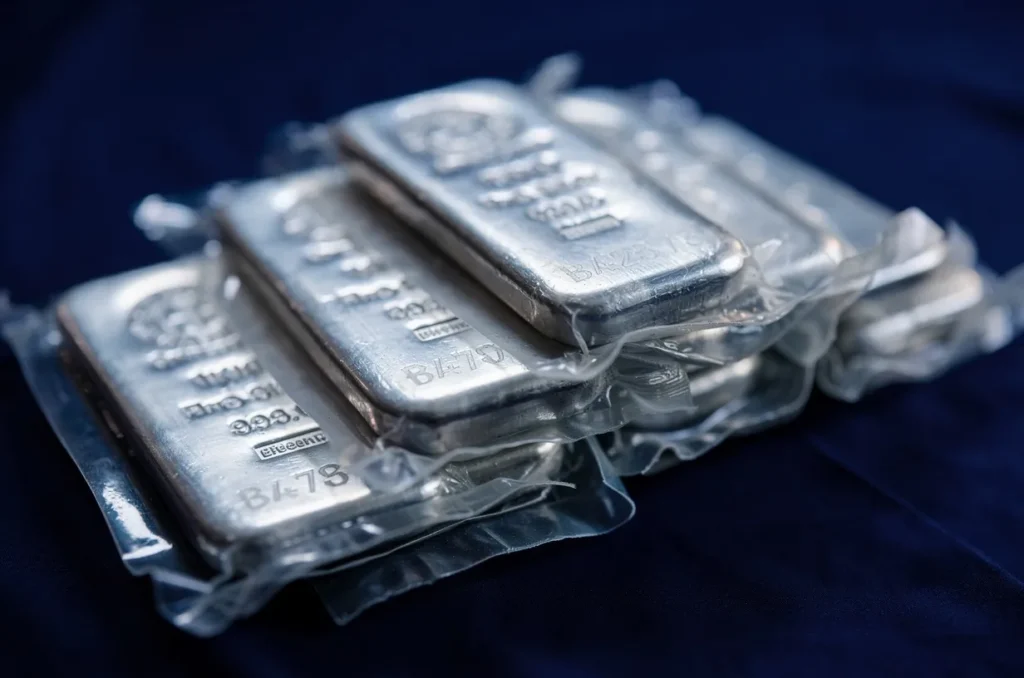
By the end of August, London vaults held 28,431 tonnes of silver, equivalent to roughly 914 million ounces. Deutsche estimates that more than 300 million ounces of that total is readily available for purchase, with freely available stocks up approximately 70% since October 2025.
Inventories have also been rising in CME warehouses and Shanghai.
Some movement between warehouses is normal, but accumulation across several major trading centers makes the change harder to dismiss as metal simply being shuffled from one location to another. Recycled supply, private holdings returning to market and weaker consumption all appear to be contributing.
A larger inventory buffer changes how silver behaves during sudden bursts of demand. Buyers that once had to compete aggressively for limited physical metal now have a much deeper pool available before another genuine shortage develops.
Scarcity can drive spectacular commodity rallies. Once the scarcity disappears, the market needs a new reason to keep paying scarcity prices.
Solar is learning how to use less silver
The biggest change is happening inside an industry that helped build silver’s long-term bull case.
Solar manufacturers still need silver because of its exceptional electrical conductivity, but soaring prices gave them a powerful incentive to reduce how much goes into every panel.
Manufacturers have responded with thinner electrical contacts, more efficient printing methods, silver-coated copper pastes and designs that use less metal altogether. The Silver Institute was already warning earlier this year that thrifting and substitution would push photovoltaic silver demand lower even as solar installations continued growing.
Deutsche now expects global silver consumption from solar to decline by more than 20% this year, with Chinese demand falling 33%. Silver usage per solar cell is expected to drop another 17%.
The economics explain the urgency. At one point earlier this year, silver represented more than 30% of the manufacturing cost of a solar module, compared with less than 10% at the beginning of 2025.
Once a raw material becomes that expensive, engineers start designing around it.
This is one of the most important lessons in commodity investing. A huge demand forecast can look permanent until the commodity becomes expensive enough to encourage substitution. Silver helped make solar one of its strongest growth markets. High silver prices are now teaching that same industry how to use less of it.
The silver trade is shifting back toward investor psychology
Industrial demand is not disappearing. AI infrastructure, vehicles, electronics and grid investment still consume significant amounts of silver, and the Silver Institute continues to see structural growth across several of those markets.
But solar was one of the strongest demand engines.
If industrial consumption softens while physical inventories remain comfortable, investment flows become far more important to price.
That introduces a different set of variables. Interest rates, the dollar, safe-haven demand and precious-metal fund flows may begin carrying more weight than whether manufacturers can physically find enough silver.
Deutsche estimates silver-backed funds could release roughly 40 million ounces by the end of 2027 if investor behavior follows patterns seen during previous Federal Reserve tightening cycles. Indian imports have also been running below year-earlier levels, while China remains the main wildcard because local prices continue to command a premium despite rising inventories.
Gold may have an advantage in that environment. Both metals can rally on monetary uncertainty and safe-haven demand, but gold does not rely on industrial consumption to the same degree.
Silver still has plenty capable of surprising the market, especially if Chinese buying strengthens or investment demand accelerates again. What has changed is the margin for error.
For years, silver bulls could point to a persistent structural deficit and shrinking available inventories.
By 2027, they may have to make the case without them.
Explore More Stories in Commodities
Disclaimer
Wall Street Access is an independent financial publisher. Wall Street Access is not a financial advisor. No company mentioned has compensated Wall Street Access for the preparation, publication or distribution of this article. This content is provided for informational and educational purposes only and is not investment advice or a recommendation to buy, sell or hold any security. Investing involves risk, including the possible loss of principal.
Prices, market capitalizations, financial figures and other market data are based on information available as of the date and time of publication and may change without notice. Information is drawn from public sources believed to be reliable but is not guaranteed to be complete or accurate. Opinions and expectations expressed are our own and may change as new information becomes available.
Readers should conduct their own due diligence and contact a licensed financial professional before making any investment decision. Past performance does not guarantee future results. Any material ownership interest or conflict of interest, where applicable, will be disclosed separately.