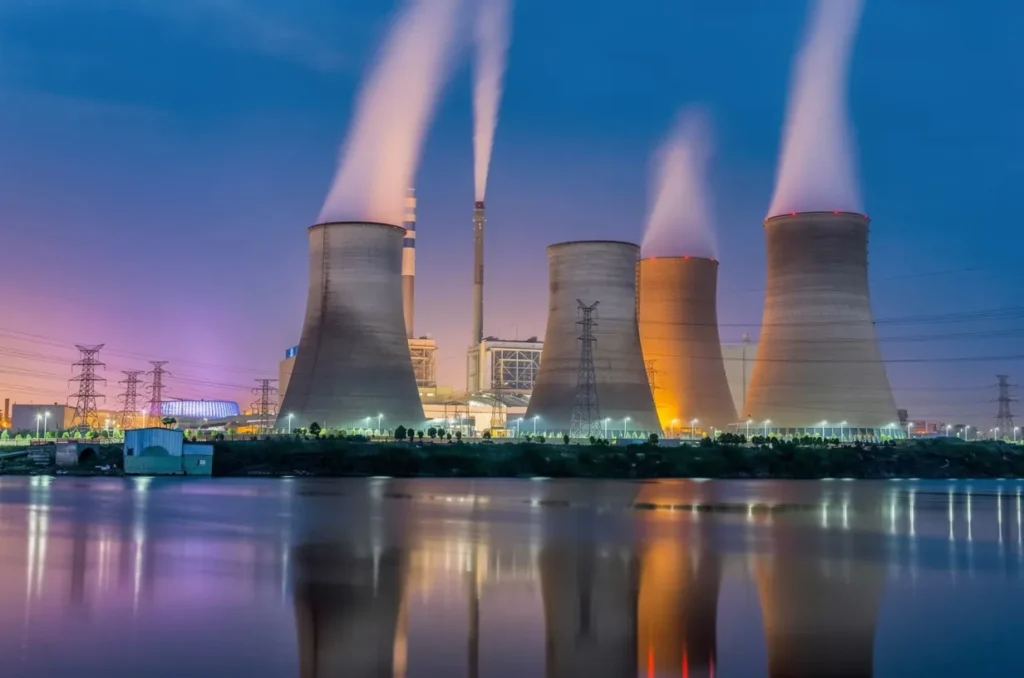
Google does not want to wait for new power plants
Google (NASDAQ: GOOGL) has spent years racing to secure more chips for AI. Now it is locking up the electricity needed to run them.
A new agreement with Constellation Energy (NASDAQ: CEG) will support more than $4.3 billion of investment across 11 nuclear reactors in Illinois, Pennsylvania and New Jersey. In return, Google gets a 20-year power agreement tied to 890 megawatts of new nuclear capacity, roughly equivalent to adding another large reactor to the grid. Google and Constellation’s 890 MW nuclear agreement
Instead of building a plant from scratch, Constellation will increase output from reactors that already exist by modernizing turbines, steam generators and digital control systems. The first additional capacity is expected in 2028, with the full 890 MW scheduled before the end of 2032.
That timeline is the most interesting part of the deal.
New nuclear plants can take years to permit, finance and construct. Upgrading an operating reactor gives Big Tech a much faster route to the one thing increasingly holding back data-center expansion: dependable electricity.
Google has already backed next-generation nuclear technologies, including a deal with Kairos Power for small modular reactors beginning around 2030. Yet AI demand is arriving much sooner. Existing nuclear plants can help bridge that gap.
Old nuclear plants are becoming growth assets
For decades, many U.S. nuclear plants were treated as mature utility assets. AI is beginning to change the economics.
Data centers need enormous amounts of electricity, but they also need it around the clock. Solar and wind can contribute plenty of generation, but their output fluctuates. Nuclear plants can operate continuously for long periods, making them particularly attractive for computing infrastructure that rarely switches off.
Google is not alone in reaching that conclusion.
Microsoft signed a 20-year agreement that is supporting the restart of the former Three Mile Island Unit 1, now called the Crane Clean Energy Center, which is expected to return roughly 835 MW to the grid. Microsoft’s nuclear agreement with Constellation Meta followed with a 20-year deal covering more than 1.1 GW from Constellation’s Clinton plant in Illinois, while Amazon recently signed another long-term agreement supporting additional capacity at Calvert Cliffs in Maryland. Amazon’s 20-year Calvert Cliffs agreement
What used to look like aging generation infrastructure is increasingly becoming scarce, long-duration AI infrastructure.
Big Tech is effectively underwriting a new investment cycle inside America’s existing nuclear fleet.
Constellation is selling something AI companies cannot easily replace
Google’s agreement actually goes beyond the 890 MW nuclear expansion.
A separate 15-year supply agreement covers another 2.7 GW of electricity across Constellation’s PJM portfolio, bringing the broader relationship to roughly 3.6 GW. Constellation will also deploy Google’s Gemini Enterprise technology across parts of its operation to improve plant planning, output and infrastructure management. Details of the broader 3.6 GW partnership
For Constellation, these contracts do more than sell electricity. Twenty-year customers provide predictable revenue that can justify billions of dollars of capital spending on assets that might otherwise have been difficult to expand.
Google gets long-term access to reliable power. Constellation gets the financial certainty to unlock more generation from plants it already owns.
That arrangement may become increasingly valuable as utilities struggle to keep pace with data-center demand. PJM, the grid covering much of the Mid-Atlantic and Midwest, is preparing for enormous load growth through the end of the decade, with AI facilities accounting for much of the increase.
Building enough entirely new generation in time will be difficult. Finding ways to extract more power from existing assets may be one of the fastest solutions available.
AI’s next bottleneck is moving outside the data center
The early AI trade revolved around semiconductors. Then investors discovered networking, memory, cooling and data centers.
Electricity is increasingly next.
Google’s deal shows how far companies are willing to go to secure it. Twenty-year contracts, multibillion-dollar plant upgrades and nuclear restarts are no longer side projects. They are becoming part of the infrastructure required to keep AI growth moving.
That broadens the opportunity considerably.
Nuclear operators such as Constellation sit directly in the path of rising demand, but the spending reaches further into turbines, grid equipment, engineering, uranium supply, plant modernization and eventually next-generation reactor technologies.
Perhaps the biggest shift is happening in how the market views power itself.
For years, compute was scarce and electricity was assumed to be available.
AI is beginning to reverse that equation. Chips can be ordered. Data centers can be built. Finding several hundred megawatts of reliable power in the right place, on the right timeline, is becoming much harder.
Google just committed for 20 years to make sure it has enough.
Disclaimer
Wall Street Access is an independent financial publisher. Wall Street Access is not a financial advisor. No company mentioned has compensated Wall Street Access for the preparation, publication or distribution of this article. This content is provided for informational and educational purposes only and is not investment advice or a recommendation to buy, sell or hold any security. Investing involves risk, including the possible loss of principal.
Prices, market capitalizations, financial figures and other market data are based on information available as of the date and time of publication and may change without notice. Information is drawn from public sources believed to be reliable but is not guaranteed to be complete or accurate. Opinions and expectations expressed are our own and may change as new information becomes available.
Readers should conduct their own due diligence and contact a licensed financial professional before making any investment decision. Past performance does not guarantee future results. Any material ownership interest or conflict of interest, where applicable, will be disclosed separately.