esla’s car business just delivered a much-needed surprise
Tesla (NASDAQ: TSLA) gave investors something Friday that has been increasingly difficult to find in the electric vehicle market: a meaningful upside surprise.
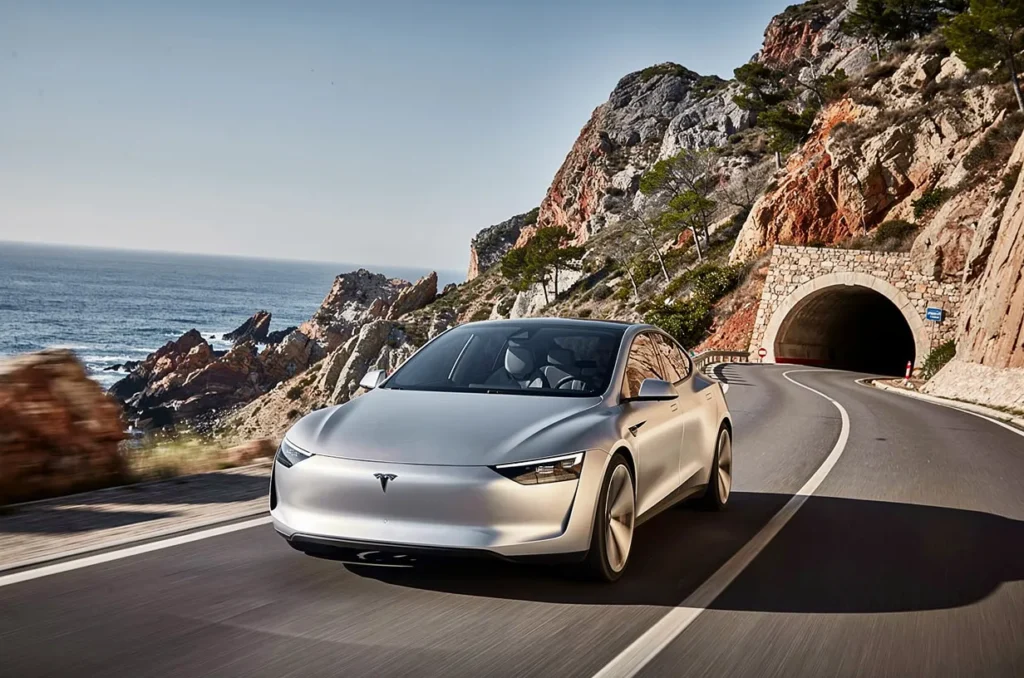
The company delivered 486,532 vehicles and produced 464,391 in the third quarter. That comfortably exceeded Tesla’s company-compiled consensus of 461,974 deliveries from 24 sell-side analysts, a beat of roughly 25,000 vehicles, or just over 5%.
Tesla shares responded by jumping more than 5% in Friday trading.
The year-over-year comparison is less impressive. Deliveries were down about 2% from the record 497,099 vehicles Tesla delivered in Q3 2025. But that quarter benefited from a rush of U.S. buyers ahead of the expiration of the federal EV tax credit, making it a difficult comparison. More importantly, deliveries actually edged higher from the 480,126 vehicles sold in Q2, despite expectations for a sequential decline.
That changes the tone around Tesla’s automotive business.
The question entering the quarter was whether weakening EV demand would produce another material step down in volumes. Instead, Tesla delivered its strongest quarter of 2026 and beat expectations by a wide margin.
It does not prove that vehicle growth has returned. It does show that Tesla’s core business is holding up better than Wall Street expected.
The more interesting Tesla story is getting broader
Vehicle deliveries still matter enormously to Tesla, but the company is gradually building businesses that make the quarterly car number less important on its own.
Energy storage is one of them.
Tesla deployed 13.7 GWh of storage products during Q3, up from 13.5 GWh in the second quarter and 12.5 GWh a year earlier. That came in below the 15.9 GWh analyst consensus, but the long-term opportunity is becoming increasingly connected to something much larger than renewable energy.
AI data centers need enormous amounts of reliable electricity, and Tesla’s Megapack has now qualified for Nvidia’s DSX Ready program for AI infrastructure. Battery systems can help data centers handle sudden power swings, support grid connections and provide backup capacity as developers race to bring new computing facilities online.
Tesla is suddenly sitting at the intersection of two enormous infrastructure buildouts: electricity storage and AI data centers.
The company’s commercial vehicle business is moving forward as well. Tesla recently began broader deliveries of the Semi from its new Nevada production facility, moving a program announced nearly nine years ago into a much more meaningful manufacturing phase.
The passenger vehicle business pays the bills today. Energy storage and commercial trucking give Tesla more ways to grow beyond it.
October 21 will tell us how good the quarter really was
Delivery numbers are only one half of the equation.
Tesla can move more vehicles through incentives, financing offers or pricing adjustments, but investors ultimately need to know what those deliveries generated in revenue and profit.
That makes the company’s October 21 earnings report considerably more important than Friday’s headline number.
Margins will show whether Tesla’s stronger volumes came with healthy economics. Energy results will provide a better look at how quickly Megapack is scaling. Investors should also get more detail on Semi production and Tesla’s broader spending plans as the company pushes simultaneously into autonomous driving, robotics, AI infrastructure and energy.
The much-hyped Roadster reveal has meanwhile been pushed to October 15 because of weather. Whatever Tesla eventually demonstrates there will attract plenty of attention, but the Roadster is unlikely to determine the company’s near-term financial trajectory.
The bigger development this quarter happened in a much less dramatic place.
Tesla sold more cars than Wall Street thought it would, while several of the businesses designed to make it less dependent on car sales moved another step forward.
That is a better setup heading into earnings than investors had a week ago.
Explore More Stories in Markets
Disclaimer
Wall Street Access is an independent financial publisher. Wall Street Access is not a financial advisor. No company mentioned has compensated Wall Street Access for the preparation, publication or distribution of this article. This content is provided for informational and educational purposes only and is not investment advice or a recommendation to buy, sell or hold any security. Investing involves risk, including the possible loss of principal.
Prices, market capitalizations, financial figures and other market data are based on information available as of the date and time of publication and may change without notice. Information is drawn from public sources believed to be reliable but is not guaranteed to be complete or accurate. Opinions and expectations expressed are our own and may change as new information becomes available.
Readers should conduct their own due diligence and contact a licensed financial professional before making any investment decision. Past performance does not guarantee future results. Any material ownership interest or conflict of interest, where applicable, will be disclosed separately.