This is much bigger than a 2% move
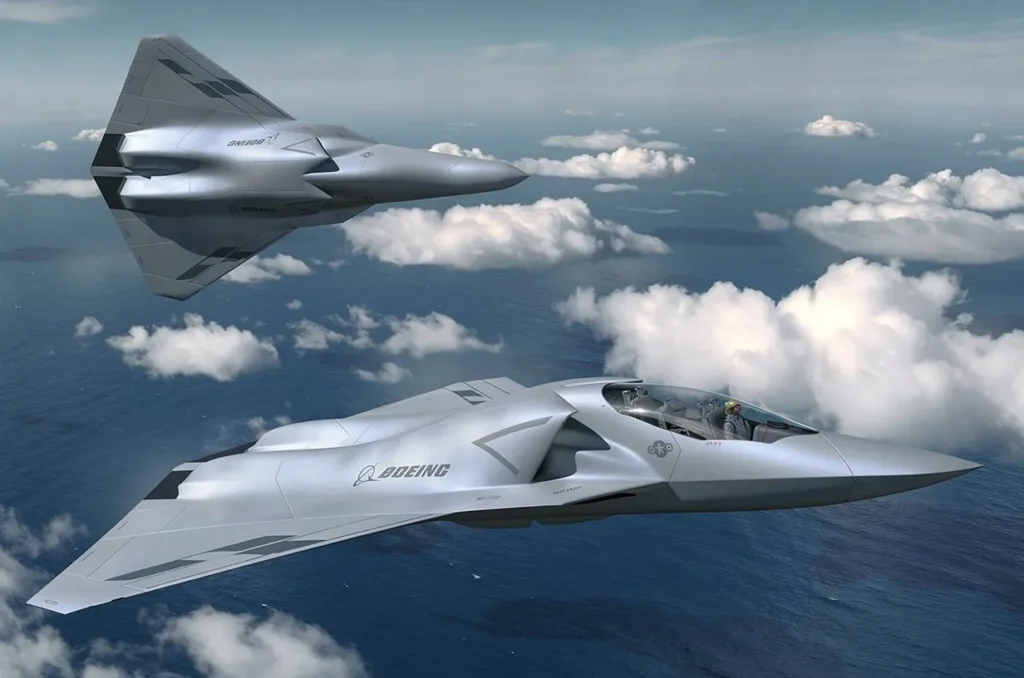
Boeing (NYSE: BA) shares climbed after the U.S. Navy selected the company over Northrop Grumman (NYSE: NOC) to develop its next-generation F/A-XX fighter.
The headline number is enormous. The full-scale development contract is valued at more than $20 billion and covers multiple test aircraft for ground testing, airworthiness, systems development and weapons integration.
But the strategic win is arguably even larger.
Boeing also won the U.S. Air Force’s F-47 sixth-generation fighter program in 2025. With F/A-XX added, Boeing has now been selected for both of America’s major crewed sixth-generation fighter programs.
That gives Boeing a position it has not held in years: the company is now at the center of the next generation of American fighter aircraft.
Northrop Grumman shares fell following the decision, while Boeing gained roughly 2% as investors digested what could become one of the most important defense awards in the company’s modern history.
The Navy needs a fighter built for a much longer-range war
F/A-XX is being developed to eventually replace the Navy’s F/A-18E/F Super Hornet fleet beginning in the 2030s and operate alongside aircraft such as the F-35C.
The aircraft’s specifications remain largely classified, but Congress and the Navy have highlighted several priorities, including greater range, speed, stealth, survivability and integration with uncrewed aircraft.
Range is particularly important.
Carrier aviation has spent decades operating around aircraft designed for conflicts where U.S. carriers could move relatively close to their targets. A future conflict in the Indo-Pacific would create a very different problem, with longer distances and increasingly capable anti-ship weapons threatening carriers well before their aircraft reach enemy territory.
F/A-XX is intended to extend the reach of the carrier air wing while operating as part of a much larger network of sensors, weapons and autonomous systems.
The next generation of fighter aircraft is increasingly being designed as the center of a combat network rather than simply a more advanced version of today’s jet.
Congress has repeatedly backed the program even after Pentagon officials considered slowing its development because of concerns about whether the industrial base could handle F/A-XX and F-47 simultaneously. Lawmakers appropriated hundreds of millions of dollars toward F/A-XX development before this week’s award and argued that the Navy and Air Force programs serve different missions.
Boeing has quietly rebuilt one of the strongest fighter portfolios in America
A few years ago, Boeing faced a very different outlook in military aircraft.
Production of legacy programs such as the F/A-18 was approaching its eventual end, raising questions about what would replace decades of fighter manufacturing work in St. Louis.
The answer is becoming much clearer.
Boeing’s current and future combat-aircraft portfolio now includes:
- F/A-XX: Navy sixth-generation carrier fighter, with a development contract worth more than $20 billion
- F-47: Air Force sixth-generation fighter awarded to Boeing in 2025
- F-15EX: Boeing was awarded another $2.38 billion contract for 22 aircraft this week, bringing the total under contract to 120
- Existing F/A-18 and EA-18G programs: continuing to support the Navy as the next generation is developed
Boeing has been preparing its manufacturing footprint for that transition.
The company is building a new secure advanced-manufacturing facility in St. Louis that Boeing describes as its largest secure production facility in the U.S. It is designed around digital manufacturing and multiple next-generation aircraft programs, giving Boeing capacity to work on F-47 and F/A-XX in parallel.
That investment now looks considerably more important after winning both competitions.
The $20 billion contract could be only the first layer
The initial F/A-XX award covers full-scale development rather than the entire lifetime of the aircraft program.
If development progresses into large-scale procurement, decades of aircraft production, upgrades, maintenance, software, weapons integration and international opportunities could follow. Reuters reported that the ultimate value of the program could rise substantially beyond the development contract as the aircraft moves toward production in the 2030s.
That is where the Boeing story becomes more interesting.
The company’s commercial aircraft business is still significantly larger and remains central to cash flow, but defense can provide something different: very long-duration programs backed by government budgets and measured in decades rather than product cycles.
Winning F-47 was already a major validation of Boeing’s advanced military aircraft business.
Winning F/A-XX a year later changes the scale.
Boeing now has the development rights to the next major land-based U.S. fighter and the next carrier-based fighter at the same time, while its St. Louis operation is being rebuilt around producing both.
The market reacted to a $20 billion contract. The larger opportunity is that Boeing may have just secured a central role in U.S. fighter aviation for the next several decades.
Disclaimer
Wall Street Access is an independent financial publisher. Wall Street Access is not a financial advisor. No company mentioned has compensated Wall Street Access for the preparation, publication or distribution of this article. This content is provided for informational and educational purposes only and is not investment advice or a recommendation to buy, sell or hold any security. Investing involves risk, including the possible loss of principal.
Prices, market capitalizations, financial figures and other market data are based on information available as of the date and time of publication and may change without notice. Information is drawn from public sources believed to be reliable but is not guaranteed to be complete or accurate. Opinions and expectations expressed are our own and may change as new information becomes available.
Readers should conduct their own due diligence and contact a licensed financial professional before making any investment decision. Past performance does not guarantee future results. Any material ownership interest or conflict of interest, where applicable, will be disclosed separately.