Rare earth magnets need a lot more than rare earths
Washington has spent billions trying to rebuild America’s rare earth supply chain, but the next bottleneck may be a material that receives far less attention.
Iron.
Texas startup Hertha Metals announced a $133.65 million Series A financing, including a $65 million equity investment from the U.S. government through the Industrial Base Analysis and Sustainment program in partnership with the Economic Defense Unit.
Private investors including Khosla Ventures, Doerr Capital, Toyota Ventures, Siemens Financial Services and Gates Frontier also participated.
The capital will fund construction of Hertha Chalyx, a new Texas facility designed to produce 10,000 tonnes of steel-grade and magnet-grade high-purity iron.
That matters because high-performance neodymium-iron-boron, or NdFeB, permanent magnets are approximately 70% high-purity iron by weight.
Yet according to Hertha, the U.S. currently imports almost all of the high-purity iron used in those magnets.
Rare earths may get most of the attention, but mining neodymium, dysprosium or terbium does not create a domestic magnet supply chain if another essential ingredient still has to come from overseas.
The Pentagon appears increasingly focused on finding and funding every weak link between the mine and the finished magnet.
Washington is moving deeper into the supply chain
The Hertha investment fits a much broader shift in U.S. critical-minerals policy.
Government capital is increasingly moving beyond exploration projects and into the industrial infrastructure required to turn raw materials into products that defense contractors and manufacturers can actually use.
Permanent magnets sit directly inside that strategy. They are essential across fighter aircraft, radar systems, missiles, electric vehicles, robotics, industrial motors and data-center infrastructure.
Hertha’s role is unusually specific: produce the high-purity iron needed alongside rare earth materials to manufacture those magnets domestically.
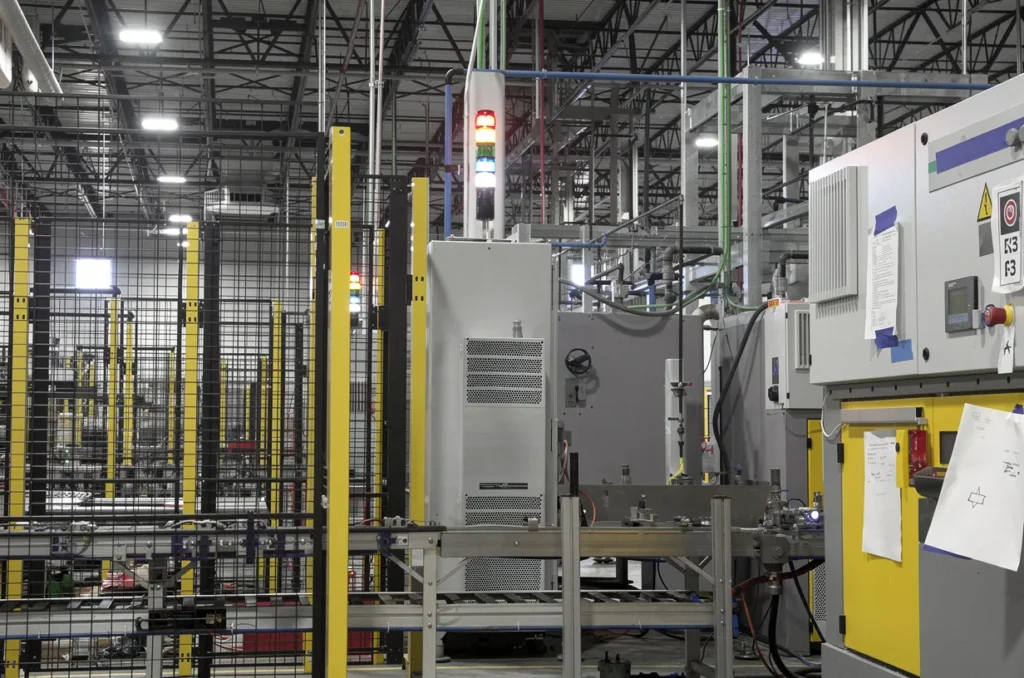
Its planned Chalyx facility would sit alongside the company’s existing 360-tonne-per-year demonstration plant in Conroe, Texas, where Hertha says it is already going through supplier qualification with major U.S. rare earth magnet producers.
Breaking ground on a 10,000-tonne facility would move the company from demonstration-scale production toward a much more meaningful domestic manufacturing footprint.
The technology could matter beyond magnets
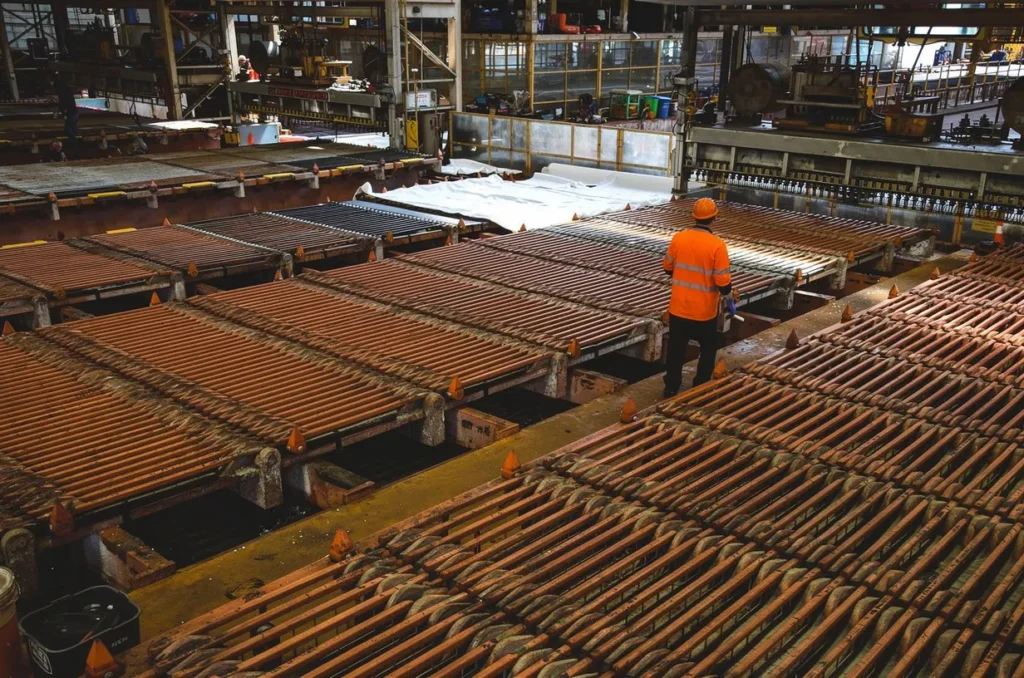
Hertha is also trying to change how the iron itself is produced.
Its FLEXHERS process, short for flexible fuel hydrogen electric reduction smelting, combines electric-arc-furnace technology with natural gas or hydrogen and is designed to produce iron and steel in a single continuous process.
The company says the system can work with different grades of iron ore and produce material at approximately 25% lower cost than conventional blast furnaces.
Hertha also estimates emissions reductions of roughly:
- 50% using natural gas
- Up to 98% using hydrogen
Those are company projections, but if the economics scale as planned, Hertha would be addressing two problems at once: supplying a strategically important magnet input and offering another domestic route for producing iron and steel.
That helps explain why the government investment arrived through a program focused on strengthening the U.S. industrial base rather than simply supporting another clean-energy startup.
The magnet race is becoming a hunt for missing pieces
The rare earth story is often simplified into a race to discover and develop more mines.
The actual supply chain is much longer.
Ore has to be mined, separated and refined. Rare earth oxides must become metals and alloys. Magnet manufacturers need high-purity iron and other inputs. Finished magnets then have to meet demanding specifications for defense, automotive and industrial customers.
A weakness at any one stage can leave the entire chain dependent on foreign supply.
Hertha’s $65 million government investment is another sign that Washington is beginning to look at the problem that way.
The opportunity across critical minerals may therefore extend well beyond companies that own the deposits. Processing technology, metals, alloys, specialty feedstocks and magnet manufacturing are all becoming strategic assets in their own right.
Hertha is building one of those missing links in Texas.
And as the U.S. pushes toward a fully domestic mine-to-magnet supply chain, the companies capable of solving overlooked bottlenecks may attract some of the most important capital in the sector.
Explore More Stories in Commodities
Disclaimer
Wall Street Access is an independent financial publisher. Wall Street Access is not a financial advisor. No company mentioned has compensated Wall Street Access for the preparation, publication or distribution of this article. This content is provided for informational and educational purposes only and is not investment advice or a recommendation to buy, sell or hold any security. Investing involves risk, including the possible loss of principal.
Prices, market capitalizations, financial figures and other market data are based on information available as of the date and time of publication and may change without notice. Information is drawn from public sources believed to be reliable but is not guaranteed to be complete or accurate. Opinions and expectations expressed are our own and may change as new information becomes available.
Readers should conduct their own due diligence and contact a licensed financial professional before making any investment decision. Past performance does not guarantee future results. Any material ownership interest or conflict of interest, where applicable, will be disclosed separately.