TSMC does not need to pick the next AI winner
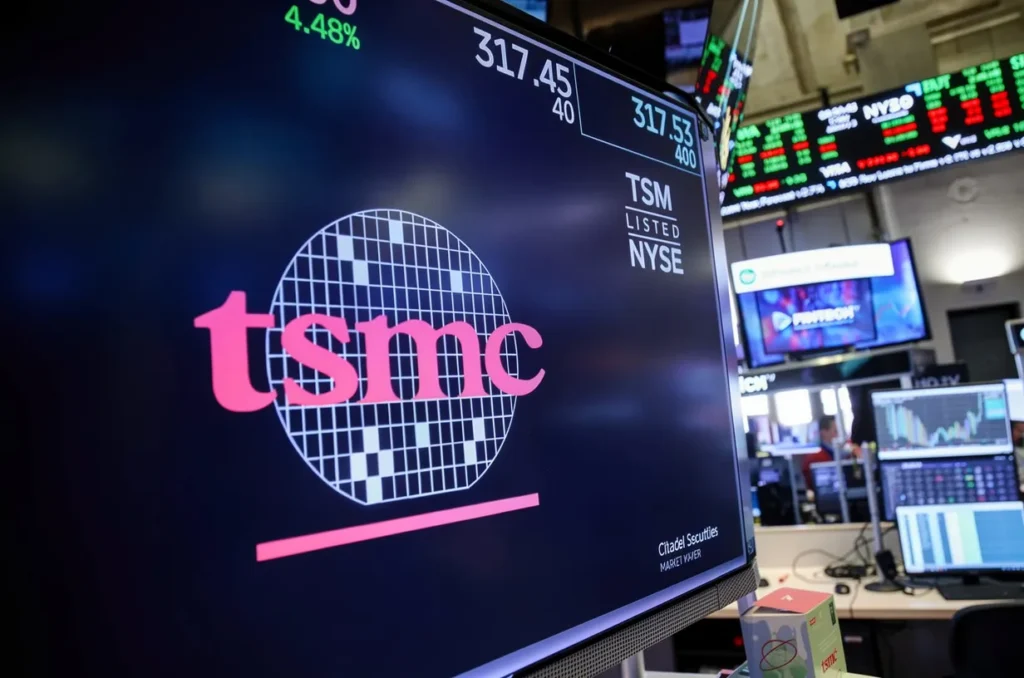
Taiwan Semiconductor Manufacturing (NYSE: TSM) has already delivered one of the strongest semiconductor runs of the year. Shares are up nearly 40% in 2026, and the stock has recently pushed into record territory.
Normally, that kind of move would make the next leg harder to justify. TSMC has a different advantage: almost every major AI chip company still needs access to the same factories.
Nvidia can win. AMD can gain share. Broadcom can expand custom accelerators. Cloud companies can design more chips themselves. TSMC can benefit from all of them because it manufactures much of the world’s most advanced silicon.
Citi analyst Atif Malik now expects TSMC revenue to grow more than 40% in 2027, supported by AI compute demand, agentic AI and another networking investment cycle. His argument is not simply that AI remains strong. It is that expectations for TSMC may still be catching up with how quickly its customers are expanding.
TSMC’s own numbers already point in that direction. Revenue through August was up 39.3% from a year earlier, while management expects third-quarter revenue of $44.6 billion to $45.8 billion, up sharply from $40.2 billion in Q2.
TSMC may be one of the cleanest ways to own the AI arms race because it does not have to predict which chip designer ultimately wins it.
Its biggest customers are still accelerating
The demand signals coming from TSMC’s customers make the 2027 setup difficult to ignore.
Nvidia has pointed to another major increase in order intake as AI infrastructure spending continues. AMD expects rapid expansion in its data-center AI business, while Broadcom sees its AI semiconductor revenue approaching another year of explosive growth.
Those forecasts eventually become foundry demand.
Every new accelerator, custom AI chip and networking processor has to be manufactured somewhere, and at the leading edge, the list of companies capable of producing them at enormous scale is extremely short.
TSMC held roughly 73% of the pure-play foundry market in the second quarter, according to industry estimates carried by TradingView, putting it far ahead of its nearest competitors. Its lead is especially important at advanced nodes, where AI chips demand the highest performance and efficiency.
That gives TSMC pricing power, but capacity may matter even more. Tight wafer supply means customers cannot simply move billions of dollars of advanced-chip orders to another manufacturer overnight.
The next generation of chips could extend the cycle
A second growth engine is arriving just as current AI demand remains strong.
TSMC’s 2-nanometer process entered volume production in late 2025, and the company expects a rapid ramp through 2026 as smartphone and high-performance computing customers move onto the technology. A16, another process aimed heavily at high-performance computing, is also scheduled to ramp this year. TSMC says A16 can deliver significantly better speed and power efficiency than its previous generation.
Those transitions matter because leading customers pay for better performance, lower power consumption and greater transistor density. AI data centers consume extraordinary amounts of electricity, making each improvement in efficiency increasingly valuable.
Citi also expects more AI workloads to migrate onto N3, N2 and A16 over the next several years. Instead of today’s AI demand simply continuing, TSMC could benefit from customers upgrading into newer and more expensive manufacturing processes at the same time.
Capital spending will likely follow. Management has already been expanding leading-edge capacity aggressively, and stronger 2027 demand could require another step higher.
TSMC is not just selling more wafers. It is moving customers onto increasingly valuable wafers while demand remains constrained.
October 15 will test how much optimism is already deserved
Record highs change the risk.
TSMC is no longer being valued as an overlooked semiconductor manufacturer. Investors understand its central role in AI, and expectations are rising quickly. A slowdown in AI spending, delays in customer products or weaker margins during heavy capacity expansion could punish the stock more severely after such a strong run.
Geopolitical exposure also remains impossible to ignore given how much advanced manufacturing is still concentrated in Taiwan, even as TSMC builds additional capacity in the United States, Japan and Europe.
Still, earnings expectations continue moving higher rather than lower.
TSMC reports third-quarter results on October 15, giving investors an immediate test of whether the fundamentals are keeping pace with the stock.
Watch revenue guidance, gross margins, advanced-node demand and any change to capital spending. Those numbers will show whether the market is simply celebrating an incredible year or beginning to price another one.
A record stock price usually invites the question: how much upside can possibly be left?
For TSMC, the better question may be how much larger the AI manufacturing bottleneck becomes if Nvidia, AMD, Broadcom and the hyperscalers all keep accelerating at once.
That is what could keep the earnings upgrades coming.
Disclaimer
Wall Street Access is an independent financial publisher. Wall Street Access is not a financial advisor. No company mentioned has compensated Wall Street Access for the preparation, publication or distribution of this article. This content is provided for informational and educational purposes only and is not investment advice or a recommendation to buy, sell or hold any security. Investing involves risk, including the possible loss of principal.
Prices, market capitalizations, financial figures and other market data are based on information available as of the date and time of publication and may change without notice. Information is drawn from public sources believed to be reliable but is not guaranteed to be complete or accurate. Opinions and expectations expressed are our own and may change as new information becomes available.
Readers should conduct their own due diligence and contact a licensed financial professional before making any investment decision. Past performance does not guarantee future results. Any material ownership interest or conflict of interest, where applicable, will be disclosed separately.