Stock buyers see opportunity. Bond traders see trouble.
CoreWeave (NASDAQ: CRWV) is becoming one of the most interesting battlegrounds in Wall Street’s increasingly nervous AI trade.
After losing more than 40% of its value since October 6, shares fell to approximately $57.24 during Tuesday’s session, their lowest level since May 2025. Buyers quickly stepped in, pushing the stock back above Monday’s $59.25 low and raising the possibility of a technical reversal.
Yet beneath the stock market’s attempt at a recovery, something considerably more concerning is happening.
The cost of protecting CoreWeave’s debt against default has surged to approximately 1,090 basis points, nearly three times its level a year ago. Based on prevailing market pricing and assumptions about recovery values, that translates into an implied default probability of roughly 60% over the next five years.
Credit default swaps, or CDS, function much like insurance on corporate debt. When investors become worried about a company’s ability to repay what it owes, that protection becomes more expensive. The sharp increase in AI-related default insurance has become one of the clearest signs that sentiment is changing.
A market-implied probability is not a prediction that CoreWeave will default. Insurance pricing reflects uncertainty, hedging demand and assumptions about potential losses. But the message is difficult to ignore.
Equity investors are betting that CoreWeave’s selloff has gone too far. Credit investors are demanding substantially more protection against the possibility that its financing model comes under pressure.
CoreWeave’s problem isn’t finding AI customers
Few companies illustrate the extraordinary demand for artificial intelligence infrastructure better than CoreWeave.
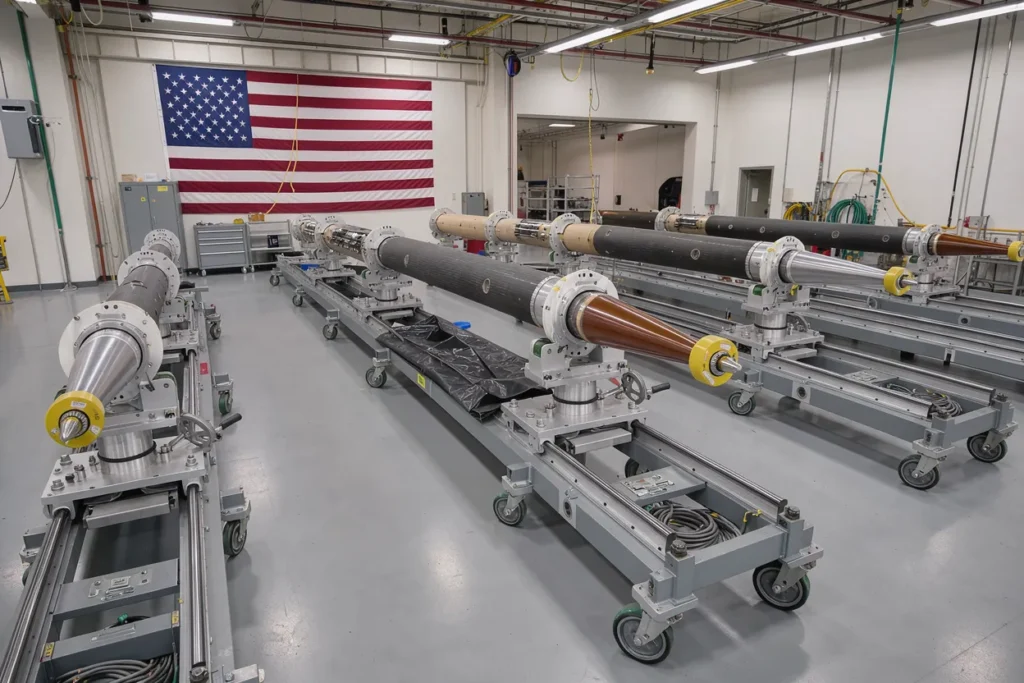
Its business revolves around providing high-performance computing capacity to AI developers and major technology companies. Demand has grown rapidly as customers compete to secure increasingly powerful Nvidia processors and the data-center infrastructure required to run them.
In its second-quarter results, CoreWeave reported:
- Revenue of $2.58 billion, more than double the previous year’s level
- Approximately $104 billion in contracted revenue backlog, excluding more than $25 billion in additional customer commitments secured early in the following quarter
- $640 million in net interest expense, more than twice the $267 million recorded a year earlier
- A net loss of $626 million, despite accelerating revenue growth
Customers are willing to commit billions for future computing capacity. The challenge is that CoreWeave must finance the infrastructure before much of that revenue can be collected.
Data centers require expensive GPUs, power infrastructure, networking equipment and years of construction and operation. Much of CoreWeave’s expansion has been financed through debt, leaving the company especially sensitive to borrowing costs.
The pressure is already visible. Some of its outstanding bonds have recently traded at yields exceeding 15%, a level that reflects significant concern among lenders. CoreWeave’s growing debt burden has become a focal point of the AI selloff.
Higher financing costs can eat into the returns from new data centers before those projects have generated enough revenue to repay their investment.
CoreWeave has already proved that customers want its computing power. Wall Street now wants proof that supplying it can generate enough cash to comfortably service the debt.
The warning is spreading beyond CoreWeave
Investors are beginning to question the financing behind the broader AI infrastructure boom.
Default-insurance costs have also risen for Oracle, Meta, Amazon, Alphabet and Microsoft, although the increases remain much less severe than those seen at CoreWeave.
Oracle’s five-year CDS recently approached 300 basis points, while protection on Meta and Nvidia has also become more expensive. The widening spreads suggest that credit investors are reassessing how much debt the AI expansion can support, particularly with inflation elevated and Treasury yields near multidecade highs.
Still, treating every AI company as though it faces CoreWeave’s financial risks would be a mistake.
Microsoft, Alphabet, Amazon and Meta generate enormous cash flows from established businesses. CoreWeave operates a much more capital-intensive model, with substantial dependence on outside financing and future contracted revenue.
Barclays recently argued that even a complete halt in CoreWeave’s capital spending would represent only around 4% to 5% of total AI infrastructure investment. Its analysts believe fears of broader contagion may be excessive.
Goldman Sachs has also upgraded CoreWeave to Buy, pointing to tight computing capacity and improving potential returns as demand for AI infrastructure continues to expand.
Both arguments have merit. Strong demand could allow CoreWeave to grow into its debt burden, while lower borrowing costs or more favorable financing arrangements could improve its outlook. The recent share-price decline may become an attractive entry point if those conditions materialize.
But a temporary stock rebound is not enough to establish that the financial risks have disappeared.
Investors should be watching whether borrowing costs stabilize, credit spreads narrow and operating cash flow begins catching up with capital spending. Continued demand for AI computing will only strengthen the investment case if the business can generate attractive returns after financing costs.
CoreWeave’s next earnings reports will provide a better test than Tuesday’s stock-market reversal.
The AI boom is not necessarily running out of demand. It may be entering a phase where the companies that can afford to build the infrastructure separate themselves from those that need increasingly expensive debt to keep up.
CoreWeave could still emerge as one of the industry’s major winners. Its debt market is making clear how much financial execution will be required to get there.
Disclaimer
Wall Street Access is an independent financial publisher. Wall Street Access is not a financial advisor. No company mentioned has compensated Wall Street Access for the preparation, publication or distribution of this article. This content is provided for informational and educational purposes only and is not investment advice or a recommendation to buy, sell or hold any security. Investing involves risk, including the possible loss of principal.
Prices, market capitalizations, financial figures and other market data are based on information available as of the date and time of publication and may change without notice. Information is drawn from public sources believed to be reliable but is not guaranteed to be complete or accurate. Opinions and expectations expressed are our own and may change as new information becomes available.
Readers should conduct their own due diligence and contact a licensed financial professional before making any investment decision. Past performance does not guarantee future results. Any material ownership interest or conflict of interest, where applicable, will be disclosed separately.