Aluminum is trading as if the Gulf shock can be managed
Aluminum has been hit by one of the largest supply disruptions in years, but the benchmark price is no longer acting like it.
London Metal Exchange three-month aluminum surged to a four-year high of $3,787.50 per tonne in early June after the Middle East conflict disrupted production and logistics across the Gulf. It has since fallen back to around $3,170 per tonne, roughly where it traded before the US and Israel launched strikes on Iran in late February.
That is a surprising reset. Damage to Gulf smelters and constrained logistics have removed more than 2 million tonnes of annualized supply from the market. Gulf production fell by 20% in the first half of the year, according to the International Aluminium Institute.
The market is effectively betting that the lost supply can be covered by recovery at damaged facilities, higher exports from China and growing output from Indonesia.
Gulf production is recovering, but slowly
The market has taken comfort from progress at Emirates Global Aluminium’s Al Taweelah facility, where repairs and restarts are underway after an Iranian missile strike. The alumina refinery is expected to return to production this quarter, and the company had restarted 89 of 1,262 smelter cells as of July 2.
That is a positive signal, but it is not a full recovery. Restarting aluminum smelter capacity is not like flipping a switch. Cell restarts take time, and full production normalization can stretch across months.
The situation is less clear at Aluminium Bahrain, which was also hit by Iranian strikes. Qatar Aluminum is still operating at roughly 60% capacity.
That means the Gulf supply hit remains real, even if the futures market has stopped pricing it aggressively.
China is absorbing part of the shock
The reason aluminum prices have calmed is that the market expects Asia to fill part of the supply gap.
China’s aluminum smelters are running near full capacity, supported by strong margins from lower alumina costs and high metal prices. Consultancy AZ Global estimates capacity utilization near 99%.
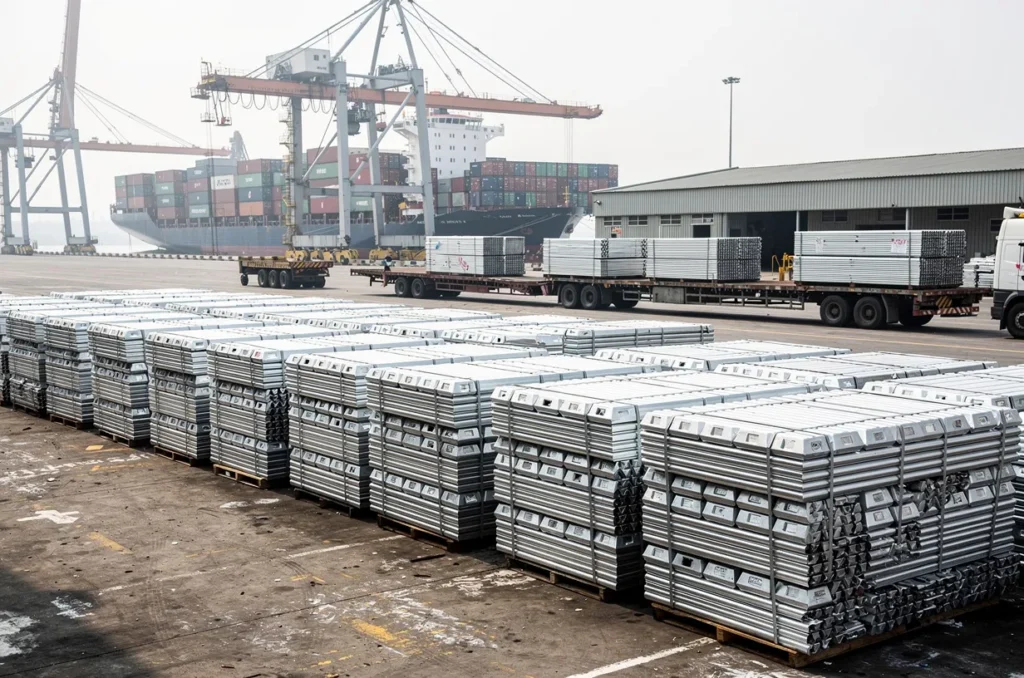
China is also exporting more semi-manufactured aluminum products, including bars, rods and tubes. According to World Bureau of Metal Statistics data, exports of semi-fabricated aluminum products rose 10% year over year in the first five months of 2026. Shipments reached 595,000 tonnes in May, the highest monthly level since November 2024.
Those exports are not a perfect replacement for lost Gulf primary aluminum and alloy production. But they can reduce demand for Western semi-products and ease pressure on the broader market.
The downside is trade friction. Chinese aluminum exports compete directly with producers in the US and Europe, which have already responded with protectionist measures in parts of the market.
Indonesia is becoming a larger aluminum supplier
Indonesia is also becoming more important in the aluminum supply chain.
New smelter capacity backed by Chinese investment is turning the country into a fast-growing source of primary aluminum. The 480,000-tonne-per-year Hua Chin smelter ramped up last year and has applied to register its HCAI brand with the LME. Alamtri Resources Indonesia is also commissioning a similar-sized plant and shipped its first exports in June.
The project pipeline is large. Greg Wittbecker of Wittsend Commodity Advisors estimates Indonesia could have as many as 11 new smelters with combined annual capacity of 13 million tonnes.
Trade data already shows the shift. Indonesia’s primary aluminum exports rose from 155,000 tonnes in 2024 to 511,000 tonnes in 2025, then climbed another 58% year over year in the first five months of 2026.
That growth helps explain why the market is more relaxed about Gulf disruptions. New supply is arriving, and some of it is already moving into global trade flows.
European stockpiles may be hiding the real tightness
Indonesia’s export pattern also creates a more cautious signal.
A meaningful amount of Indonesian aluminum moved into Europe late last year, including shipments to Spain, Croatia, Bulgaria, Italy, the UK and Turkey. That appears to have been partly driven by stock-building ahead of Europe’s Carbon Border Adjustment Mechanism, which began this year.
That inventory cushion may now be helping absorb the Gulf disruption.
The question is how much of that stock has already been drawn down and when it needs to be replaced. If European buyers built inventories before new carbon-related import costs took effect, the current market may look better supplied than it really is.
This is where the futures market and physical market are telling different stories.
Physical premiums still show stress
The LME aluminum price may have lost its war premium, but regional physical premiums remain elevated.
The European duty-unpaid premium is up about 65% since the start of the US-Iran conflict. The Japanese premium has more than doubled.
That matters because physical premiums reflect what buyers are paying to access metal in specific regions. If futures prices are calm but physical premiums are rising, it suggests the global benchmark may be underestimating local tightness.
The aluminum market is not necessarily saying supply risk is gone. It may be saying visible inventory, Chinese exports and Indonesian supply are enough to calm headline prices for now.
The risk is that the market is too relaxed
Aluminum is still exposed to several pressure points.
Gulf production may take months to normalize. Hormuz and Red Sea logistics remain vulnerable. Chinese exports could face more trade barriers. Indonesian supply is growing quickly, but some of it is coal-powered and exposed to carbon-related import costs in Europe.
The key risks are straightforward:
- Gulf smelter recovery takes longer than expected
- Physical premiums stay elevated in Europe and Japan
- China exports trigger more trade restrictions
- Indonesian supply faces carbon-cost pressure
- Middle East logistics deteriorate again
The futures market has removed much of the war premium. The physical market has not.
WSA Take
Aluminum prices are acting like the Gulf supply shock can be managed, largely because China and Indonesia are adding enough export supply to calm the benchmark market.
The caution is in the physical premiums. Europe and Japan are still paying more for metal, which suggests the supply chain is tighter than the LME price implies. The war premium has faded, but the aluminum market is not fully out of the woods.
Explore More Stories in Commodities
Disclaimer
WallStAccess is a financial media platform providing market commentary and analysis for informational and educational purposes only. This content does not constitute investment advice, a recommendation, or an offer to buy or sell any securities. Readers should conduct their own research or consult a licensed financial professional before making investment decisions.