
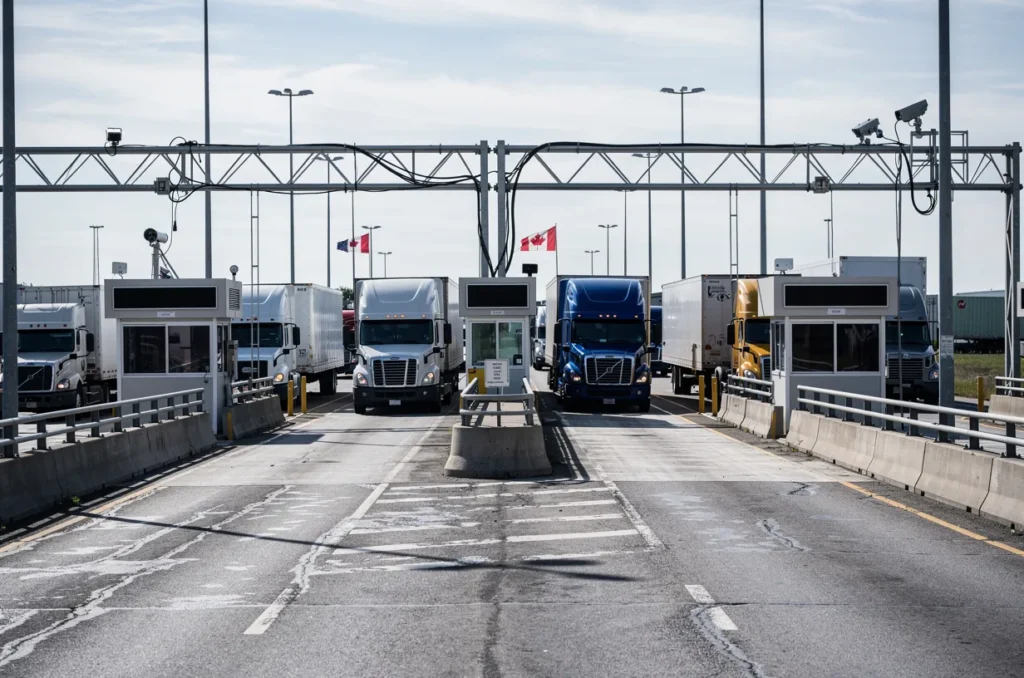
The US-Canada trade fight just escalated
The US administration signed three proclamations Monday that would impose 50% tariffs on a wide range of Canadian goods, marking a major escalation in trade tensions between Washington and Ottawa.
The proposed duties are focused on Canadian actions around automobiles, alcohol and dairy products. A senior administration official said the impact could range from “wine to hockey sticks to cement,” while the automobile proclamation alone listed 18 pages of goods that could be covered if the action moves forward.
The most important detail is that the tariffs could apply even to goods that were previously exempted under the US-Mexico-Canada Agreement. That raises the stakes because USMCA has been the core trade framework between the two countries for years.
The tariffs will not take effect for 30 days, leaving a short window for negotiations before the duties become active.
The White House is framing the move as defensive
The US administration described the tariffs as a response to what it called Canada’s “continued discrimination” against US goods.
Officials pointed to Canadian rules that limit exports of US cars and alcohol into Canada, while allegedly treating other countries differently. The White House also highlighted dairy quotas, saying Canada’s restrictions on US cheese are more severe than the tariff-rate quotas applied to similar imports from the European Union.
The measures are being pursued under Section 338 of the Tariff Act of 1930, a rarely used law that allows tariffs of up to 50%. That legal route is likely to face immediate challenges, but it gives the administration a framework for imposing steep duties if the dispute is not resolved.
A senior official said, “This is not a trade war with Canada,” describing the move instead as a defensive response to Canadian trade actions.
Key exemptions limit the immediate supply shock
The tariff package includes important carve-outs, which show that Washington is trying to apply pressure without disrupting products where the US depends heavily on Canadian supply.
The exemptions include:
- Oil, which US refineries rely on
- Potash, a key fertilizer input for US farmers
- Fish
- Critical minerals
- Goods already facing national-security tariffs, including steel and many auto parts
Those carve-outs matter because Canada is not just another trade partner. It is the largest destination for US exports and a major supplier of energy, fertilizer inputs, industrial materials and manufactured goods.
The exemptions also show the practical limit of tariff policy. Some goods can be targeted for leverage. Others are too connected to domestic supply chains to disrupt without creating cost pressure at home.
Canada is pushing for an off-ramp
The Canadian Chamber of Commerce urged both sides to use the 30-day window to avoid the tariffs taking effect.
Candace Laing, the group’s president and CEO, called the move a “regrettable escalation” but said the delay creates time for formal talks. That response reflects the business community’s main concern: uncertainty can be damaging even before tariffs are imposed.
Companies exposed to cross-border trade now have to assess whether goods will be taxed, exempted or pulled into future rounds of trade action. That can affect pricing, inventory planning, supplier decisions and investment timelines.
The 30-day delay may reduce immediate market pressure, but it also creates a negotiation clock. If talks do not advance quickly, companies may begin preparing for a higher-cost trade environment.
USMCA renewal talks now carry more pressure
The tariff announcement comes as the US and Canada are set to negotiate over the renewal of USMCA, which lapsed earlier this summer.
That makes the timing important. The proposed duties could become leverage in broader negotiations over autos, agriculture, market access and other trade rules. Ongoing talks with Mexico have been described as more positive, with another round expected later this week. No face-to-face talks with Canada are immediately planned.
The contrast matters because North American trade depends on integrated supply chains. Autos, industrial products, energy and agricultural goods often move across borders multiple times before reaching end markets. Higher tariffs between the US and Canada could therefore create ripple effects beyond the first layer of imports.
The administration’s message is that Canada still has time to negotiate. The market’s question is whether that window is enough to avoid another round of tariff uncertainty.
The broader risk is a more fragmented North American market
The US-Canada relationship has become more tense as tariff disputes have widened. US officials have repeatedly noted that Canada and China were among the only major countries to retaliate against recent US tariffs.
That matters because trade policy is becoming less predictable. Duties are no longer being discussed only as temporary negotiating tools. They are increasingly being used to reshape market access, supply chains and leverage between major trading partners.
For businesses, the risk is that North America becomes more fragmented just as companies are trying to localize production, secure critical inputs and reduce dependence on overseas supply chains.
A 50% tariff on Canadian goods would not automatically break that system, especially with major carve-outs. But it would make cross-border planning more difficult and could raise costs in affected categories.
WSA Take
The proposed Canada tariffs are significant because they challenge the assumption that USMCA-protected trade is insulated from new duties. The exemptions reduce the immediate supply shock, but autos, dairy and alcohol are now bargaining chips in a larger dispute.
The 30-day window is the key. If talks progress, the tariffs may become leverage rather than policy. If negotiations stall, companies tied to US-Canada trade will face a more uncertain and expensive operating backdrop.
Explore More Stories in Markets
Disclaimer
WallStAccess is a financial media platform providing market commentary and analysis for informational and educational purposes only. This content does not constitute investment advice, a recommendation, or an offer to buy or sell any securities. Readers should conduct their own research or consult a licensed financial professional before making investment decisions.