
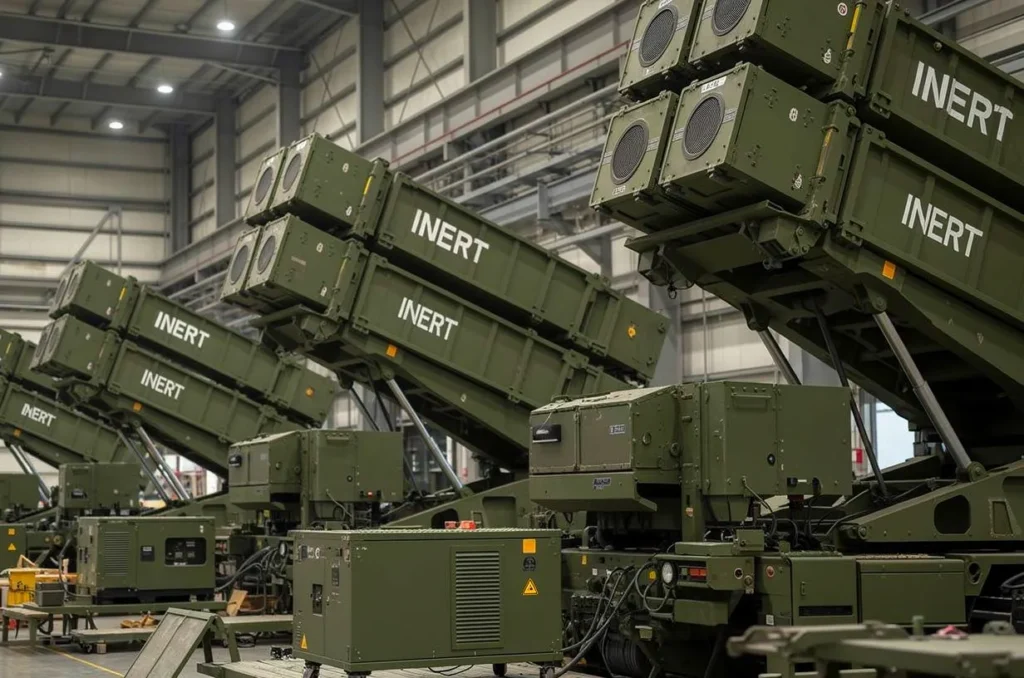
The defense trade is no longer just about war headlines
Defense stocks are moving like investors are pricing in something larger than a temporary geopolitical scare.
The iShares U.S. Aerospace & Defense ETF (ITA) has pushed to a fresh high as capital moves into companies tied to missile defense, aircraft engines, munitions, space communications, surveillance systems and battlefield software. The rally has lifted familiar defense names, but it has also reached suppliers and industrial companies that historically were not viewed as pure defense plays.
That is the important shift.
The market is no longer treating defense as a slow-growth government-contracting sector. It is beginning to treat it as a multi-year industrial and technology cycle driven by three forces: depleted weapons inventories, rising allied military budgets and the rapid integration of artificial intelligence into modern warfare.
For investors, the defense trade now looks less like a single sector rotation and more like an emerging capital-spending theme.
The first pillar is rearmament
The wars in Ukraine, the Middle East and Iran have exposed a basic problem for the US and its allies: advanced weapons can be used much faster than they can be replaced.
Missiles, interceptors, air-defense systems and precision munitions are not consumer products. They require specialized electronics, rocket motors, seekers, advanced materials, certified suppliers and years of production planning.
That has turned inventory depth into a strategic issue.
The US military and allied governments are not only replacing weapons already used. They are trying to rebuild stockpiles large enough to deter future conflicts and sustain operations if deterrence fails.
That is why the investment case for defense stocks starts with munitions.
Lockheed Martin (LMT), RTX (RTX), Boeing (BA) and Northrop Grumman (NOC) are positioned across key areas of this rebuild, including missile defense, air-to-air missiles, precision strike systems, space systems and command infrastructure.
The market is rewarding the companies that can convert urgency into production.
The $1.5 trillion budget request changes the scale
The White House’s fiscal 2027 defense budget request calls for $1.5 trillion in total defense resources.
The figure still needs congressional approval, and the final number may change. The direction of travel is already clear. Washington is preparing for a larger defense budget, faster procurement and more industrial-base investment.
That matters because defense production is capital intensive.
Factories cannot be built around one-year emergency orders. Suppliers cannot hire and train specialized workers without confidence that demand will last. Prime contractors cannot expand output if critical sub-suppliers remain underfunded.
A larger budget request gives the industry a signal: production capacity itself has become part of national security.
That is a meaningful change for listed defense companies. Investors are not only looking at new contracts. They are looking at who can scale manufacturing profitably over several years.
Lockheed Martin remains the missile-defense anchor
Lockheed Martin (LMT) is one of the clearest beneficiaries of the air and missile-defense cycle.
The company is tied to several of the systems most relevant to current geopolitical demand, including THAAD, PAC-3, precision-strike missiles and integrated defense architecture. Its reported multiyear THAAD award of more than $35 billion reinforces how large these programs can become when governments move from limited procurement to stockpile rebuilding.
The investment case for Lockheed is not only backlog size.
It is the company’s position as a prime contractor in systems that allies are unlikely to delay: missile defense, long-range strike, space, aircraft and command integration.
The risk is execution. Large multiyear contracts can support revenue visibility, but margins depend on production rates, supplier performance, labour availability and program cost control.
For LMT, the core question is whether rising demand converts into operating leverage or gets absorbed by supply-chain friction.
RTX is a munitions and air-defense volume story
RTX (RTX) is another major name in the rearmament trade.
Its Raytheon business sits inside several weapons categories where demand is rising: AMRAAM air-to-air missiles, Tomahawk cruise missiles, NASAMS air-defense systems, SM-series interceptors and Patriot-related systems.
Those are not speculative technologies. They are established systems already used by the US and allied militaries.
The issue is production capacity.
Recent conflicts have shown that missile inventories can be drawn down quickly. Rebuilding them requires not only prime-contract awards but also more rocket motors, electronics, guidance systems and testing capacity.
RTX also has exposure through Pratt & Whitney engines and Collins Aerospace systems, giving the company a broader defense and aerospace profile than missiles alone.
That breadth can be an advantage. It also makes execution more complex. Investors watching RTX should focus on backlog conversion, defense-margin performance and whether production expansion improves free cash flow rather than simply increasing working-capital needs.
Boeing’s defense story is becoming more relevant
Boeing (BA) is usually discussed through the lens of commercial aircraft, quality control and delivery schedules. The defense cycle gives the company another angle.
Boeing has a seven-year framework to triple production of PAC-3 missile seekers. It also received a Space Force contract valued at up to $2 billion for narrowband communications satellites.
Those awards matter because they move Boeing deeper into areas where demand is strategic: missile defense and secure military communications.
PAC-3 seekers are critical components. A missile-defense system is only as scalable as its bottleneck suppliers. If seeker output cannot rise, interceptor output cannot rise.
The satellite award also reflects a broader military shift toward resilient space-based communications. Modern forces need secure networks that can connect sensors, aircraft, ships, ground units and weapons systems across contested environments.
For BA, defense does not erase commercial-aircraft risk. It does add a more durable policy-supported growth channel at a time when the Pentagon is emphasizing industrial capacity.
GE Aerospace and Howmet show why suppliers matter
The defense rally is not limited to prime contractors.
GE Aerospace (GE) and Howmet Aerospace (HWM) have become important ways to express the broader aerospace and defense manufacturing cycle.
GE Aerospace has exposure to military and commercial engines, service revenue and the installed base that supports long-term aftermarket cash flow. Defense demand for aircraft readiness, engine support and propulsion systems strengthens the company’s position beyond the commercial recovery.
Howmet supplies advanced engineered components, including products tied to jet engines, airframes, fasteners and high-performance metal systems. It benefits when aircraft production rises, when engine platforms require more specialized materials and when defense programs demand components that must perform under extreme conditions.
These companies illustrate a key point: the defense cycle is also a supply-chain cycle.
Missiles, aircraft and satellites are assembled by primes, but margins and bottlenecks often sit deep inside the supplier base.
Investors looking beyond LMT, RTX and BA are increasingly watching names such as GE, HWM, Honeywell (HON), Curtiss-Wright (CW), HEICO (HEI) and L3Harris (LHX).
AI is creating a second defense trade
The second major pillar is battlefield AI.
Modern military operations increasingly depend on the ability to collect enormous amounts of data, interpret it quickly and act before an adversary can respond.
That has created demand for software platforms that can connect drones, satellites, sensors, aircraft, ground units, command centers and weapons systems into a faster decision-making loop.
This is where Palantir (PLTR) becomes central.
Palantir’s Maven software is being moved toward official program-of-record status inside the Pentagon. That would make the platform a more permanent part of US military infrastructure and create a clearer long-term funding path.
For PLTR, the defense case is not simply that governments are spending more. It is that software is becoming part of the operating system of warfare.
That makes Palantir different from a traditional contractor. Its upside is tied to data integration, AI-assisted targeting, command workflows and recurring software adoption across agencies and military branches.
The risk is valuation. Palantir already trades with expectations that its government and commercial AI platforms can sustain significant growth. The Maven decision strengthens the defense thesis, but the stock still needs revenue growth and margin performance to justify its premium.
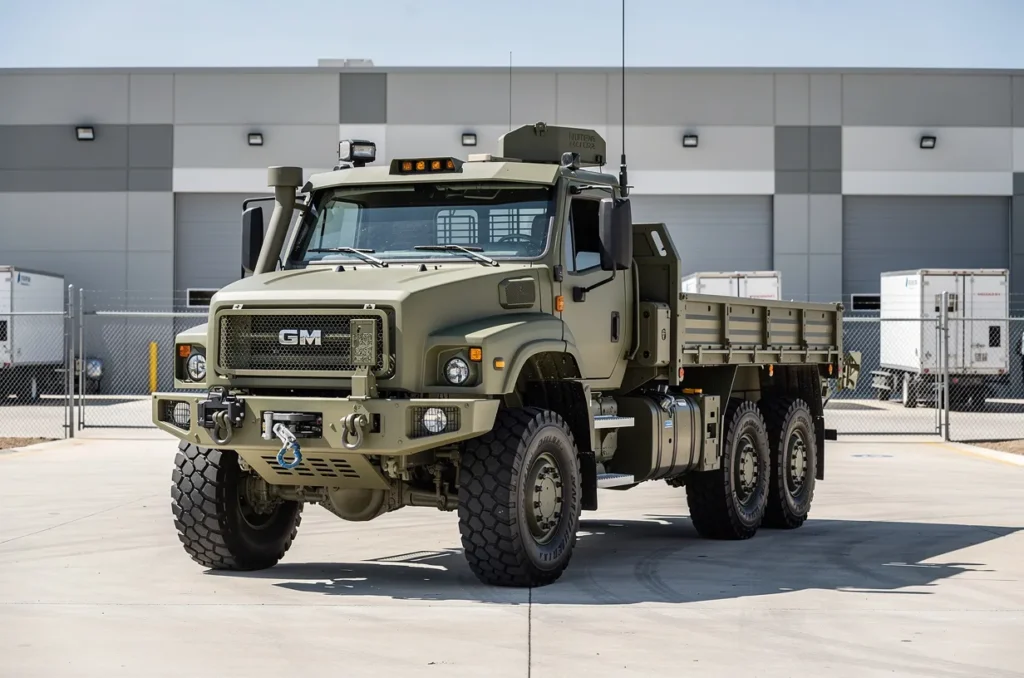
Automakers are entering the industrial-base conversation
General Motors (GM) and Ford (F) are not defense stocks in the traditional sense.
That is what makes their involvement notable.
GM Defense and Lockheed Martin have agreed to explore ways to combine Lockheed’s defense-production expertise with GM’s high-rate manufacturing, engineering and supply-chain capabilities. The goal is to identify opportunities to strengthen defense supply chains, expand production capacity and accelerate delivery of critical systems.
Ford has also shown interest in defense opportunities with US and European governments.
The logic is straightforward. The US defense industry knows how to build complex weapons. Automakers know how to manufacture at scale.
If the Pentagon wants missiles, drones, vehicles, components and autonomous systems produced faster and in greater numbers, commercial manufacturing expertise becomes more valuable.
For GM and F, defense is optionality rather than the main earnings driver. Their core businesses remain autos. But the crossover between vehicles, autonomy, robotics, batteries, manufacturing and defense is becoming more relevant.
This is one of the more important structural changes in the sector.
The defense industrial base is no longer limited to the companies that have always served it.
Europe adds another layer of demand
The US spending cycle is only part of the story.
European governments are increasing defense budgets as security assumptions change. NATO members are under pressure to rebuild weapons inventories, improve air defense, expand drone capabilities and increase domestic production.
That benefits European defense companies, but it also supports US suppliers through foreign military sales, co-production agreements and maintenance contracts.
Air defense is particularly important. Patriot, PAC-3, NASAMS, IRIS-T, AMRAAM and related systems have become central to allied security planning.
The market is beginning to price defense as a transatlantic industrial cycle rather than a US-only budget story.
That should extend the runway for suppliers with export approvals, allied relationships and scalable production.
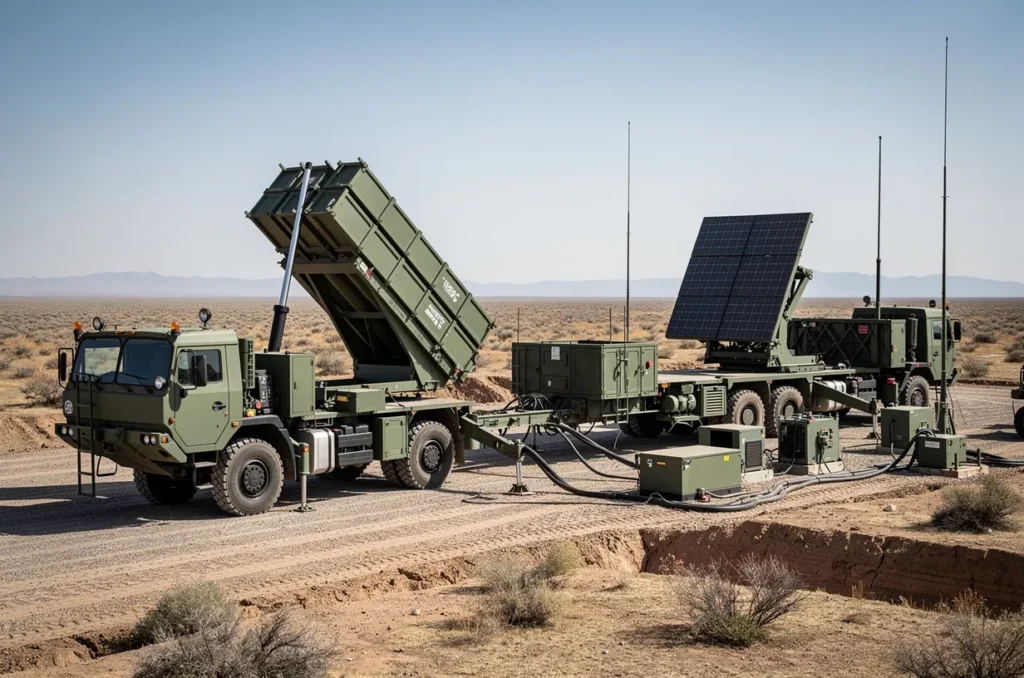
The biggest risk is not demand. It is capacity
Defense demand is visible.
The constraint is whether companies can deliver.
Missile production requires solid rocket motors, seekers, sensors, energetics, advanced electronics, specialty metals and test infrastructure. Many of those supply chains are narrow. Some depend on only a few qualified producers.
Labour is also a constraint. Defense manufacturers need engineers, machinists, software developers, cleared workers and quality specialists.
Factories cannot be expanded overnight. New suppliers must be qualified. Production lines must meet reliability standards that are far stricter than most commercial manufacturing.
That is why contract announcements are only the first step.
The best defense stocks will be the companies that convert awards into deliveries, margins and cash flow. The weaker performers may win contracts but struggle to scale profitably.
Valuation discipline still matters
Defense has become a powerful theme, but investors still need valuation discipline.
Some stocks have already moved sharply. ITA has rallied, PLTR carries a technology-style multiple, and several aerospace suppliers trade at elevated valuations after strong runs.
A durable spending cycle does not protect investors from overpaying.
The cleanest analysis is not simply which company has the best story. It is which company has the best combination of contract visibility, production capacity, margin expansion and valuation support.
For prime contractors, backlog quality matters. For suppliers, bottleneck exposure matters. For software companies, adoption and renewal economics matter. For private-market defense tech, the question is whether valuations have moved ahead of procurement reality.
Defense is becoming a growth sector. It is not immune to execution risk.
The featured investment thesis
The defense rally rests on a simple but powerful idea: the world has moved from efficiency to readiness.
For decades, governments optimized around lean inventories, slow procurement cycles and limited production capacity. Recent conflicts have shown that model is inadequate.
The next cycle is about stockpiles, redundancy, faster manufacturing, autonomous systems and software-defined military operations.
That creates a different market structure.
Legacy contractors benefit from higher spending on weapons and platforms. Aerospace suppliers benefit from the physical supply chain behind those programs. All while, software benefits as AI becomes a command-and-control layer.
The sector is becoming both an industrial trade and an AI trade.
That combination is why defense stocks are breaking out.
WSA Take
Defense stocks are rallying because investors are beginning to price a multi-year rearmament and battlefield-technology cycle.
The old defense trade was built around large platforms, slow procurement and predictable but modest growth. The new trade is built around missiles, interceptors, drones, satellites, AI software, autonomous systems and industrial capacity.
The most important takeaway is that the beneficiary list is widening.
Demand is strong, but execution will separate winners from headlines. Investors should watch production rates, supplier bottlenecks, margin performance and whether AI defense platforms become recurring budget lines rather than experimental programs.
This is not a short-term geopolitical trade anymore. It is a structural reset in how governments think about military readiness, technology and industrial capacity.
Disclaimer
Wall Street Access is an editorial and market commentary publication. The information in this article is provided for informational and opinion-based purposes only and should not be considered investment advice, financial advice, or a recommendation to buy, sell, or hold any security.
Wall Street Access and its editors are not financial advisors, brokers, dealers, analysts, or investment professionals. The views expressed are editorial opinions based on publicly available information and are not intended to be relied upon as the basis for any investment decision.
Wall Street Access has not been compensated by any company mentioned in this article. No company discussed has paid for coverage, approval, distribution, or favorable commentary. Readers should conduct their own due diligence and consult a qualified financial advisor before making any investment decisions.