E-waste is becoming a rare earth supply opportunity
ERI and Cyclic Materials are partnering to build what they describe as one of the largest rare earth recovery ecosystems in the United States.
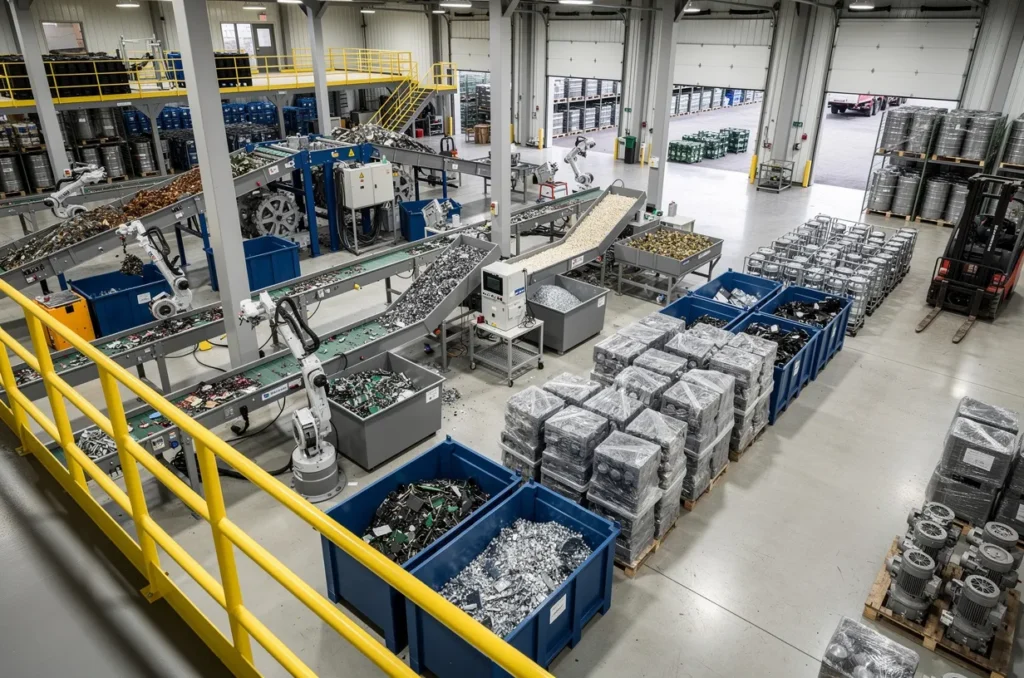
The agreement brings together ERI’s nationwide electronics recycling network with Cyclic Materials’ rare earth recovery and refining technology. The goal is to process high-volume products that contain rare earth magnets and other valuable materials before they disappear into waste streams.
That matters because end-of-life electronics are one of the largest underused sources of rare earths and critical minerals. The materials are already in circulation, but much of that value is still lost when devices, appliances and industrial products are discarded rather than processed for mineral recovery.
The partnership is trying to turn that waste stream into a domestic supply source.
ERI brings the feedstock scale
ERI recycles more than one million pounds of electronic waste every day, giving Cyclic Materials access to a large and consistent feedstock base.
The company will use its global collection network and eight US recycling centres to pre-process materials containing rare earth magnets and other critical inputs. Those materials will then be sent to Cyclic Materials for rare earth recovery and refining.
That division of labour is important. Rare earth recycling is not only a technology problem. It is also a collection, sorting and logistics problem. A company needs enough material flowing through the system to make commercial recovery meaningful.
ERI provides that front-end volume.
Cyclic Materials provides the downstream recovery technology.
Cyclic is building the refining side
Cyclic Materials said the feedstock will be sent primarily to its Arizona operations, where it has a facility capable of processing up to 25,000 tonnes of end-of-life components annually in the US.
The company is also investing more than $82 million to establish a rare earth recycling campus in McBee, South Carolina. That site is expected to have initial processing capacity of 2,000 tonnes of magnet material per year, with a planned expansion to 6,000 tonnes.
The footprint gives Cyclic a growing base for recovering rare earths from magnet-containing products. The company also expects to recover other critical materials, including copper and aluminum, through its process.
That makes the partnership broader than rare earths alone. It is part of a larger shift toward recovering valuable industrial materials from products already inside the economy.
The partnership fits the US supply-chain push
Cyclic Materials said its rare earth recycling platform can support the US manufacturing sector, strengthen national security and enable growth across AI, defense, automotive and other major industries.
That language reflects the current policy environment. The US is trying to reduce dependence on foreign supply chains for rare earths, magnets and other critical minerals. China still dominates many parts of the rare earth processing and magnet supply chain, which has made recycling a more strategic part of the domestic supply conversation.
Recycling will not replace mining. The volumes are not large enough to solve the entire rare earth supply gap on their own. But recycling can still play an important role because it offers a domestic source of material that is already above ground.
The most important benefits are clear:
- More domestic rare earth feedstock
- Lower exposure to foreign trade disruptions
- Recovery of metals already inside discarded products
- Support for circular supply chains in strategic industries
That is why the ERI-Cyclic partnership is relevant beyond the recycling sector.
Government and commercial opportunities are part of the plan
Under the partnership, ERI and Cyclic Materials will also jointly pursue requests for proposals tied to recycling and critical material recovery.
That includes commercial and government opportunities that support the development of circular supply chains in the US. The government angle matters because rare earths sit directly inside national-security and industrial-policy priorities.
Cyclic Materials CEO Ahmad Ghahreman said the partnership would transform ERI’s recycling volume into an impactful supply of rare earths for the US. He said the companies are creating new supply by unlocking materials already in circulation and recirculating them into the supply chain.
ERI CEO John Shegerian said Cyclic’s technology and facility network make the circularity of heavy rare earth elements more accessible than before.
The commercial message is simple: rare earth recycling is moving from concept to infrastructure.
WSA Take
The ERI-Cyclic partnership shows how rare earth recycling is becoming a practical supply-chain strategy, not just an environmental idea. ERI brings the e-waste volume, while Cyclic brings the recovery and refining technology needed to turn discarded products into usable material.
The opportunity is that the US can recover more rare earths, copper and aluminum from products already in circulation. That will not replace mining, but it can reduce waste, improve supply resilience and support strategic sectors that need secure access to critical materials.
Explore More Stories in Commodities
Disclaimer
WallStAccess is a financial media platform providing market commentary and analysis for informational and educational purposes only. This content does not constitute investment advice, a recommendation, or an offer to buy or sell any securities. Readers should conduct their own research or consult a licensed financial professional before making investment decisions.