A $13.7 billion contract can change a company
RUM Group shares jumped more than 8% in premarket trading after announcing a six-year AI infrastructure deal worth approximately $13.7 billion.
The agreement calls for an unnamed U.S.-based cloud customer to purchase GPU capacity and related services from RUM Group’s Maysville, Georgia site, which is still being developed.
On paper, the scale is enormous. Spread evenly across six years, the contract represents roughly $2.3 billion of services per year.
For a company that only began operating as RUM Group in June, following its acquisition of German AI cloud company Northern Data, that is a serious vote of confidence in its new direction.
But there is an important distinction.
This is not $13.7 billion sitting in the bank. It is a long-term purchase commitment that RUM Group still has to finance, build and deliver.
That is where the story gets interesting.
AI demand is creating a second boom beyond the chipmakers
The first stage of the AI trade was easy to understand: companies needed GPUs, so semiconductor stocks exploded higher.
The next stage is much broader.
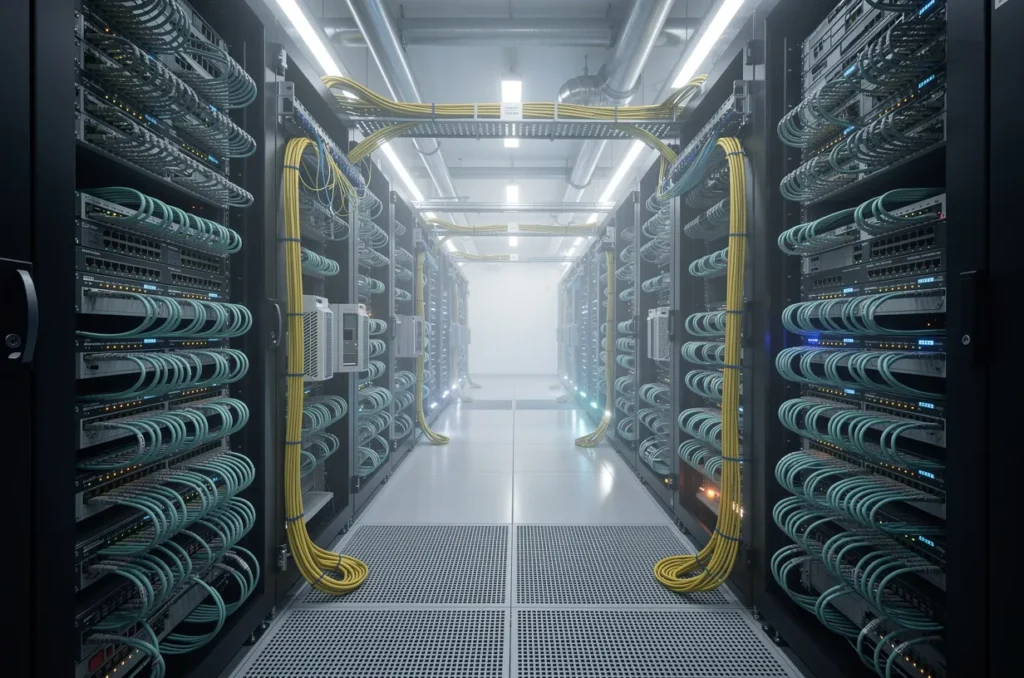
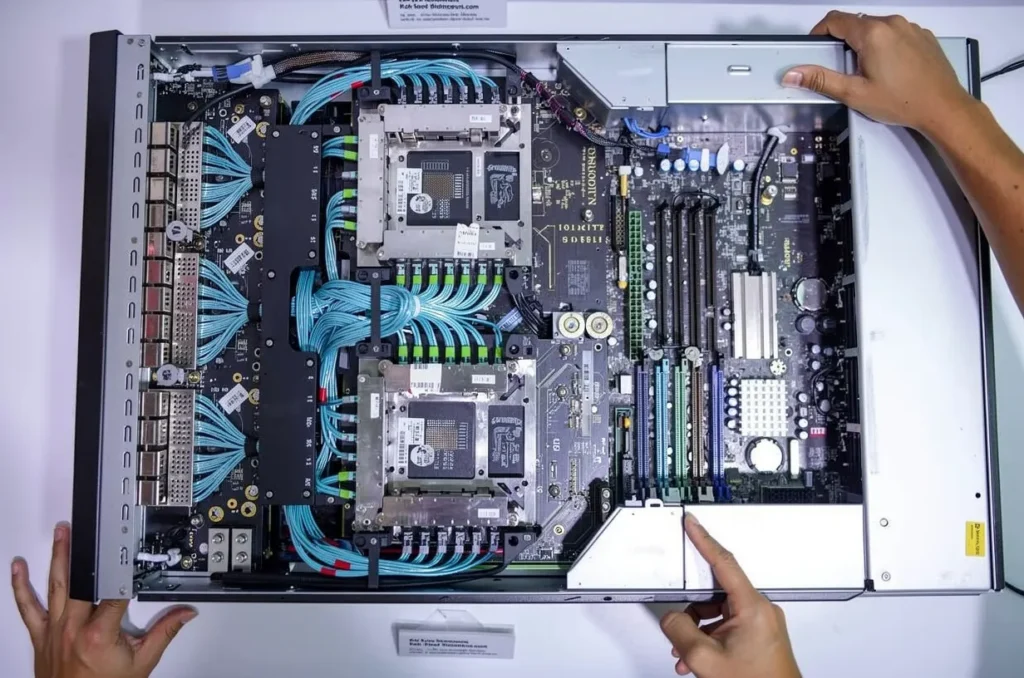
Those GPUs need data centers, enormous amounts of electricity, cooling, networking and operators capable of delivering computing power to customers at scale.
RUM Group is trying to position itself directly inside that infrastructure layer.
Its new customer will access GPUs and related services from the Georgia facility rather than purchasing the chips outright. In simple terms, RUM Group owns and operates the computing infrastructure, while customers pay to use it.
The fact that a cloud company is willing to commit $13.7 billion over six years suggests demand for AI computing capacity remains extremely strong.
That is a positive signal beyond RUM Group itself.
The AI buildout is increasingly becoming a race for available compute, not simply a race to own the latest processor.
Companies capable of bringing large amounts of GPU capacity online could become increasingly valuable if demand continues growing faster than supply.
The catch: RUM Group still needs the money
The biggest line in the announcement may not be the $13.7 billion figure.
RUM Group acknowledged that it does not currently have sufficient capital to fulfill the contract.
Management plans to raise money through debt, equity or both.
That immediately turns this from a simple AI-growth story into a financing story.
Building GPU infrastructure at this scale requires enormous upfront spending. The Georgia site is still under development, and RUM Group will need the computing equipment and infrastructure necessary to meet the customer’s purchase commitments.
A large customer contract can make financing easier because lenders and investors can see future demand already lined up.
But the terms matter.
Heavy debt could add substantial interest costs. Large equity raises could dilute existing shareholders.
The contract may eventually create billions of dollars of revenue, but how much of that value reaches current shareholders will depend heavily on how the buildout is funded.
The one-cent stock option deserves attention
There is another unusual part of the agreement.
RUM Group is giving the customer the ability to purchase roughly 51 million shares for just $0.01 each.
The shares do not vest immediately. The option becomes available gradually over six years as the customer fulfills its purchase commitments.
There is a strategic logic behind that structure.
The customer now has a direct financial incentive to keep buying services from RUM Group. If the relationship succeeds and RUM Group becomes more valuable, the customer benefits not only from the computing capacity but also from its potential ownership position.
For existing shareholders, however, those shares represent potential dilution.
Without knowing what RUM Group’s eventual share count and stock price will be, it is impossible to calculate the true economic cost today.
But 51 million shares is not a detail investors should skim past.
The contract is large because RUM Group is offering something valuable to the customer. The customer appears to be offering something valuable in return: years of committed AI spending.
The investment case will depend on whether that trade ultimately creates more value than it gives away.
Execution now matters more than the announcement
There are still several unknowns.
The customer has not been identified. The Georgia facility is under development. RUM Group needs additional financing. And the $13.7 billion commitment itself is divided into three parts, with the final installment dependent on a delivery date approved by the customer.
Those conditions matter because they show that the entire contract is not equally certain today.
RUM Group has won the opportunity.
Now it has to execute on it.
That means raising capital on reasonable terms, finishing the Maysville facility, securing enough GPUs and supporting infrastructure, and meeting the customer’s delivery requirements over six years.
If it does, this agreement could transform the scale of the business.
If financing becomes expensive or construction falls behind, the headline value of the contract becomes much less important.
The bigger takeaway is that AI infrastructure is still attracting enormous commitments
There is a reason the stock initially moved higher.
A newly formed AI infrastructure business signing a $13.7 billion customer agreement is material by almost any standard.
It also shows how quickly the AI investment cycle is spreading beyond the obvious semiconductor winners.
The next phase is being built around the companies that can supply compute capacity, data centers, power and connectivity at scale.
RUM Group now has a chance to prove it belongs in that group.
The contract gives it demand.
What it does not give the company is the capital or infrastructure needed to satisfy that demand.
That makes the next chapter fairly simple to follow.
The $13.7 billion headline got the market’s attention. The financing terms will tell us whether shareholders should stay interested.
Disclaimer
Wall Street Access is an independent financial publisher. Wall Street Access is not a financial advisor. No company mentioned has compensated Wall Street Access for the preparation, publication or distribution of this article. This content is provided for informational and educational purposes only and is not investment advice or a recommendation to buy, sell or hold any security. Investing involves risk, including the possible loss of principal. Prices, market capitalizations, financial figures and other market data are based on information available as of the date and time of publication and may change without notice. Information is drawn from public sources believed to be reliable but is not guaranteed to be complete or accurate. Opinions and expectations expressed are our own and may change as new information becomes available. Readers should conduct their own due diligence and contact a licensed financial professional before making any investment decision. Past performance does not guarantee future results. Any material ownership interest or conflict of interest, where applicable, will be disclosed separately.