
A small break in oil was enough to improve the mood
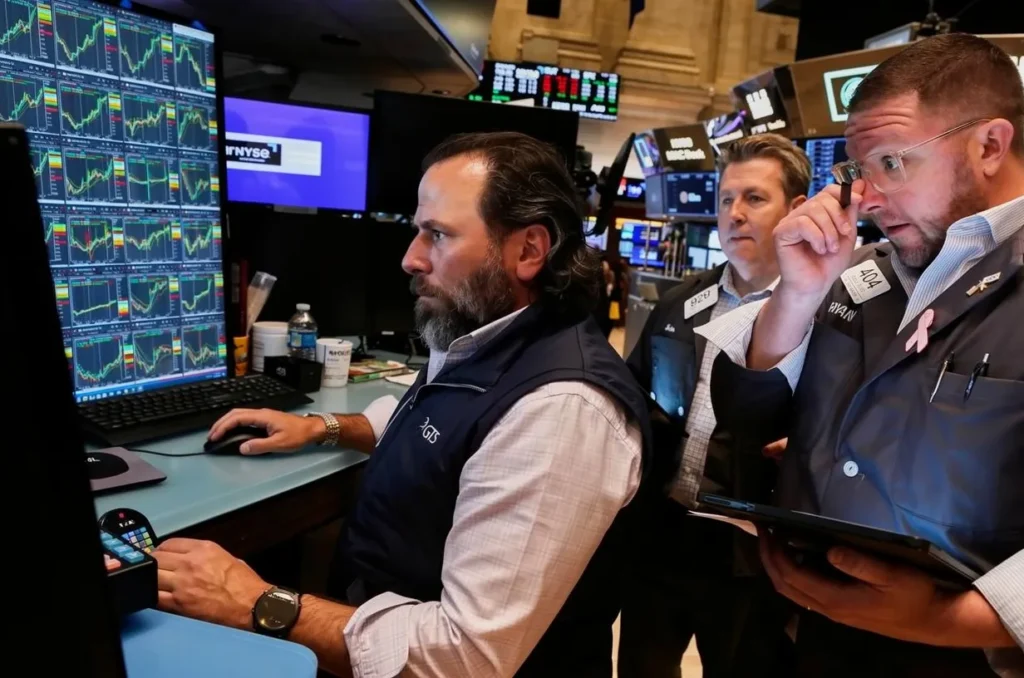
U.S. stocks moved higher on Tuesday as investors welcomed a pullback in oil prices and looked for signs that the latest U.S.-Iran ceasefire might hold, even if only temporarily.
The S&P 500 rose 0.7%, the Dow added 0.5%, and the Nasdaq led with a 1% gain. The move came after a sharp selloff tied to renewed Middle East fears, and it showed once again that the market does not need a perfect geopolitical backdrop to rally. It just needs conditions to stop getting worse.
That was the setup Tuesday. The ceasefire still looked fragile, but oil stopped moving the wrong way for a day, and that was enough for buyers to step back in.
Hormuz is still the problem, but the pressure eased a bit
The bigger issue in the market has not changed: the Strait of Hormuz remains a major pressure point, and neither side has fully stepped back from trying to assert control over it.
Still, Brent fell nearly 3% to around $111 a barrel, while WTI dropped more than 3% to below $103. That matters because after Monday’s surge, even a modest pullback in crude helped calm the inflation panic that had started to spread across the market.
This does not mean the energy risk is gone. It just means the market got a brief pause from the worst-case pricing.
Earnings are doing the heavy lifting again
With the macro backdrop still unstable, investors are leaning on earnings to keep the rally alive.
So far, that support is holding up. The market is looking for companies to prove that corporate growth can still outrun geopolitical noise, and this earnings season has largely done that. Tuesday’s focus shifted quickly back toward company results and especially toward the AI-linked chip trade, where expectations remain high.
That makes this a familiar 2026 market pattern: if oil calms down even a little, investors go right back to buying earnings and AI.
AMD and the chip complex remain critical to the story
The next major test for that trade comes from AMD, whose results should offer another read on the semiconductor demand cycle that is still powering much of the AI buildout.
The reason this matters is straightforward. The market is no longer just rewarding AI headlines. It wants evidence that spending on data centers, chips, servers, and related infrastructure is turning into durable revenue growth.
That is why the chip group remains so important. It still sits closest to the actual spending wave underneath the AI story.
AI is still helping growth — but it is also making inflation more complicated
One of the more interesting undercurrents in the report is that AI is now supporting the economy in two very different ways.
On one side, it is clearly boosting business investment. That was visible in the latest GDP data, where business investment contributed more to growth than consumer spending, an unusual shift for the U.S. economy. That tells you the AI buildout is no longer just a market narrative. It is becoming a real macro driver.
On the other side, the same AI boom is also creating its own inflation pressures.
According to the Goldman Sachs analysis cited in the source, AI is helping lift prices through:
- stronger demand for chips and electronics inputs
- software companies charging more as they add AI-driven features
- rising electricity demand from new data center buildouts
That is an important tension. AI is helping growth, but it is not purely disinflationary in the short run.
The labor market still looks steady, even if cracks are forming underneath
The latest labor data did not dramatically change the picture, but it also did not break it.
JOLTS showed job openings were basically flat in March, while layoffs ticked higher but remained low overall. That keeps the labor market in a relatively stable zone, even though job-cut announcements across parts of tech and media continue to attract attention.
At the same time, the source notes that unemployment for recent college graduates remains elevated. That matters because it hints at a labor market that may still be solid in aggregate, but is becoming more uneven underneath the surface, especially in entry-level white-collar work increasingly exposed to AI automation.
That is something worth watching more closely in the months ahead.
Energy stocks are not acting like oil needs to go higher from here
One of the more interesting details in Tuesday’s session is that energy stocks still pushed higher in parts of the market even though crude itself pulled back.
That suggests investors are thinking more carefully about refined products, supply bottlenecks, and the structural tightness behind the broader energy market rather than just looking at the spot price of a barrel. When refiners and selected energy names stay strong on a down-oil day, it usually means the market still sees supply problems underneath the surface.
That is another reminder that this ceasefire has not solved anything durable yet.
Record highs are spreading again
The other constructive sign is that fresh highs are continuing to appear across different parts of the market.
The source points to new intraday highs in:
- the Nasdaq Composite
- the Nasdaq 100
- the Russell 2000
- the PHLX Semiconductor Index
That matters because rallies are healthier when leadership spreads. It is one thing for a handful of megacaps to carry the tape. It is another when semis, small caps, energy-related groups, and selected industrials are also participating.
That does not mean the market is risk-free. It does mean the underlying breadth still looks stronger than many expected.
WSA Take
Tuesday’s rally was a reminder that this market still wants to move higher whenever oil gives it the chance. The U.S.-Iran ceasefire remains fragile, and Hormuz is still a major unresolved risk, but a modest drop in crude was enough to shift attention back toward the themes investors still trust most: earnings, AI spending, and chip demand.
For now, that is enough to keep the rally alive. But the market is still walking a narrow path. If oil stays contained, stocks can keep climbing on strong corporate results. If energy flares back up, the inflation problem returns fast.
Explore More Stories in Markets
Disclaimer
WallStAccess is a financial media platform providing market commentary and analysis for informational and educational purposes only. This content does not constitute investment advice, a recommendation, or an offer to buy or sell any securities. Readers should conduct their own research or consult a licensed financial professional before making investment decisions.