
Round Top shows what strategic funding can do
When USA Rare Earth (NASDAQ: USAR) began trading publicly in March 2025, it looked much more like an emerging critical-minerals company than the rare earth platform it has become today.
Its flagship Round Top Mountain project in West Texas was still years from production. The company was developing its processing capabilities, building out magnet manufacturing and trying to solve the same problem facing almost every Western rare earth developer: turning an interesting deposit into a complete supply chain.
Then the capital started arriving.
In January 2026, USAR closed a $1.5 billion PIPE financing at $21.50 per share. A few months later, definitive agreements with the U.S. Department of Commerce provided access to as much as $277 million in federal funding and $1.3 billion in senior secured loan capacity. Combined with previous raises, USA Rare Earth said approximately $3.5 billion of committed capital was supporting its growth plan.
The company that entered the market at roughly $464 million is now valued at approximately $6 billion.
Round Top did not suddenly become strategically important because of one financing. The funding gave USA Rare Earth the ability to develop the infrastructure, processing and manufacturing needed to turn that strategic potential into something much larger.
Billions in capital changed the development plan
Round Top remains central to the story.
USA Rare Earth accelerated its commercialization target by two years, with commercial production now targeted for late 2028. The company plans to process rare earths including dysprosium, terbium and yttrium as it builds out the domestic heavy rare earth side of its supply chain.
Texas has also committed $14.2 million through the Texas Semiconductor Innovation Fund to accelerate Round Top, with the state saying the broader project is expected to represent more than $1.4 billion in capital investment and create approximately 260 jobs.
But the real transformation happened around the mine.
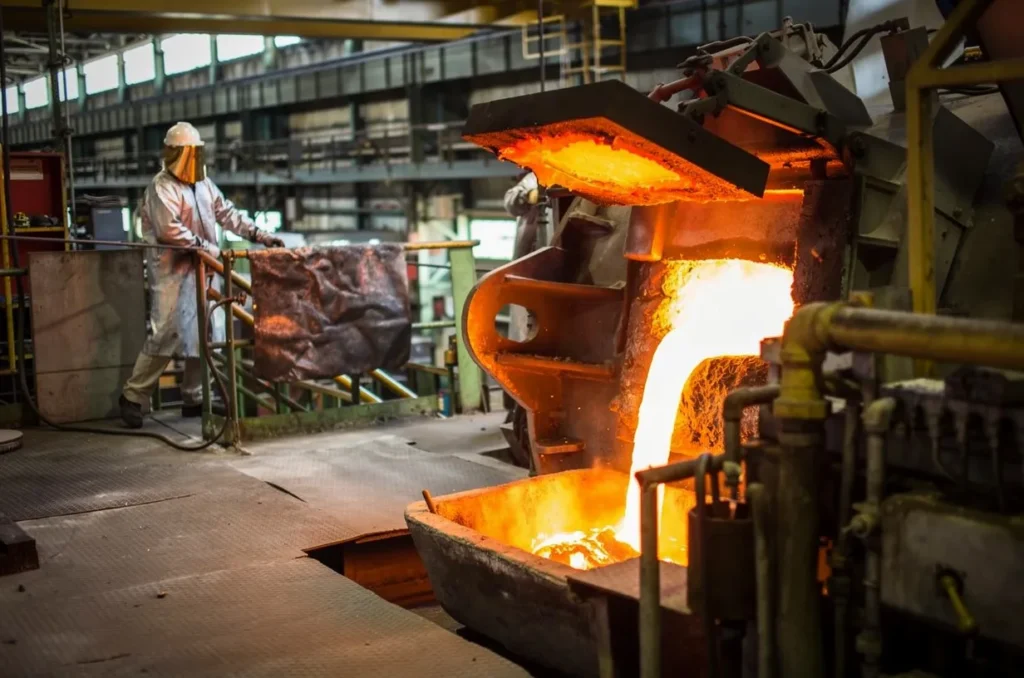
USA Rare Earth used its expanding capital base to assemble capabilities across nearly every major step between raw material and finished permanent magnets:
- Round Top, Texas: domestic heavy rare earth mining and processing, targeting commercial production in late 2028
- Stillwater, Oklahoma: commercial NdFeB magnet production, targeting a 600-tonne annual run rate by the end of 2026
- Blacksburg, South Carolina: an approximately $1.2 billion facility targeting 6,400 tonnes of NdFeB magnets annually, with commissioning planned for 2028
- Wheat Ridge, Colorado: rare earth separation and hydrometallurgical development
- Less Common Metals, United Kingdom: rare earth metals and alloys
- Serra Verde, Brazil: an operating producer of the four magnetic rare earths neodymium, praseodymium, dysprosium and terbium outside Asia
A company once centered around an early-stage Texas deposit is now building mining, separation, metal, alloy and permanent-magnet capacity across an integrated platform.
The U.S. needs the entire chain, not simply another rare earth mine
Rare earths become strategically important when they reach the other end of the supply chain.
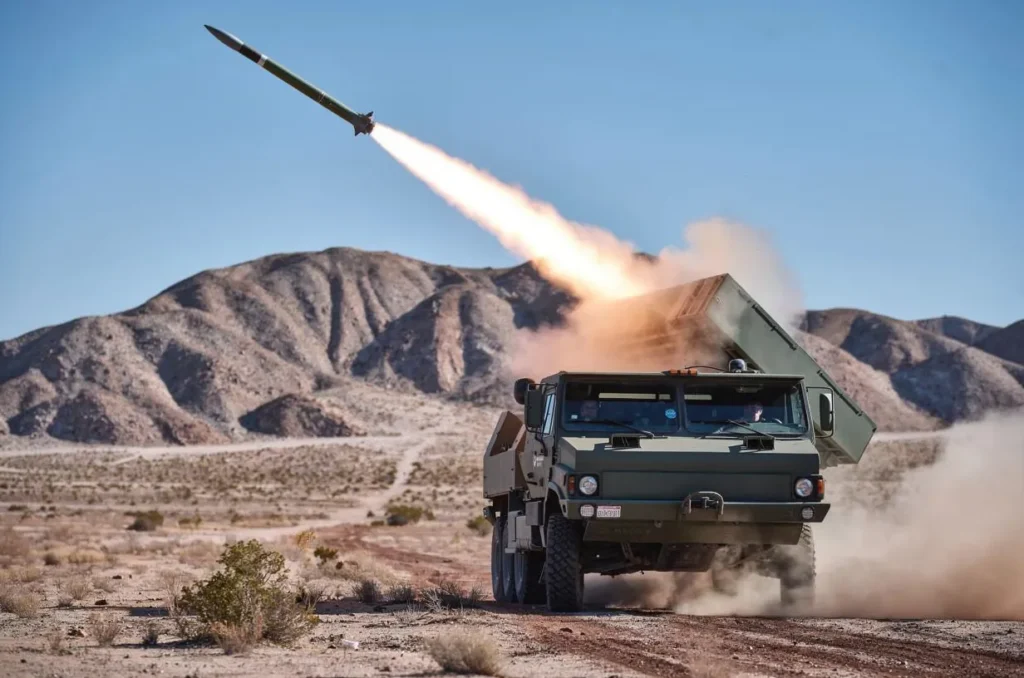
High-performance NdFeB permanent magnets are used in fighter jets, missiles, submarines, drones, radar systems and other advanced technologies. The Defense Department has been explicitly working toward a domestic mine-to-magnet system covering sourcing, separation, processing, metallization, alloying and magnet manufacturing.
USA Rare Earth’s current plan ultimately targets approximately 10,000 tonnes per year of U.S. NdFeB magnet capacity, alongside heavy rare earth metal and alloy production.
The timing is becoming more important. Beginning January 1, 2027, Pentagon sourcing restrictions expand across the full supply chain for neodymium-iron-boron magnets originating from China and other covered countries, from the mining of neodymium through finished magnet production, subject to specified exceptions.
Washington has been putting money behind that objective for years and the scale of the commitments is getting larger. The Defense Department provided MP Materials with a $150 million loan for additional heavy rare earth separation capacity in 2025, while USAR’s 2026 package pushed government involvement much further into an integrated rare earth platform.
China still dominates the global rare earth chain, controlling up to 70% of mining and more than 85% of refining and rare earth metal production.
For Washington, finding a deposit is only the first step. The larger objective is finding projects that can close a specific weakness in a supply chain stretching all the way from the ground to a finished magnet.
A $464 million company became a $6 billion rare earth platform
The development of USA Rare Earth offers a powerful example of what can happen when an early-stage critical-minerals company lands directly inside a strategic U.S. priority.
Early investors who recognized the potential before USAR attracted billions in government and institutional capital had an opportunity to participate in a significant rerating. The company’s market value has moved from less than half a billion dollars when it entered the public market to roughly $6 billion today, while Round Top’s development timeline and the scale of the wider company have expanded dramatically.
And Washington is still investing.
The government continues to fund mining, separation, processing and manufacturing projects aimed at reducing critical-mineral supply-chain dependence. The Defense Department has said future investments are expected to focus specifically on closing remaining gaps and connecting the different stages of the rare earth chain.
That creates an interesting search for what comes next.
We are closely following an emerging U.S. rare earth company at a much earlier stage of its development, advancing a significant project approximately two miles from Round Top Mountain. The project sits in the same West Texas rare earth district while the company works to advance processing, development and potential downstream relationships.
The setup reminds us of the period when Round Top was still primarily an early-stage rare earth story waiting for the capital and strategic backing needed to accelerate it.
For a smaller company, becoming the next project selected to fill a critical gap in America’s rare earth supply chain could become a serious revaluation catalyst.
USA Rare Earth has already shown how quickly the scale of a company can change once government capital, private financing and strategic importance begin moving in the same direction.
Now we are looking for the next one.
Disclaimer
Wall Street Access is an independent financial publisher. Wall Street Access is not a financial advisor. No company mentioned has compensated Wall Street Access for the preparation, publication or distribution of this article. This content is provided for informational and educational purposes only and is not investment advice or a recommendation to buy, sell or hold any security. Investing involves risk, including the possible loss of principal.
Prices, market capitalizations, financial figures and other market data are based on information available as of the date and time of publication and may change without notice. Information is drawn from public sources believed to be reliable but is not guaranteed to be complete or accurate. Opinions and expectations expressed are our own and may change as new information becomes available.
Readers should conduct their own due diligence and contact a licensed financial professional before making any investment decision. Past performance does not guarantee future results. Any material ownership interest or conflict of interest, where applicable, will be disclosed separately.