The tournament is larger, longer, and landing in a more developed betting market
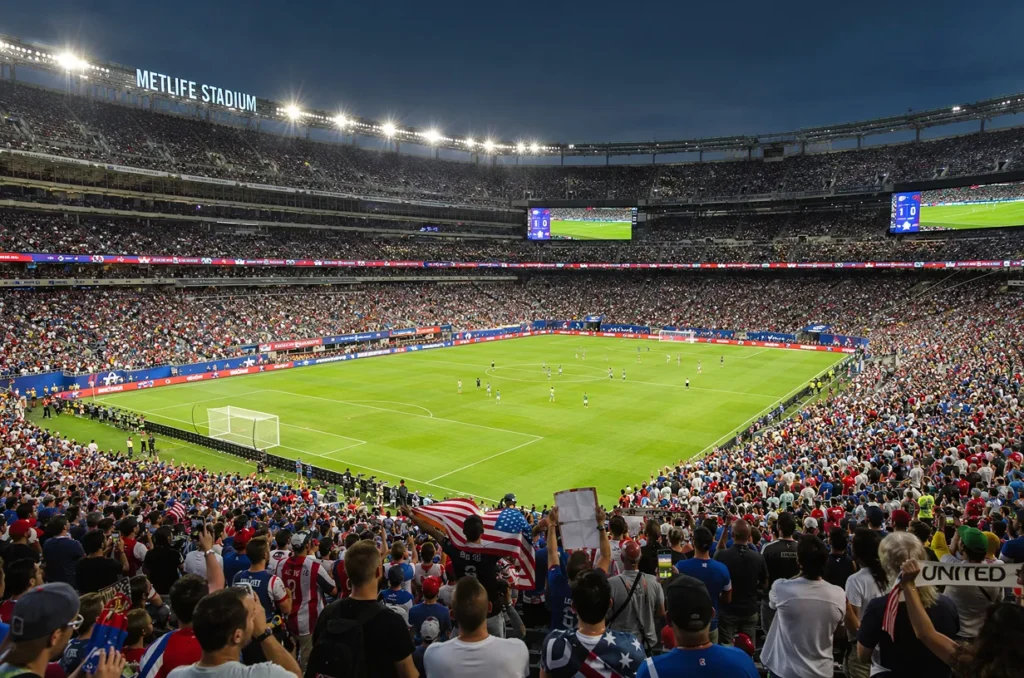
The 2026 World Cup is a different commercial event from the one held in 2022. It is larger, with 48 teams and 104 matches. It is being played across the United States, Canada, and Mexico, with the US expected to host roughly 75% of matches. It is also arriving in a North American market where legal sports betting is far more established than it was four years ago. Since the 2018 Supreme Court ruling, 38 states and Washington, D.C. have legalized sports betting in some form.
That combination matters. The event is not just bigger in absolute terms. It is being staged in a market where the distribution, product design, and legal access needed to monetize it are far more mature.
This is more than a handle story
The obvious number is the handle estimate. Macquarie’s forecast for more than $50 billion in global wagers is large enough on its own.
The more important issue is what the tournament does to customer behavior. A six-week competition with daily match flow creates repeated opportunities for operators to acquire new users, reactivate dormant ones, drive live betting and parlays, and cross-sell customers into higher-margin products once the tournament ends. That is why sportsbooks, prediction platforms, and sports-data businesses are all leaning into the same event. The World Cup is one of the few global sports properties large enough to move both near-term volumes and medium-term customer economics.
The market backdrop has changed since the last cycle
The US betting market has matured quickly since the 2022 men’s World Cup. Sportsbooks have broadened same-game parlays, improved live betting menus, and built out soccer-specific products. Prediction markets have also emerged as a real adjacent category, creating a parallel venue for event-based trading and giving the tournament a second speculative channel beyond traditional betting apps. The competitive field is wider than it was four years ago, but so is the addressable audience.
That makes operator quality more important, not less. The question is no longer who can simply offer World Cup bets. The question is who can turn a huge tournament into durable customer value.
Flutter Entertainment is the cleanest direct expression of the World Cup thesis
If the tournament becomes the largest betting event on record, Flutter is the name with the clearest line into that volume through FanDuel.
Reuters reported that FanDuel still holds a leading 39% share of the US market, and broker commentary around the World Cup has pointed to Flutter and DraftKings as the two public names most likely to relatively outperform if betting volumes rise as expected.
The other part of the Flutter case is geographic and cultural. Unlike a purely domestic sportsbook operator, Flutter has a broader international profile and more direct exposure to football-oriented markets where the World Cup carries deeper engagement. That matters in a tournament where betting interest is not being created from scratch. It is already embedded in the global fan base.
DraftKings has the sharper event-driven operating leverage
DraftKings enters the tournament as the other clear large-cap US sportsbook name with enough scale to convert a global event into meaningful financial volume.
The company maintained 2026 revenue guidance of $6.5 billion to $6.9 billion and Adjusted EBITDA guidance of $700 million to $900 million in its latest filing. It is live with mobile sports betting in 27 states, Washington, D.C., and Puerto Rico, representing about 53% of the US population.
That footprint matters because the World Cup is likely to be more of a volume event for DraftKings than a margin event in the first instance. If engagement runs ahead of expectations, the stock has more operating sensitivity to higher handle and better retention than some of its peers. DraftKings also has the advantage of being a pure-play digital name. The market does not need to disentangle a sportsbook story from a resort, casino, or land-based business.
That cuts both ways. DraftKings is also more exposed if customer acquisition costs rise, promotional intensity accelerates, or prediction-market competition starts to take more event-driven volume than the market currently expects. Still, for a tournament-specific research framework, it remains one of the names most directly geared to betting activity itself.
MGM is the less pure sportsbook name, but the digital angle is still meaningful
MGM Resorts sits in a different category because the World Cup exposure comes through BetMGM, not through the whole enterprise.
That distinction is important. BetMGM is not the market leader in US online sports betting, but it is still a meaningful operator. In its latest business update, the company reported Q1 net revenue of $696 million, up 6% year over year, with Adjusted EBITDA of $25 million, up 11%. It also said it held a 13% gross gaming revenue market share in active markets, including 20% in iGaming and 7% in online sports.
There is also a clear limitation. BetMGM cut its 2026 revenue outlook after a soft first quarter in online sports betting and rising promotional pressure. That makes MGM the least direct World Cup trade of the three names. The attraction is not that it offers the highest sensitivity to match-by-match wagering. The attraction is that it gives exposure to tournament-driven digital upside without making the whole equity entirely dependent on sportsbook momentum.
In practical terms, that makes MGM the more diversified expression of the theme. If the World Cup lifts digital engagement and improves sentiment around BetMGM, that can help. If the online betting environment remains uneven, the stock still has a much broader earnings base than a pure-play sportsbook operator.
The biggest upside may come after the final whistle
For the leading operators, the World Cup is not just a volume event. It is a rare chance to deepen customer relationships at scale. A tournament this large gives sportsbooks weeks of continuous engagement, repeated betting touchpoints, and a broader audience than a typical domestic sports calendar can offer. That creates room for the strongest platforms to convert casual traffic into more durable activity, expand wallet share, and reinforce their position in a market that is still maturing. The headline betting numbers should be strong, but the more important result may be how much of that momentum carries into the rest of the year.
WSA Take
The World Cup is shaping up as a meaningful event for the listed betting sector, but not because it will produce one strong month of wagering. The more important point is that it arrives in a larger legal market, with a broader digital ecosystem, and enough global audience scale to influence customer acquisition well beyond soccer itself.
In that setup, Flutter, DraftKings, and MGM each offer a different expression of the theme. Flutter has the clearest link to market leadership through FanDuel. DraftKings carries more direct digital operating leverage. MGM brings tournament exposure through BetMGM, but with a broader gaming business around it.
Explore More Stories in Markets
Disclaimer
WallStAccess is a financial media and market commentary platform. This content is provided for informational and educational purposes only and reflects editorial opinion at the time of publication. It does not constitute investment advice, financial advice, or a recommendation, solicitation, or offer to buy, sell, or hold any security.
Any views on companies, sectors, or market trends are subject to change without notice. Forward-looking statements, estimates, and projections involve risks and uncertainties, and actual results may differ materially. Past performance is not indicative of future results.
Readers should conduct their own due diligence and consult a licensed financial advisor or other qualified professional before making any investment decision. WallStAccess and its affiliates make no representation or warranty as to the accuracy or completeness of the information presented and accept no liability for any loss arising from reliance on this content.