What Happened
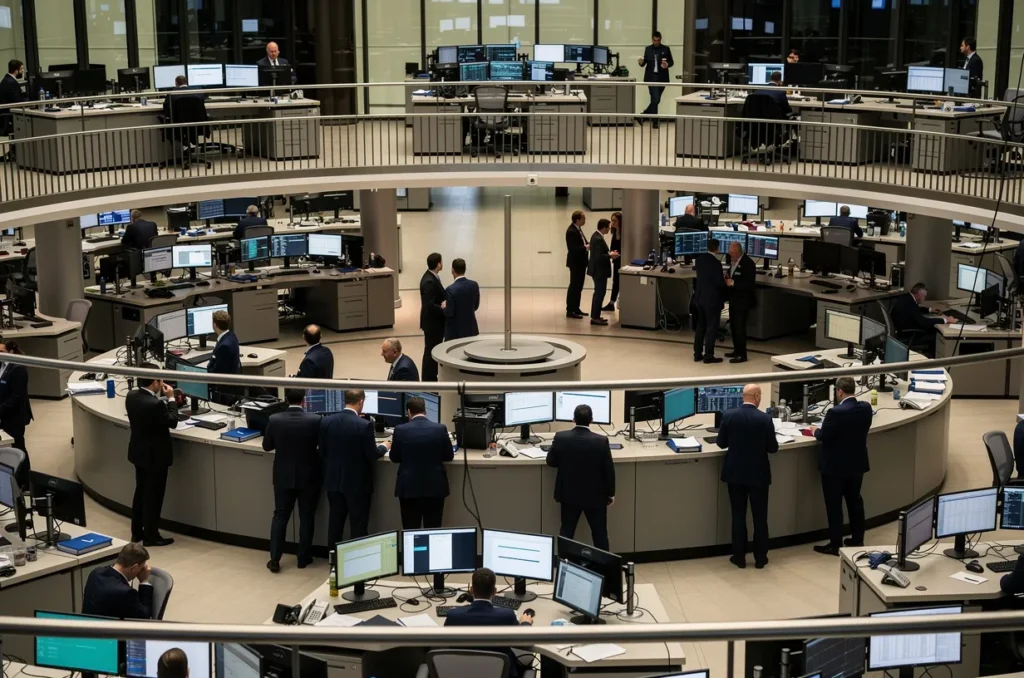
U.S. stocks moved higher on Wednesday after President Trump extended the U.S. ceasefire with Iran, giving markets a short-term relief headline even as the broader conflict remained unresolved.
The Nasdaq Composite led the gains, rising 1.2%, while the S&P 500 added 0.8% and the Dow Jones Industrial Average gained about 0.7%.
The move followed a weaker prior session and showed that investors were still willing to buy equities when the immediate threat of escalation appeared to ease, even if only temporarily.
The Ceasefire Helped Stocks, But It Did Not Calm Oil
The biggest contradiction in Wednesday’s market was that stocks rallied while oil also moved higher.
That matters because the ceasefire extension reduced near-term pressure, but it did not solve the core problem in the Strait of Hormuz. According to the source, Iranian gunboats fired on two ships in the waterway, while two Iranian supertankers also tested the U.S. blockade.
That kept energy markets on edge.
- Brent crude rose above $100 a barrel
- WTI crude climbed above $92
So while equities were willing to treat the truce as a short-term positive, oil traders were still pricing the risk that the maritime standoff could worsen again quickly.
The Diplomatic Path Still Looks Fragile
The market is also dealing with a ceasefire that looks more like a pause than a settlement.
Efforts to hold another round of talks have reportedly fallen apart, with Trump describing the Iranian government as “seriously fractured.” Iranian officials, meanwhile, called the discussions a waste of time because of what they see as a lack of U.S. commitment to prior deals.
That matters because the market is now trading two timelines at once:
- a short-term truce that offers immediate relief
- a longer-term negotiation track that still looks unstable
As long as those two tracks remain disconnected, investors will likely keep treating every positive headline as temporary rather than final.
Tech Stayed In Control
One of the clearest features of the session was that technology remained the market’s leadership group.
The Nasdaq outperformed, and the source points to continued strength across:
- large-cap technology
- semiconductors
- high-momentum growth names
That is important because it shows investors are still willing to favor the same parts of the market that have led the AI-driven rally, even with oil rising and the Middle East still unresolved.
In other words, elevated crude has not yet been enough to break the market’s preference for tech leadership.
Tesla Became The Day’s Main Earnings Focus
Another reason the market stayed locked on tech was the timing of Tesla’s results.
The source says investors were waiting for Tesla (TSLA) to kick off another big round of Magnificent Seven earnings after the close. That matters because Tesla is often treated as both a company-specific event and a read-through on market appetite for high-beta mega-cap growth.
In a market already sitting near highs, Tesla’s report becomes more than just a quarterly update. It becomes a test of whether investors are still willing to reward the names that have done the most work in carrying this rally.
Boeing Added A Traditional Industrial Bright Spot
Outside of tech, Boeing helped support sentiment after reporting first-quarter results that topped expectations.
The source says the company’s turnaround got help from stronger deliveries, and the stock moved higher before the bell. That is notable because Boeing has been one of the more closely watched industrial recovery stories, and a better print there gives the market another source of support beyond just semiconductors and software.
It also reinforces that this rally is not purely a one-sector move, even if tech remains the most powerful engine.
Palantir Was Another Winner
The session also brought a notable gain in Palantir, which rose after securing a $300 million purchase agreement with the U.S. Department of Agriculture.
According to the source, Palantir will provide software aimed at improving service delivery for farmers and government field staff, while also helping with visibility into supply-chain and production risks.
That matters because it is another example of the market rewarding software names tied to government and AI-adjacent use cases, especially when the contracts are large and operationally concrete.
The Transport Rally Needs A Footnote
One of the more interesting under-the-surface points in the source is the strength in the Dow Jones Transportation Average.
The index has surged, but the article also notes that Avis Budget has heavily distorted the move because of an extreme short squeeze. Since the transports index is price-weighted, a very high-priced stock can have an outsized impact on the benchmark.
That matters because headline strength in a sector index can sometimes look broader than it really is.
The source does note there is still underlying strength in several transport-related names even stripping out Avis, but the warning is fair: sharp short-squeeze moves can reverse just as quickly as they rise.
This Market Is Still Looking Through Higher Oil
One of the most important messages in the source is that the stock market has recently been able to look past elevated oil prices.
The main reason appears to be that deep-pocketed chip and tech companies are still benefiting from strong AI-driven demand, making them less sensitive to energy shocks than many other areas of the market.
That helps explain why stocks could rally even as Brent pushed back above $100.
But that also creates a tension investors should keep watching. If energy stays elevated long enough, the market may eventually have a harder time ignoring it, especially if fuel costs begin affecting margins, inflation expectations, or consumer demand more visibly.
What Investors Should Watch Next
The immediate checklist for the market is fairly clear:
- does the ceasefire extension actually hold
- does the situation in Hormuz worsen
- can oil stay contained near current levels
- and do major earnings, especially Tesla, justify the market’s current optimism
If the truce holds and tech earnings stay strong, stocks may keep grinding higher. If the maritime conflict intensifies again, oil could become a much bigger problem for the broader rally.
WSA Take
Wednesday’s market move was a good example of how much short-term relief still matters. Extending the Iran ceasefire was enough to support equities, especially in tech, even though the underlying geopolitical picture remains messy.
For investors, the key signal is that the market still wants to buy risk, but it is doing so in a selective way. Tech remains the preferred trade, while oil is warning that the conflict has not really been solved. That gap between equity optimism and energy-market caution is still one of the most important things to watch.
Explore More Stories in Markets
Disclaimer
WallStAccess is a financial media platform providing market commentary and analysis for informational and educational purposes only. This content does not constitute investment advice, a recommendation, or an offer to buy or sell any securities. Readers should conduct their own research or consult a licensed financial professional before making investment decisions.