Ferrari finally launched its first EV — and the reaction was ugly
Ferrari spent years building anticipation around its first fully electric model. What it got instead was one of the harshest market reactions a major auto design reveal has seen in a long time.
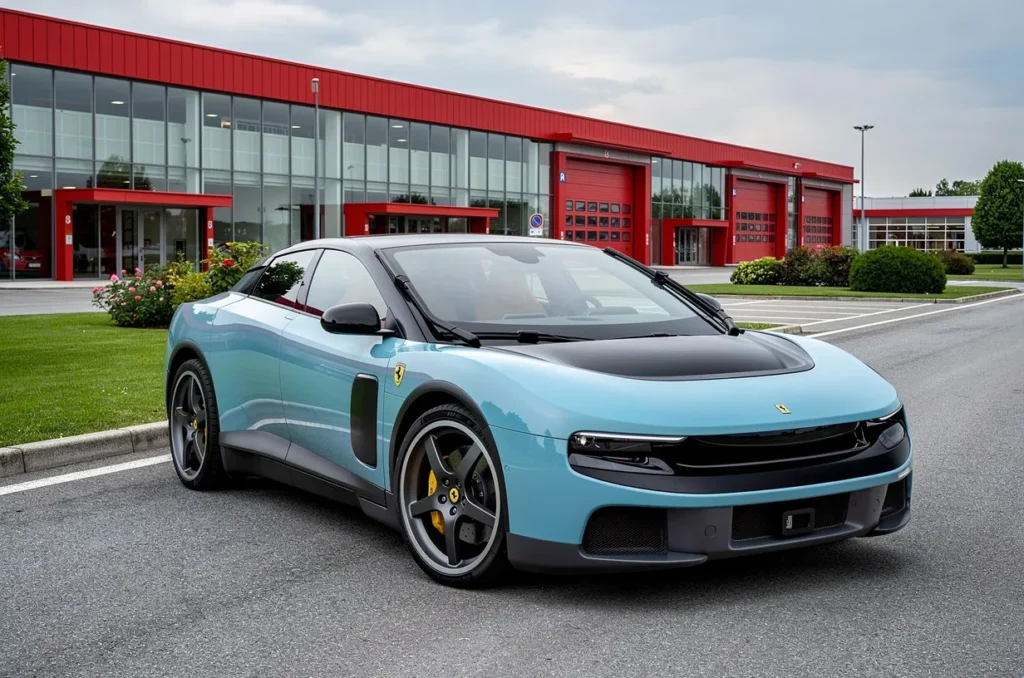
Shares fell as much as 8.4% in Milan and more than 5% in New York after the company unveiled the Luce, a €550,000 electric Ferrari scheduled for first deliveries in the fourth quarter of 2026. That is not a normal post-launch wobble. That is investors telling management they do not like what they see.
This is not just an EV debate. It is a design failure
The easy take is that Ferrari fans simply do not want an EV. That is too simplistic.
Luxury buyers have already shown they will accept new technology if the product still feels unmistakably premium, emotional, and true to the house that made it. The problem with the Luce is that it does not look like a great Ferrari that happens to be electric. It looks like a company got so focused on making a futuristic EV statement that it forgot what made Ferrari design special in the first place.
Ferrari built its mystique on proportion, drama, surface detail, and mechanical theater. Those cars felt sculpted, sensual, and expensive in a way that was hard to imitate. The Luce breaks from that language hard. Reuters described it as a significant departure from Ferrari’s traditional high-performance combustion identity, while the Financial Times called the design polarizing and noted the social-media backlash.
It feels less like Ferrari and more like a luxury-tech experiment
That is where the market’s discomfort starts to make sense.
This car was developed with input from LoveFrom, the studio founded by former Apple design chief Jony Ive. On paper, that sounds premium and modern. In practice, the result appears to have stripped away too much of Ferrari’s emotional and visual DNA.
There is a real difference between clean design and generic design. Ferrari has always been about more than speed. It has been about theatrical detail, presence, and an unmistakable sense of occasion. That is what makes buyers pay Ferrari prices.
The Luce, by contrast, feels more like luxury minimalism imposed on a house that was never supposed to be minimalist.
For a lot of people, this is the luxury-auto version of a Swatch moment
For purists, this feels like the automotive equivalent of a Swatch x AP kind of misread: a heritage luxury brand taking something once rare, emotionally loaded, and obsessively finished, then flattening it into something more trend-driven and mass-culture adjacent.
That does not mean the Luce is cheap. It clearly is not.
It means the design language risks making a $640,000 Ferrari feel less exclusive than the badge deserves. That is a dangerous place for a company whose entire business depends on protecting mystique.
Ferrari is asking customers to accept two huge changes at once
That is another reason the launch is so risky.
The Luce is not just Ferrari’s first EV. It is also a five-seat, four-door departure from the brand’s more traditional visual and emotional formula. Ferrari says the car can hit 60 mph in around 2.5 seconds and top out near 192 mph, so performance is not the issue. The issue is that the company is asking customers to accept a new powertrain, a new format, and a new visual identity all at the same time.
That is a lot to ask from a customer base that tends to care deeply about heritage, proportion, sound, and finish.
The market’s message was straightforward
Analysts were blunt. Reuters reported that some market watchers attributed the reaction to “design hate,” while others warned that the Luce may represent the furthest deviation from Ferrari’s traditional ethos the company has ever attempted. The Guardian also reported that fans and analysts questioned whether the model’s minimalist, saloon-like design still aligned with Ferrari’s identity.
That is the real issue. Ferrari can survive an unusual model. What it cannot afford is a serious hit to brand equity.
Because once a luxury house starts looking confused about its own taste level, investors begin asking a much harsher question: if the aura slips, what exactly are customers paying for?
This is why the reaction matters beyond one car
The Luce does not just matter as a product. It matters as a signal about Ferrari’s strategic judgment.
Luxury EV demand has already proven softer and more uneven than many expected. Porsche and Lamborghini have both become more cautious around their own EV timelines, according to multiple reports. Ferrari chose this environment to make its boldest design break in years.
If the car sells well, management will argue that it expanded the brand. If it does not, the concern will be much larger than one weak launch. It will be that Ferrari misread where the line is between innovation and dilution.
WSA Take
Ferrari’s first EV should have felt like the future of Ferrari. Instead, it feels like a premium-tech object wearing a Ferrari badge.
That is why the stock sold off. This was not simply a protest against electrification. It was a reaction to a design that, for many investors and enthusiasts, looks too far removed from the craftsmanship, visual richness, and emotional edge that once made Ferrari feel untouchable. The Luce may still find buyers. But first impressions matter in luxury, and this one landed with a thud.
Disclaimer
WallStAccess is a financial media platform providing market commentary and analysis for informational and educational purposes only. This content does not constitute investment advice, a recommendation, or an offer to buy or sell any securities. Readers should conduct their own research or consult a licensed financial professional before making investment decisions.