Big Tech’s AI spending problem hit the market
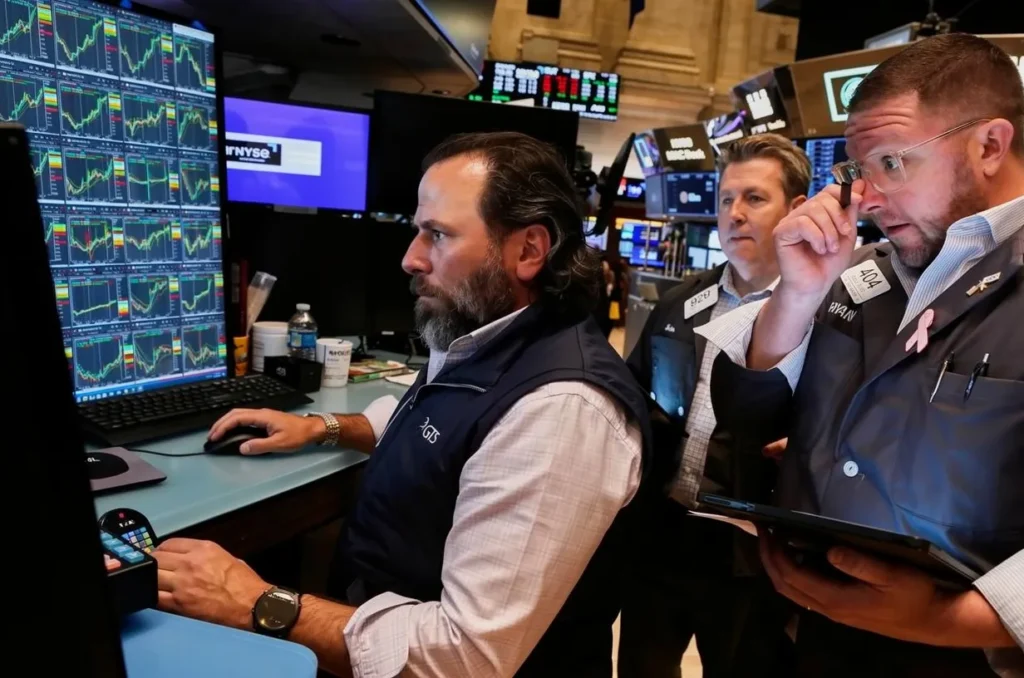
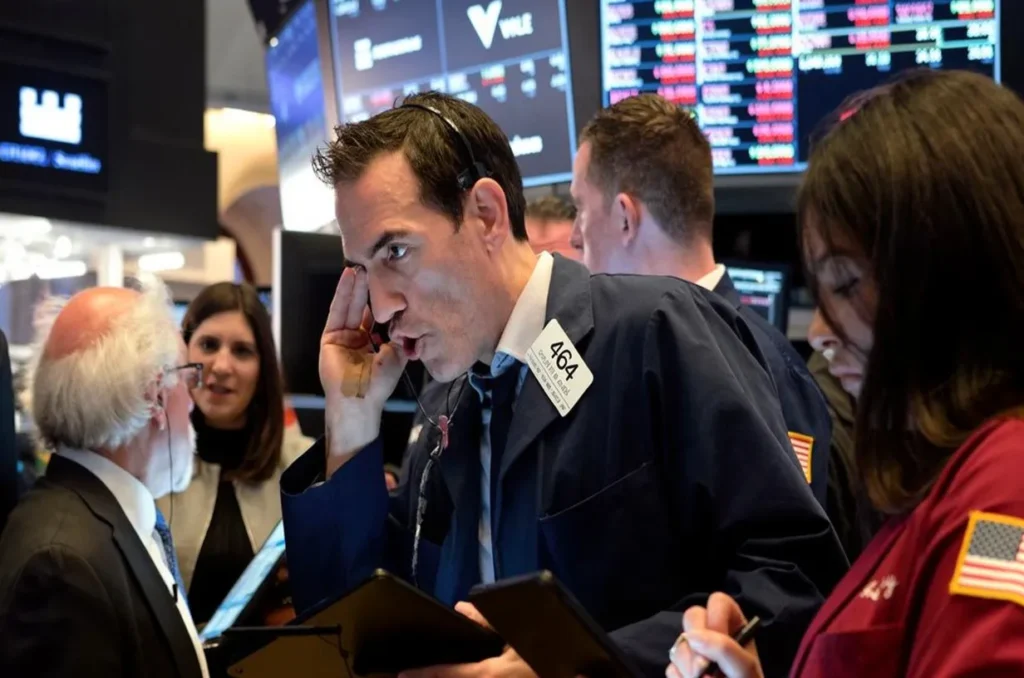
US stocks fell sharply Thursday as investors reacted to a difficult combination of Big Tech weakness, rising oil prices and renewed pressure in the bond market.
The Nasdaq Composite took the hardest hit, falling as much as 2.6% and briefly breaking below 25,000 for the first time since May. The index was recently down about 2%. The S&P 500 declined 1.1%, while the Dow Jones Industrial Average dropped 0.9%.
The selling was led by the same group that has carried much of the market’s rally: large technology stocks tied to AI spending. Alphabet and Tesla both reported results after Wednesday’s close, and the market focused less on current fundamentals and more on the cost of funding the next stage of artificial intelligence.
Alphabet and Tesla raised the capex question
Alphabet posted a strong quarter, but the market reacted negatively to the company’s higher capital spending outlook. That matters because investors are becoming more focused on whether massive AI investment will produce enough revenue growth to justify the cost.
Tesla added to the concern. CEO Elon Musk said 2026 would be a “massive capex year,” with spending tied to Optimus robots, robotaxis and data centres. Tesla shares fell 13%, while Alphabet dropped 7%.
The selling spread across the Magnificent Seven. Nvidia and Microsoft each fell about 2%, Amazon and Meta dropped 4%, and Apple slipped 1%.
The market is not walking away from AI. It is asking a harder question: who can turn AI spending into real earnings, and how long will investors tolerate rising capex before the payoff becomes visible?
Oil above $100 changed the macro setup
The tech selloff came as crude prices surged following another escalation in the Middle East. Brent crude crossed $100 per barrel, while West Texas Intermediate also climbed after Iran-backed Houthis said they had attacked tankers in the Red Sea.
The oil move is important because it feeds directly into the inflation and rate outlook. Higher energy prices can lift transportation costs, pressure consumers and make it harder for the Federal Reserve to justify a more patient stance.
That pressure showed up quickly in bonds. The 10-year Treasury yield rose 5 basis points to 4.7%, its highest intraday level since January 2025. The 30-year yield climbed to 5.18%, testing levels near a multidecade high.
Bond traders are now pricing in a 35% chance that the Fed raises rates at next week’s meeting, up from 11% a week ago, according to CME Group’s FedWatch.
Red Sea risk is becoming a bigger oil-market threat
The latest oil spike came after the Houthis threatened shipping through the Bab el-Mandeb Strait, a key waterway connecting the Red Sea to the Gulf of Aden and wider global markets.
That route has become more important because the Strait of Hormuz has remained largely closed to through-traffic during the US-Iran war. Saudi Arabia has increased capacity on its East-West pipeline, which moves oil from the Gulf to the Red Sea, to about 5 million barrels per day.
That pipeline has acted as a release valve for crude trapped in the Persian Gulf. If Bab el-Mandeb becomes harder to use, the market loses part of that cushion.
The risk points are now stacking up:
- Hormuz remains constrained
- Red Sea shipping is under threat
- Saudi export routes are more important
- Oil near $100 is feeding inflation fears
- Higher yields are pressuring growth stocks
That is why energy is now part of the equity story. Oil is not just moving commodities. It is tightening financial conditions.
Housing felt the pressure from higher yields
Mortgage rates also moved higher as the bond selloff deepened. The average 30-year fixed mortgage rate rose to 6.58%, according to Freddie Mac, while the 15-year rate increased to 5.96%.
Zillow senior economist Kara Ng said renewed geopolitical tensions have reintroduced inflation risks and pushed mortgage rates to their highest level in nearly a year. That threatens to turn recent affordability improvements back into headwinds for the housing market.
Some buyers are still moving forward. Mortgage applications for home purchases rose 6% last week, according to the Mortgage Bankers Association. But higher mortgage rates remain a clear pressure point for housing, especially if Treasury yields keep climbing.
Jobless claims gave the Fed less reason to ease
Economic data added another complication. Initial jobless claims unexpectedly fell to 187,000, the lowest level since 1969, compared with expectations for 210,000.
A strong labour market is not bad news on its own. But in a market already worried about oil-driven inflation, strong claims data gives the Fed less reason to lean dovish.
That is the difficult macro mix investors faced Thursday: energy prices rising, bond yields climbing, labour data staying firm and Big Tech asking for more capital to fund AI expansion.
Each piece makes the market less comfortable with expensive growth stocks.
Blackstone warned about AI exuberance
Blackstone also put a more cautious frame around the AI infrastructure boom.
The private markets giant reported second-quarter distributable earnings of $2 billion, or $1.52 per share, up 26% from a year earlier and ahead of analyst expectations. CEO Stephen Schwarzman pointed to Blackstone’s earlier investments in data centres, energy, power and AI companies as a major driver of results.
But he also warned that the firm is mindful of “excessive exuberance” in AI and has been selective in choosing where to invest.
That comment fit the tone of the day. AI infrastructure is still one of the strongest investment themes in the market, but investors are becoming more sensitive to valuation, spending discipline and proof of returns.
Earnings season now has a higher bar
The next wave of earnings will be important because the market is no longer rewarding AI exposure automatically. Companies now need to show that spending is translating into revenue, margins or durable competitive advantages.
Investors are watching reports from Intel, T-Mobile, Lockheed Martin and others, but the bigger test remains technology. Alphabet and Tesla showed that strong narratives can still be punished if the capex outlook looks too heavy.
The bar has moved. AI optimism is still present, but the market wants cleaner evidence that the spending cycle can support earnings rather than just inflate budgets.
WSA Take
Thursday’s selloff was a reset around AI capex and oil-driven inflation risk. Alphabet and Tesla reminded investors that the next phase of AI will be expensive, while crude above $100 pushed yields higher and revived Fed rate-hike concerns.
The Nasdaq can still recover if earnings prove the AI spend is working. But the market is becoming less forgiving. Higher capex, higher oil and higher yields are a difficult mix for expensive growth stocks.
Explore More Stories in Markets
Disclaimer
WallStAccess is a financial media platform providing market commentary and analysis for informational and educational purposes only. This content does not constitute investment advice, a recommendation, or an offer to buy or sell any securities. Readers should conduct their own research or consult a licensed financial professional before making investment decisions.