Google is trying to win on speed, cost and specialization
Alphabet is rolling out three new Gemini models as Google tries to show that its AI pipeline is moving faster, getting cheaper and becoming more specialized.
The launch includes Gemini 3.5 Flash Cyber, a cybersecurity-focused model designed to find and patch software vulnerabilities. The model will initially be available only to governments and trusted partners through a limited-access pilot.
Google is also launching Gemini 3.6 Flash and Gemini 3.5 Flash-Lite, two lower-cost models aimed at coding, multimodal work, knowledge tasks and high-volume AI workloads.
The timing matters. The rollout comes one day before Alphabet earnings, with investors watching whether Google can turn its AI scale into stronger product momentum after a period of delays, competitive pressure and rising infrastructure costs.
Cybersecurity is the clearest new battleground
Gemini 3.5 Flash Cyber is Google’s most direct answer yet to Anthropic’s early lead in automated code defense.
The model is designed to detect and patch software vulnerabilities, placing Google more directly into one of the most valuable enterprise AI use cases. Cybersecurity is attractive because companies already spend heavily on protection, monitoring and code review, and AI could reduce the time required to identify and fix weaknesses before they become larger risks.
Google said the specialized model runs at a lower price per token than larger models. That matters because cybersecurity workloads can be repetitive, continuous and high-volume. A model that can scan, detect and suggest fixes at lower cost could be useful for governments, cloud customers and large enterprises.
The limited rollout also makes sense. Cybersecurity models can be powerful tools, and Google is keeping early access restricted to trusted users before opening the system more broadly.
Flash models are aimed at cheaper AI usage
The broader Gemini update is about efficiency.
Gemini 3.6 Flash improves coding, multimodal and knowledge-work performance while using up to 17% fewer tokens than the previous model. Google says it also costs less per token, which could reduce the expense of running large volumes of AI tasks.
Gemini 3.5 Flash-Lite is positioned as the fastest and cheapest model in the 3.5 family. It is built for high-volume workloads and smaller tasks inside larger AI-agent systems, where speed and cost can matter more than maximum performance.
That gives Google a more complete product ladder:
- Flash Cyber for vulnerability detection and patching
- 3.6 Flash for stronger coding, multimodal and knowledge work
- Flash-Lite for faster, cheaper, high-volume tasks
This is where the AI race is changing. The market is no longer focused only on who has the most powerful frontier model. It is also focused on which companies can serve everyday AI workloads cheaply enough for businesses to use them at scale.
Google is leaning into price pressure
Artificial Analysis data shows Gemini Flash already undercuts comparable models from Anthropic, OpenAI and Chinese rivals on cost.
According to the company, Gemini 3.6 Flash is cheaper per task than GPT-5.6 Terra Max, Kimi K3 and Qwen 3.7 Max. Gemini 3.5 Flash-Lite costs even less, targeting the kind of smaller workloads that can add up quickly across enterprise software, agents and customer-facing applications.
That cost advantage is important because AI adoption is increasingly running into budget reality. Companies may be excited about AI, but they still need models that can process large volumes of requests without making products uneconomic.
The cheaper the model, the easier it becomes to embed AI into search, cloud software, coding tools, support systems, workflow automation and security products.
Chinese rivals are gaining momentum
Google’s launch also comes as Chinese AI companies are drawing more attention.
Moonshot AI’s Kimi K3 has seen enough demand that the company limited new subscriptions and API access because of capacity constraints. Alibaba is also teasing Qwen 3.8 Max, which it says trails only Anthropic’s Fable 5 in overall performance.
That demand highlights one of the biggest constraints in the AI market. Building a strong model is only one part of the business. Companies also need enough computing capacity to serve that model reliably to customers.
This is where Google should have an advantage. The company has cloud infrastructure, custom chips and the ability to design models and hardware together. But the pressure from Chinese rivals shows that the global AI race is becoming more crowded, more price-sensitive and more difficult to lead by brand alone.
The hardware strategy is becoming more important
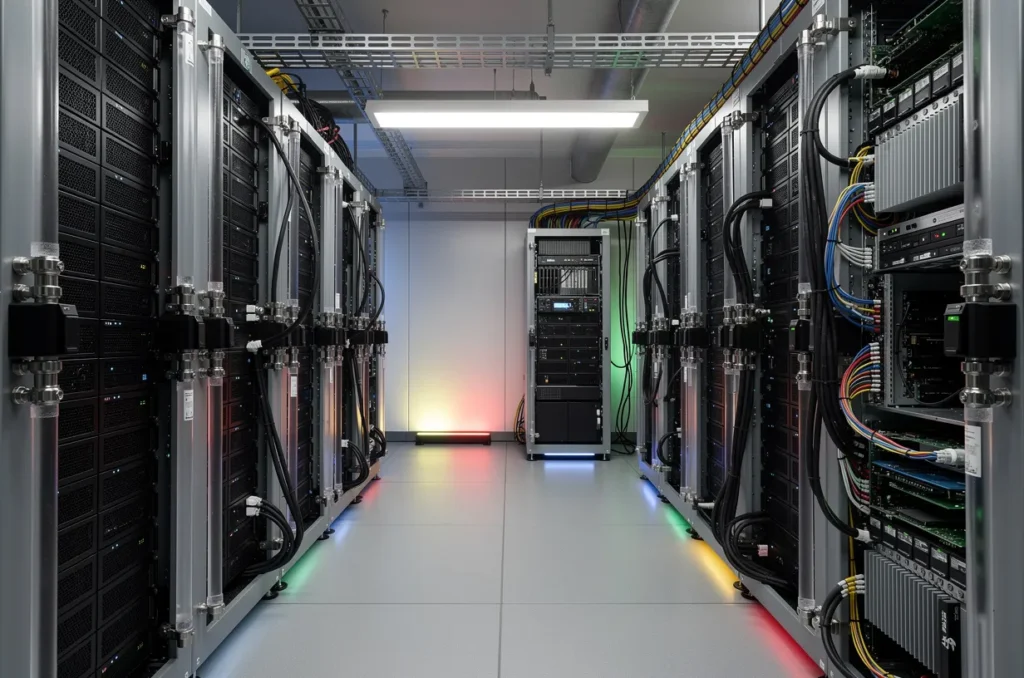
Google is reportedly developing a specialized chip designed to run Gemini up to 10 times more efficiently, part of a broader effort to reduce the cost of serving AI.
That could become a major advantage if it works. The largest AI companies are now competing not only on model quality, but also on the economics of inference. Every prompt, code completion, image request, agent task or enterprise workflow creates compute cost.
A Google Cloud spokesperson said the company is constantly experimenting with new innovations to deliver maximum performance and efficiency, adding that Google’s full-stack approach depends on co-designing hardware and software from the ground up.
That is the key strategic idea. If Google can make Gemini models run more efficiently on its own infrastructure, it can lower costs, improve margins and price more aggressively against competitors.
The roadmap is becoming more visible
Google is also trying to address investor concerns about timing.
The company is testing Gemini 3.5 Pro with partners ahead of broader availability, while also beginning its largest-ever pre-training run for Gemini 4.
That roadmap visibility matters because Google has sometimes looked slower than rivals in bringing AI products to market. OpenAI, Anthropic and Chinese labs have pressured the company on speed, model performance and developer attention.
The new Gemini lineup suggests Google is trying to respond with more frequent releases, clearer segmentation and a stronger focus on cost-per-task. That could help the company compete across different customer needs instead of relying on one flagship model to carry the entire AI strategy.
WSA Take
Google’s latest Gemini rollout shows where the AI race is heading next: cheaper models, specialized tools and better inference economics. The cybersecurity model gives Google a clearer enterprise use case, while Flash and Flash-Lite target the cost problem that will decide how widely AI gets adopted. Alphabet still has to prove execution, but its hardware, cloud and model stack give it a real chance to compete on efficiency as much as raw performance.
Disclaimer
WallStAccess is a financial media platform providing market commentary and analysis for informational and educational purposes only. This content does not constitute investment advice, a recommendation, or an offer to buy or sell any securities. Readers should conduct their own research or consult a licensed financial professional before making investment decisions.