Amazon is spending further upstream in the AI buildout
Amazon’s latest infrastructure deal says a lot about where the AI race is moving.
The company signed a multibillion-dollar agreement with Corning to secure optical fiber, cable, and connectivity products for its expanding US data center footprint. Reuters reported the partnership on Monday, and both Amazon and Corning framed it as a domestic manufacturing and supply-chain investment tied directly to the next phase of AI infrastructure growth.
This is not another cloud contract or software partnership. It is Amazon going deeper into the physical layer of the AI stack.
Fiber optics are becoming a real AI choke point
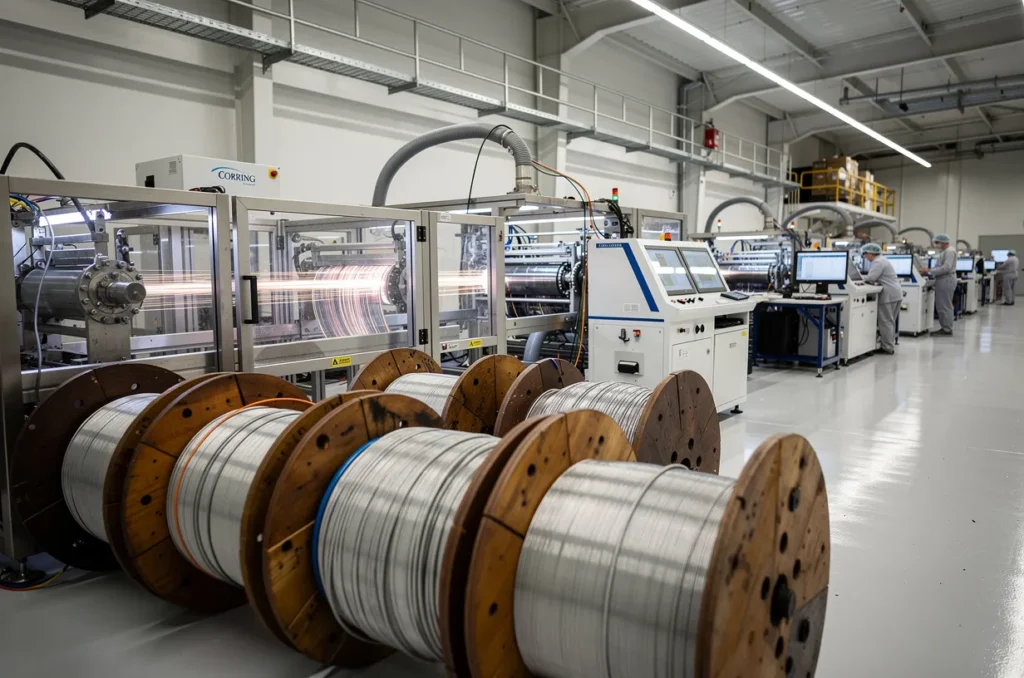
Corning’s role here is straightforward but critical. Optical fiber products help move data between the thousands of processors packed into modern AI data centers. As training clusters and inference infrastructure scale up, the bottleneck is no longer just access to chips. It is also the ability to move data fast enough, cheaply enough, and at low enough power draw to keep those systems useful.
That is why this agreement matters. Amazon is not just buying more capacity. It is locking in a piece of infrastructure that becomes more important as compute density rises.
The North Carolina angle is not incidental
The deal will create 1,000 jobs at Corning’s facilities in North Carolina, along with hundreds of additional construction jobs tied to the expansion. Amazon and Corning also said they will broaden a technician training program with Catawba Valley Community College to prepare workers for roles in fiber optics and related manufacturing.
That gives the deal a second layer beyond AI demand. It is also part of the broader effort to rebuild more of the data center supply chain inside the US.
Amazon said separately that it has invested more than $20 billion in North Carolina and created over 26,000 jobs across the state since 2010.
Corning is becoming a clear second-order AI winner
For Corning, this is another strong signal that its fiber business is becoming one of the more important picks-and-shovels exposures in the AI trade.
Reuters noted that the agreement gives fresh support to Corning’s fast-growing fiber optics unit at a time when weaker consumer electronics demand has weighed on the business tied to Gorilla Glass. Corning has already said it plans to increase US optical connectivity manufacturing capacity tenfold and lift domestic fiber production capacity by more than 50%.
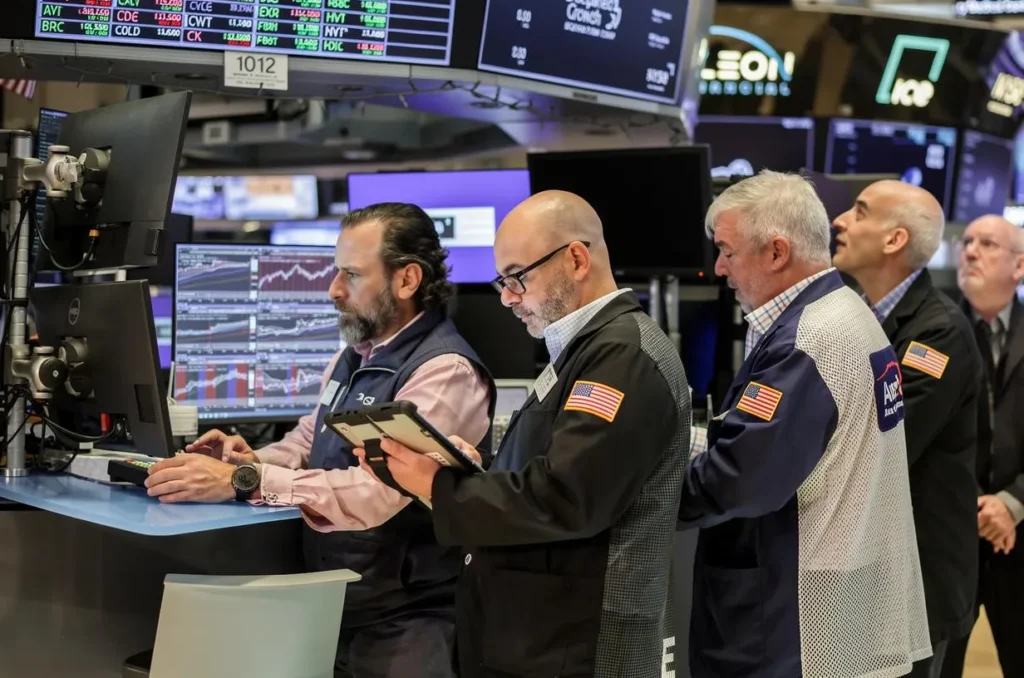
The market understood the read-through quickly. Corning shares were up about 7% in early trading after the announcement.
This follows the same pattern emerging across hyperscalers
Amazon is not the only large AI infrastructure buyer moving into optics.
Corning announced last month that Nvidia had also partnered with the company to help expand US-based fiber optics manufacturing. That matters because it shows the same problem is being recognized across the top end of the AI buildout: more chips alone are not enough if the interconnect layer cannot keep up.
The pattern is becoming clearer. AI spending is broadening out from GPUs and data center shells into networking, memory, power, cooling, and now optical connectivity.
WSA Take
Amazon’s agreement with Corning is a good example of how the AI buildout is moving further into the industrial supply chain.
The biggest winners in this cycle will not just be the model companies and the chip designers. They will also include the businesses that make high-volume compute physically workable. Fiber optics sits squarely in that category now.
For Amazon, the deal secures a strategic input. For Corning, it confirms that optical connectivity is becoming one of the more important hidden beneficiaries of the AI infrastructure boom.
Disclaimer
WallStAccess is a financial media platform providing market commentary and analysis for informational and educational purposes only. This content does not constitute investment advice, a recommendation, or an offer to buy or sell any securities. Readers should conduct their own research or consult a licensed financial professional before making investment decisions.