
Stocks pull back after another record
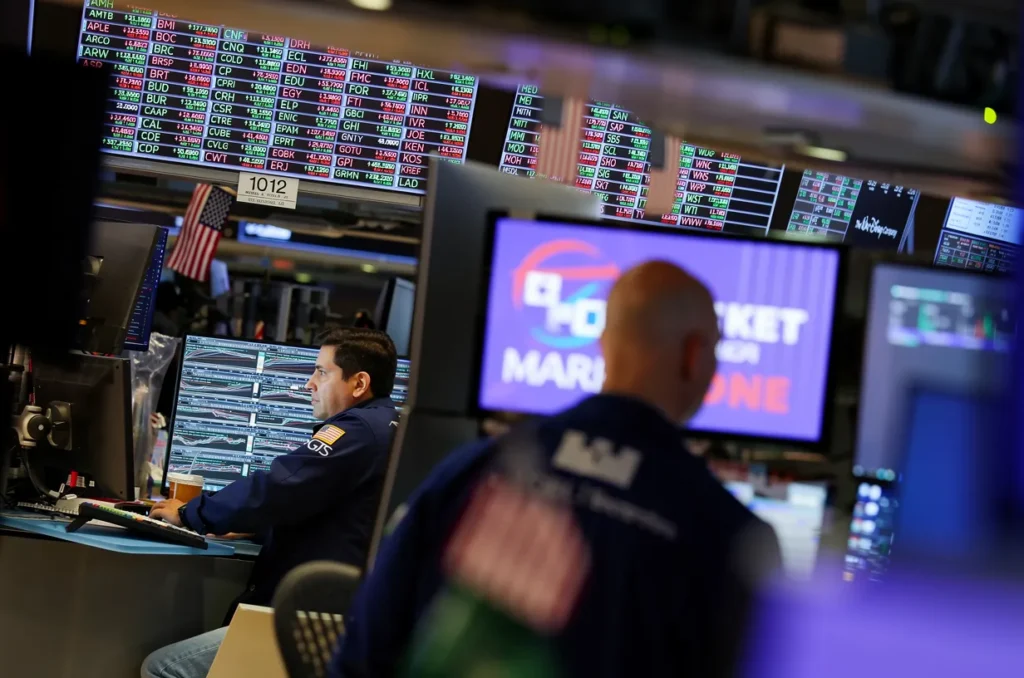
US stocks edged lower Friday after the S&P 500 reached another record high in the previous session.
The S&P 500 slipped just below the flat line, while the Dow Jones Industrial Average and Nasdaq each fell about 0.2%.
Despite Friday’s weakness, the S&P 500 and Nasdaq remained on pace for weekly gains.
Asian markets were stronger overnight. South Korea’s KOSPI climbed more than 2.4%, while Japan’s Nikkei gained 0.6%.
Consumer sentiment breaks a two-month recovery
The University of Michigan’s preliminary Consumer Sentiment Index fell to 51 in August, down from 55.2 in July and below economist expectations of 55.
It was the first decline in three months.
The current conditions index fell to 51.8, below expectations of 54.8, while the expectations index dropped to 50.6 versus forecasts of 55.2.
Inflation remained a major concern. Consumers now expect prices to rise 4.3% over the next year, up from 4.2% in July. Five-to-10-year inflation expectations held at 3.3%.
Only 8% of consumers expect their income growth to outpace inflation over the next year.
Survey director Joanne Hsu said the largest drops in sentiment came among older, lower-income and non-college-educated consumers, groups particularly exposed to declining purchasing power.
Retail sales add another sign of consumer weakness
Separate Commerce Department data showed US retail sales fell 0.6% in July.
Economists had expected sales to rise 0.1%.
The decline was the largest in more than a year and adds another weak data point following July’s disappointing jobs report.
Attention now turns to next week’s retail earnings, with Walmart and Target set to give investors a direct look at consumer spending.
AI infrastructure stocks may be getting cheaper
Bank of America says the recent pullback in AI infrastructure stocks has opened potential entry points even as hyperscaler spending forecasts continue to rise.
The bank said the trade became crowded enough to trigger widespread profit-taking, despite little evidence so far that major technology companies are pulling back on infrastructure plans.
BofA highlighted Meta, which is down roughly 10% this year, arguing Wall Street may be underestimating its ability to monetize data-center capacity, AI models and infrastructure through new enterprise agreements.
The broader AI infrastructure trade has been volatile as investors debate whether record spending can continue without eventually overwhelming returns.
Money is not the only constraint on AI
Wall Street estimates put hyperscaler AI spending next year somewhere between $700 billion and more than $1 trillion.
But access to capital may no longer be the biggest problem.
AI companies are running into shortages of chips, skilled construction workers, permits and electricity.
Bloomberg New Energy Finance estimates AI data centers could face a 19-gigawatt power shortfall by 2035 if current growth continues.
New York has introduced a one-year data-center moratorium, while Texas has ordered an audit of power hookups as governments respond to the pressure large facilities are putting on local grids.
The industry may have enough capital to keep building. Finding enough power, equipment and labour is becoming harder.
Nvidia is the next major earnings test
With Friday’s earnings calendar relatively light, investors are looking ahead to two major checkpoints.
First comes next week’s retail results from companies including Walmart and Target, which will show whether weaker sentiment is translating into weaker consumer spending.
Then Nvidia reports on August 26.
After another quarter of massive spending commitments across AI infrastructure, Nvidia’s results will give the market its clearest update on whether chip demand is still keeping pace with the amount of capital flowing into the sector.
Explore More Stories in Markets
Disclaimer
WallStAccess is a financial media platform providing market commentary and analysis for informational and educational purposes only. This content does not constitute investment advice, a recommendation, or an offer to buy or sell any securities. Readers should conduct their own research or consult a licensed financial professional before making investment decisions.