Oil reopened the week with geopolitical premium back in the barrel
Crude moved higher Monday after the weekend delivered exactly what the market did not want: fresh military action across multiple fronts in the Middle East.
Brent rose roughly 1.8% to trade above $94.50 a barrel, while WTI gained around 1.5% to sit just below $92. Earlier in the move, both benchmarks had surged more than 4%, with Brent pushing above $97 and WTI above $95 as the conflict escalated.
The immediate catalyst was a new round of strikes between Israel and Iran, with Lebanon again pulled into the center of the conflict through Israeli attacks on Hezbollah positions in Beirut.
Iran and Israel crossed another line over the weekend
The military sequence mattered.
Israel struck Hezbollah targets in Beirut. Hours later, Israel said it had intercepted missiles launched from Iran, marking the first direct exchange of air fire between the two countries since the US-backed ceasefire took hold in early April. Israel then struck back inside Iran, including an attack on a petrochemical facility in the southwest of the country that Israeli officials linked to missile production.
That was enough to reset the oil market quickly. Traders had been leaning on the view that a fragile truce, even if messy, was still holding the region below full-scale escalation. The weekend challenged that view.
Lebanon is still blocking a cleaner Iran deal
The central diplomatic problem remains unchanged.
Iran has repeatedly insisted that any broader ceasefire or settlement must also address Israel’s campaign against Hezbollah in Lebanon. Israel continues to argue that the Lebanon front is separate. That gap keeps wrecking any attempt to treat an Iran agreement as a self-contained negotiation.
For oil, that means the region cannot be reduced to a single bilateral framework. Even if Washington and Tehran make progress, the Lebanon front can still reprice crude on its own.
Hormuz remains the core energy risk
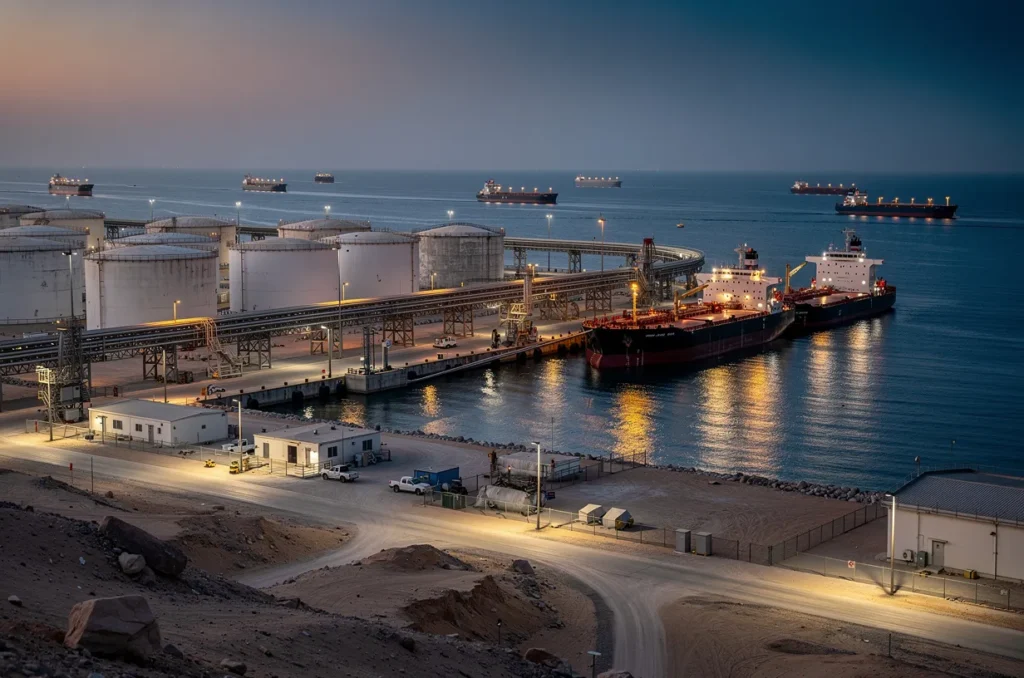
The market is still trading the same strategic chokepoint: the Strait of Hormuz.
The war has already removed or disrupted more than 14 million barrels per day of normal flow tied to the corridor. That is why every new exchange of fire matters so much. The issue is not simply whether strikes continue. It is whether the current instability turns into a more durable impairment of shipping, insurance, escorts, and regional export flows.
Iranian officials reinforced that threat over the weekend, warning that continued aggression could turn American and allied assets in the region into legitimate targets. That kind of language keeps the floor under crude even when prices pull back intraday.
The Red Sea threat is back in the frame too
The weekend also widened the map.
The Houthis said Monday they would impose a full ban on Israeli vessels using the Red Sea, directly threatening a route that had only recently begun recovering from earlier disruption. That matters because the Red Sea and the Bab-el-Mandeb strait have become essential alternative pressure valves for oil and refined products trying to move around the Hormuz bottleneck.
If that lane gets hit again, the market does not just lose another route. It loses flexibility.
Saudi Arabia’s East-West pipeline and the port of Yanbu have helped reroute barrels, with somewhere between 5 million and 7 million barrels per day moving through that system. Any renewed pressure on the southern Red Sea corridor would tighten the logistics picture further.
The White House is still trying to sell diplomacy
Washington spent the weekend trying to keep the diplomatic track alive.
The US president publicly said Israel and Iran needed to stop firing immediately and later said both sides were looking at an immediate ceasefire while final negotiations continued. The administration’s broader line remains that a deal is close and that Tehran has effectively conceded on key nuclear questions.
Still, the market has heard versions of that before. The issue now is credibility. Each new flare-up makes the diplomatic story harder to price confidently, especially when the region’s proxy fronts keep moving independently.
The market no longer needs a full supply shock to keep oil elevated
That is the bigger change.
Earlier in the conflict, crude needed a dramatic escalation to move sharply. Now the market is reacting to the persistence of instability itself. Direct exchanges between Israel and Iran, continued fighting in Lebanon, renewed Red Sea threats, and uncertainty around Hormuz are enough to keep oil supported even without a total breakdown.
That leaves energy traders in a more defensive posture. The barrel no longer needs catastrophe. It just needs the conflict to stay unresolved.
WSA Take
Oil moved higher because the weekend exposed how little room there is between “fragile ceasefire” and “regional escalation.”
The market is still willing to believe diplomacy can eventually produce a narrower Iran arrangement. It is much less willing to believe that such a deal would automatically stabilize the wider region. Lebanon remains active, the Red Sea threat is back, and Hormuz is still the center of the global oil story.
This is not a market pricing peace. It is a market pricing instability with pauses.
Explore More Stories in Commodities
Disclaimer
WallStAccess is a financial media platform providing market commentary and analysis for informational and educational purposes only. This content does not constitute investment advice, a recommendation, or an offer to buy or sell any securities. Readers should conduct their own research or consult a licensed financial professional before making investment decisions.