The market is starting to look through the headlines
There is a lot for investors to worry about right now.
Canada is preparing retaliatory tariffs on roughly $20 billion of U.S. goods. Consumer confidence just fell to its lowest level since January. Nvidia earnings are approaching, fresh inflation data is due, and the Federal Reserve is about to deliver one of its most closely watched policy speeches of the year.
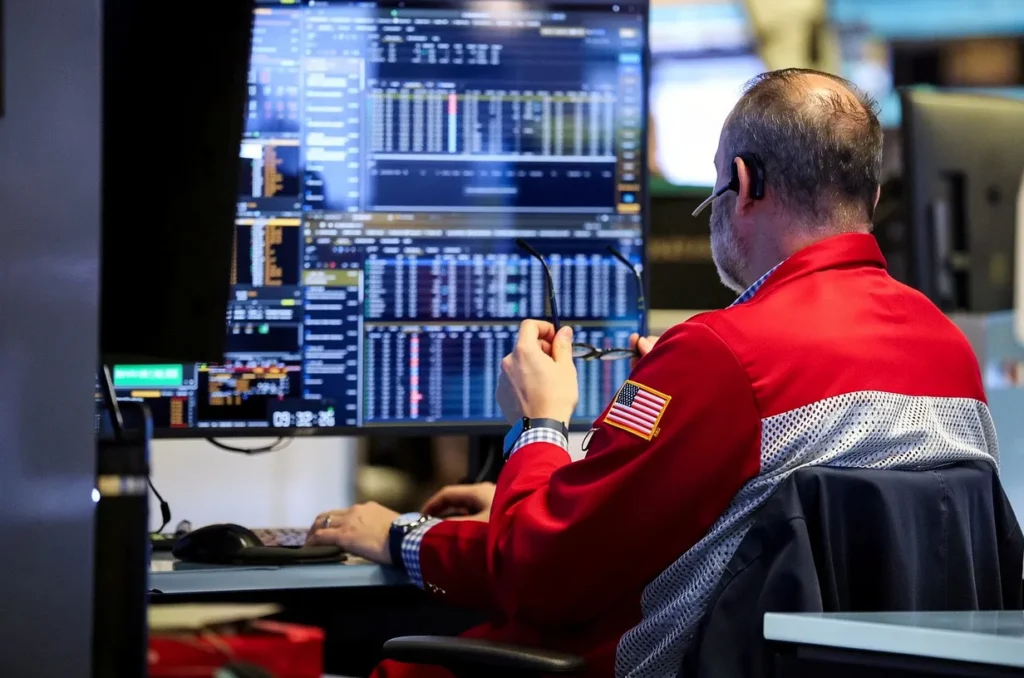
Yet stocks moved higher Tuesday.
The Dow and S&P 500 gained roughly 0.4%, while the Nasdaq rose about 0.7%, recovering from Monday’s weakness in technology stocks.
That may be the most interesting part of the story.
Markets are not ignoring the risks. They are simply being given something else to work with: falling Treasury yields, lower oil prices and expectations that monetary policy may not need to remain as restrictive as feared.
When those pressures ease, stocks usually have more room to breathe.
Lower yields can change the math quickly
Treasury yields matter because they sit underneath much of the financial system.
When yields climb, companies face higher borrowing costs and investors can earn more by simply owning government bonds. That makes expensive growth stocks harder to justify.
When yields fall, the equation begins moving the other way.
Technology companies tend to benefit because more of their value is tied to profits expected years into the future. Lower rates make those future profits more valuable today, which helps explain why the Nasdaq led Tuesday’s gains.
Lower oil prices can help for a similar reason.
Cheaper energy takes some pressure off transportation, manufacturing and household budgets while also reducing one source of inflation. It does not solve every inflation problem, but it gives the Federal Reserve one less reason to stay aggressive.
That combination—lower yields and lower energy prices—is a much friendlier backdrop for equities than the one markets were dealing with earlier in the year.
The economy is slowing, but that is not automatically bearish
The latest consumer-confidence report was not particularly strong.
The Conference Board’s index fell to 89.4 in August from 90.8 in July, while the expectations component dropped sharply to 68.2 from 74.7.
Consumers are becoming more worried about hiring and future business conditions.
Normally, that would sound like bad news for stocks.
But markets care about the reason growth is slowing and what policymakers may do next.
A gradual slowdown that brings inflation under control without causing a major collapse in employment can actually improve the setup for equities. It gives the Federal Reserve more freedom to ease financial conditions without waiting for something to break first.
That is why upcoming employment, manufacturing and inflation data matter so much.
The market does not need a booming economy right now.
It needs an economy strong enough to avoid recession, but soft enough to keep rates from moving sharply higher again.
That is a narrow path, but Tuesday’s trading suggests investors still believe it is possible.
The tariff fight is serious, but it has not taken control of the market
Canada’s decision to match new U.S. tariffs dollar for dollar is clearly another source of uncertainty.
Beginning September 8, Canadian tariffs ranging from 15% to 50% are expected to hit products including steel, dairy, appliances, agricultural equipment, pulp and paper, and electronics.
That can hurt specific companies and industries. It may also raise costs in areas where supply chains cross the border.
But the broader market has so far treated the dispute as a risk that remains contained rather than something capable of derailing the entire economy.
That could change.
If tariffs keep expanding into larger categories or start materially raising consumer prices, the market will have to rethink that view. For now, however, rates and liquidity appear to be carrying more weight than trade headlines.
That is worth paying attention to.
A market that rallies only when every headline is good is not especially strong.
A market that can absorb bad news and still move higher is showing something different.
Bitcoin and gold are telling another part of the story
The move is not limited to stocks.
Bitcoin briefly traded above $80,000 for the first time in three months, while gold has also rallied sharply in recent days.
Both have benefited from renewed concerns around the U.S. dollar and government debt after Treasury intervention in the bond market.
This creates an unusual setup.
Stocks are rising because yields are easing.
Gold and bitcoin are also attracting money because some investors worry about what easier financial conditions and growing debt could eventually mean for the purchasing power of the dollar.
Those trades can coexist.
In fact, they often do when investors expect liquidity to become easier while confidence in traditional government finances becomes a little less certain.
For portfolios, that means the fall market may not be a simple choice between “risk-on” and “risk-off.”
Technology stocks, precious metals and alternative assets could all attract capital for very different reasons.
The next few days will tell us whether this strength has legs
There are several important tests coming quickly.
Nvidia’s earnings will give investors another look at whether AI spending remains strong enough to support one of the market’s biggest growth themes.
The PCE inflation report will help shape expectations for interest rates.
Then comes Jackson Hole, where Federal Reserve Chair Kevin Warsh will have an opportunity to lay out how he sees inflation, growth and the path for monetary policy.
Those events matter more than Tuesday’s 0.4% move in the S&P 500.
But the market’s behavior heading into them is encouraging.
Stocks are facing weaker confidence, trade friction and plenty of uncertainty—and they are still moving higher as yields ease.
That does not mean the fall will be easy.
It does suggest the market may be entering it with more support underneath it than the headlines would have you believe.