Washington isn’t just making another critical-minerals list
The U.S. government has spent years talking about how dependent the country is on foreign critical minerals.
Now it is asking companies to show it what they can build.
The Defense Industrial Base Consortium is seeking proposals from domestic projects capable of increasing U.S. supply of indium, manganese, magnesium and titanium—four metals tied to defense systems ranging from aircraft and electronics to armor and batteries.
Applications can cover almost any part of the supply chain: mining, processing, refining, alloy production and even recycling. The first round is intentionally simple, requiring companies to submit a one-page proposal by September 17 before selected projects move into a deeper review.
The dollar amount hasn’t been announced yet.
Still, we think the solicitation is more important than the eventual headline funding number. It shows where U.S. critical-minerals policy is heading: identify the weakest links, find domestic projects capable of filling them and put government capital behind the ones that can realistically scale.
The import numbers explain the urgency
These are not four metals chosen at random.
According to the U.S. Geological Survey’s latest Mineral Commodity Summaries, the United States was 100% net import reliant in 2025 for indium, manganese and titanium sponge metal. Magnesium metal, meanwhile, was identified by USGS as one of the mineral supply chains facing the country’s highest disruption risk.
That is a serious vulnerability for a country trying to expand its defense industrial base.
Titanium alloys are used in aircraft, spacecraft and military armor. Magnesium is valued for lightweight alloys across aerospace and electronics. Manganese is important in steelmaking and batteries. Indium finds its way into advanced electronics, displays, specialty alloys and defense technologies.
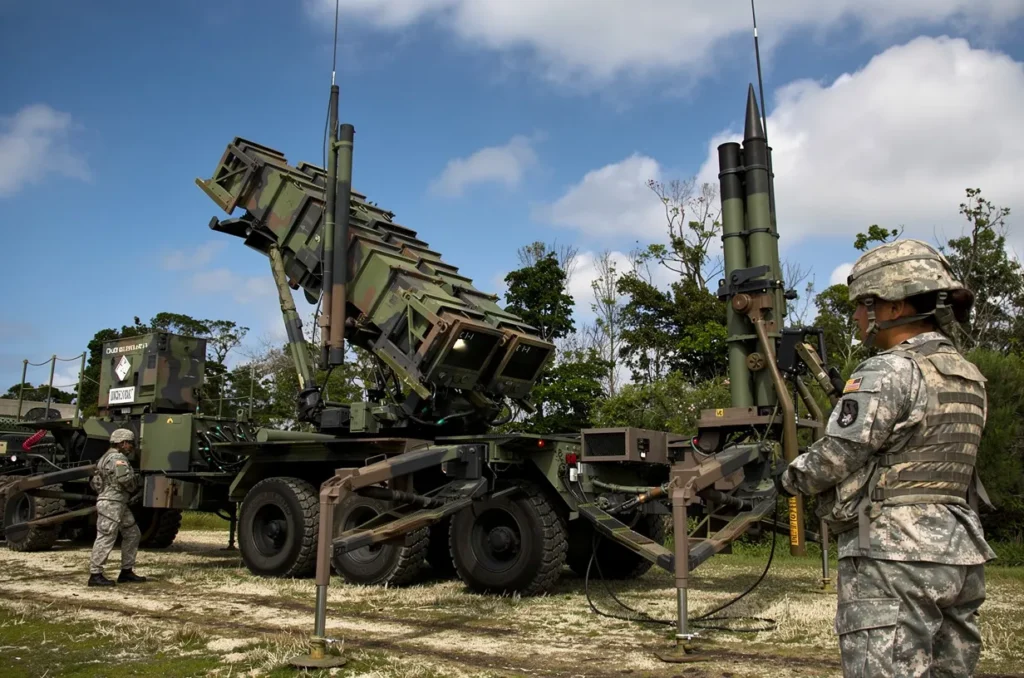
The Pentagon has already said critical minerals touch virtually every major defense system, from fighter jets and submarines to unmanned aircraft.
Put simply, America can design the world’s most advanced military equipment and still have a problem if it cannot reliably source the materials needed to manufacture it.
That is the gap Washington is now trying to close.
The opportunity isn’t necessarily the company with the biggest deposit
This is where the story becomes more interesting for public-market investors.
A decade ago, a junior miner could attract attention by announcing a large critical-mineral resource and pointing to future demand.
That may no longer be enough.
The latest solicitation covers the entire supply chain, which tells us Washington is looking for usable material—not simply more rocks in the ground.
A strong project today may need several things: a credible domestic resource, a realistic path through permitting, processing technology, infrastructure and a plan to eventually produce something that defense manufacturers can actually use.
That could put companies with advanced projects, existing processing expertise or near-term expansion plans in a much better position than extremely early exploration stories.
It also creates opportunities beyond traditional miners. Refiners, recyclers, alloy producers and specialty-material companies can potentially benefit from the same push.
That distinction matters.
Finding a mineral and building a secure supply chain are two very different businesses.
There is already real government money behind this theme
This is not simply Washington asking companies to send in PowerPoint slides.
The Pentagon has been deploying capital into strategic materials for several years. Its fiscal 2026 budget request included about $2.6 billion across Industrial Base Analysis and Sustainment and Defense Production Act Title III funding to address supply-chain risks including critical minerals, batteries and strategic materials.
There are already examples of that money reaching individual projects.
The Defense Department awarded $20 million to South32’s Hermosa project in Arizona to accelerate development of domestic battery-grade manganese. It previously awarded $19.6 million to Magrathea Metals to establish domestic magnesium production. More recently, a NioCorp subsidiary received $10 million toward developing a domestic scandium supply chain from its Nebraska project.
Those awards don’t guarantee commercial success. Government money cannot fix poor geology, bad economics or an unrealistic development plan.
But it can change the equation.
For smaller companies especially, non-dilutive funding, government-backed financing or a strategic contract can help advance work that might otherwise require issuing a large amount of new stock.
It can also provide something the market values almost as much as the cash: validation that the government considers the project strategically relevant.
The next critical-minerals winners may look different from the last ones
Rare earths, lithium and graphite have dominated much of the critical-minerals conversation.
This latest solicitation shows the focus is widening.
Indium isn’t a commodity most retail investors follow every morning. Neither is magnesium metal. Yet if the U.S. is almost completely dependent on foreign supply for a material required by defense manufacturing, its strategic importance can be far greater than the size of the commodity market suggests.
That is where smaller, underfollowed companies can become interesting.
We would not simply buy every company with “titanium,” “manganese” or “critical minerals” in its presentation. Government interest doesn’t automatically create an economic project, and the current solicitation hasn’t disclosed how much capital will ultimately be awarded.
The better question is which companies already have assets capable of moving from strategic story to actual domestic supply.
September 17 gives the industry its next deadline.
After that, the companies selected to move forward—and eventually the projects that attract government capital—could tell investors much more about where Washington intends to build the next pieces of America’s mineral supply chain.
For years, critical minerals were largely an investment thesis built around future shortages.
The U.S. government is increasingly turning that thesis into an industrial policy.
That makes the companies capable of actually delivering the metal much harder to ignore.
Explore More Stories in Commodities
Disclaimer
Wall Street Access is an independent financial publisher. Wall Street Access is not a financial advisor. No company mentioned has compensated Wall Street Access for the preparation, publication or distribution of this article. This content is provided for informational and educational purposes only and is not investment advice or a recommendation to buy, sell or hold any security. Investing involves risk, including the possible loss of principal.
Prices, market capitalizations, financial figures and other market data are based on information available as of the date and time of publication and may change without notice. Information is drawn from public sources believed to be reliable but is not guaranteed to be complete or accurate. Opinions and expectations expressed are our own and may change as new information becomes available.
Readers should conduct their own due diligence and contact a licensed financial professional before making any investment decision. Past performance does not guarantee future results. Any material ownership interest or conflict of interest, where applicable, will be disclosed separately.